The sandstone-look porcelain tile trends transforming 2026 design

The sandstone-look porcelain tile trends transforming 2026 design

Why sandstone-look porcelain tiles are trending

Sandstone-look porcelain tiles are trending in 2026 because they answer a growing demand for surfaces that feel genuinely connected to the natural world, without the maintenance demands that natural stone imposes. Among stone-look tiles, sandstone-inspired porcelain has seen a particularly sharp rise, driven by interior design’s ongoing shift toward warm, grounding palettes, biophilic aesthetics, and layered mineral depth. Digital printing and surface engineering now reproduce the grainy textures, natural shading, and fine sedimentary details of quarried sandstone at a level of resolution that reads as geological rather than printed.

From a technical standpoint, porcelain tiles deliver <0.5% water absorption, high stain resistance, and frost-resistant performance, properties that natural sandstone cannot match without routine sealing. For a material that carries the warmth and visual character of ancient sedimentary stone, these advantages make sandstone-look porcelain a compelling choice for modern indoor and outdoor design alike. Understanding what defines this aesthetic is the natural next step.

What defines a sandstone-look porcelain tile

A sandstone-look porcelain tile is defined by its ability to replicate the visual and tactile qualities of natural sedimentary stone through advanced digital printing and precision surface engineering. Five characteristics distinguish an authentic sandstone aesthetic from generic stone-look surfaces.

Grainy, layered mineral textures

The surface replicates the characteristic grain structure of compacted sand particles, creating a tactile depth that feels genuinely geological rather than decorative. This layered quality gives each tile a sense of physical weight and material authenticity.

Warm earth-tone color families

Warm tans, muted oranges, soft creams, and earthy browns form the core palette, reflecting the iron-oxide mineral deposits that give natural sandstone its distinctive warmth. These tones pair naturally with timber, linen, and raw metal finishes in contemporary interiors.

Natural sand-pattern shading

Subtle tonal variations across the tile surface reproduce the natural shading shifts caused by differences in mineral density and sediment compression. This variation prevents visual repetition and gives large-format installations a dynamic, organic presence.

Fine sedimentary details

Micro-scale surface details, including stratified grain patterns and faint cross-bedding lines, reinforce the geological character that separates high-quality sandstone-look porcelain from simpler stone aesthetics. These fine details become especially visible in raking light.

Matte and textured stone finishes

Matte tile finishes are the natural pairing for sandstone-look porcelain, absorbing light in the same way quarried stone does and enhancing the material’s grounded, tactile presence. Textured surfaces deepen the sedimentary impression further, particularly on flooring applications.
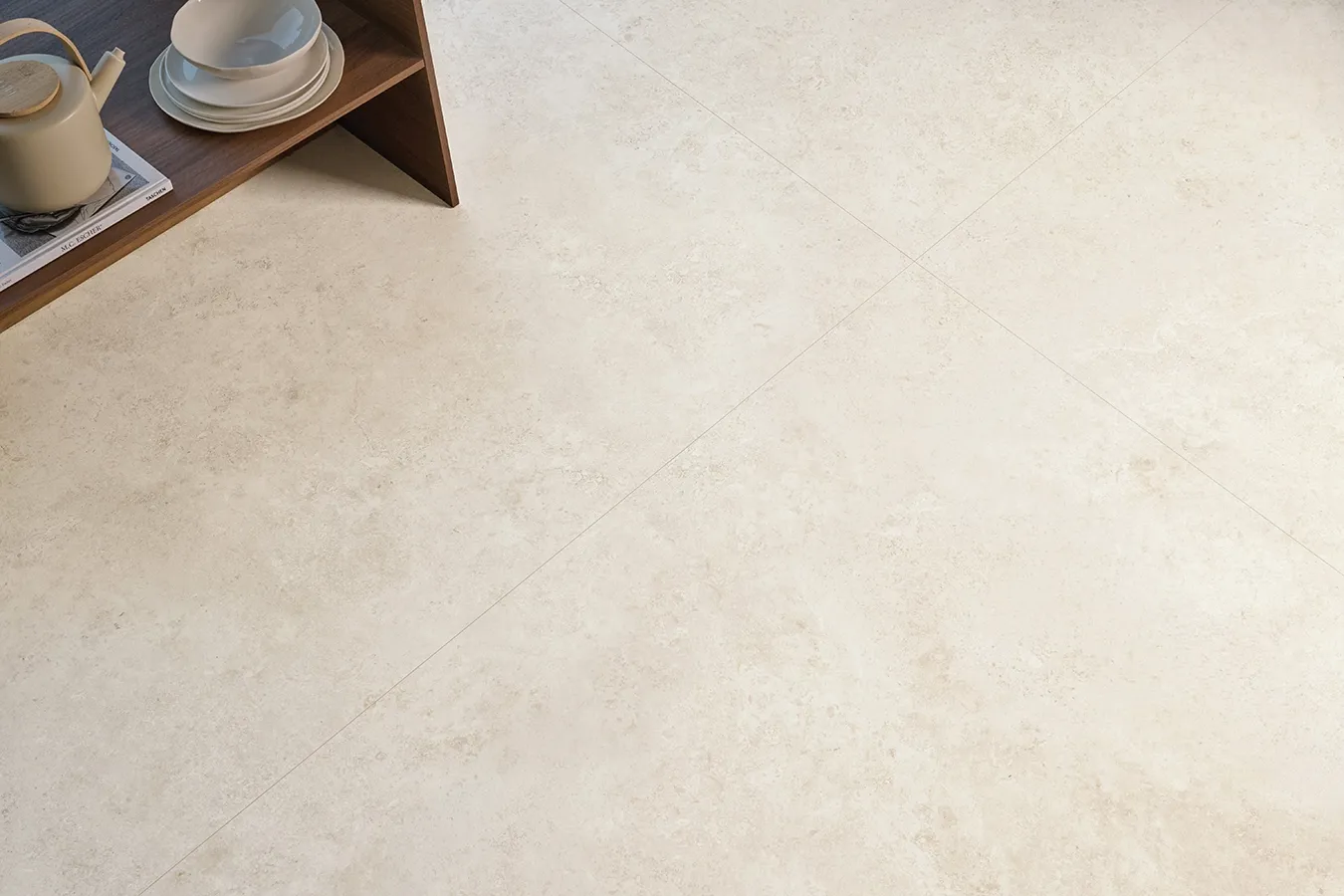
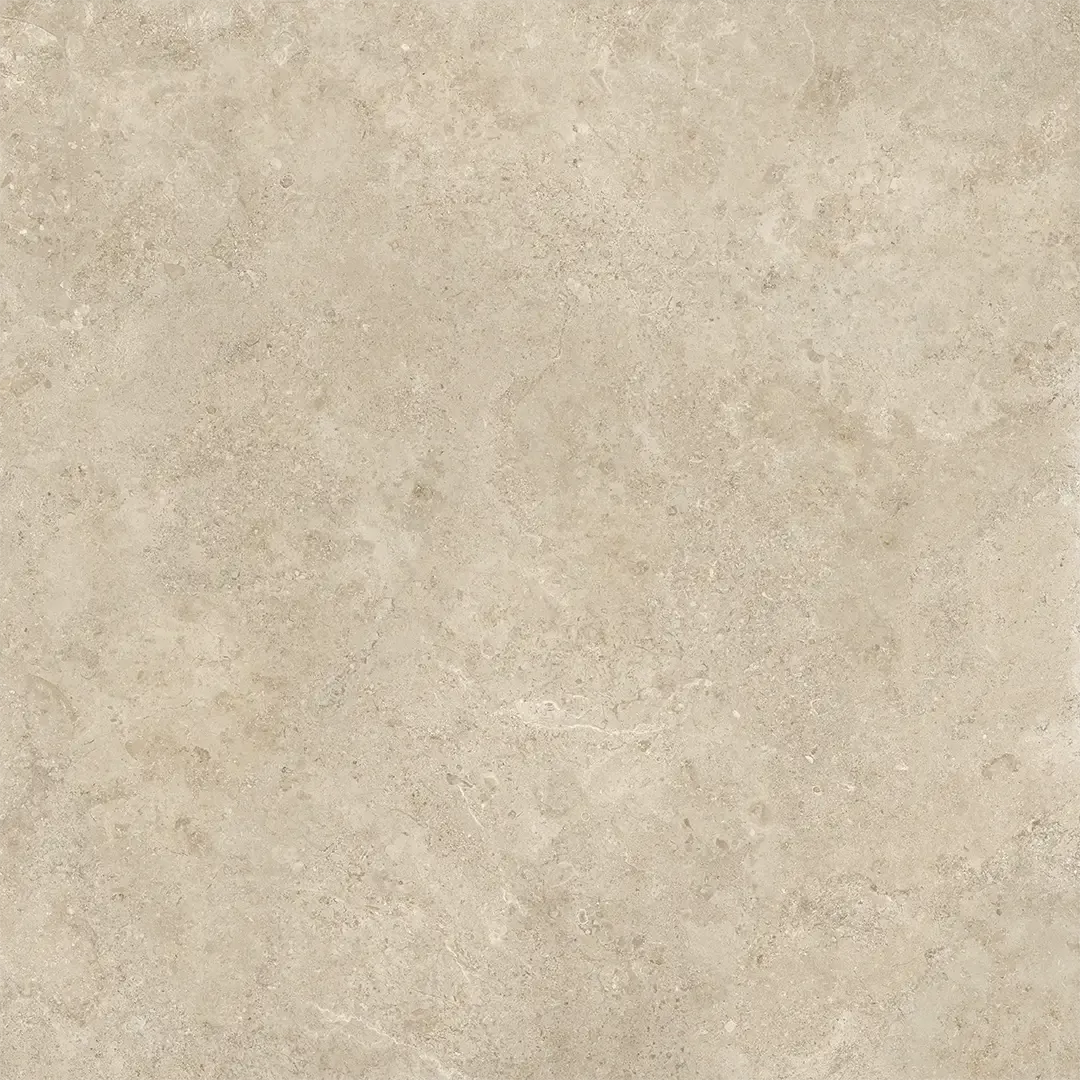
Ivory sandstone-look porcelain floor tiles in large format
Grace Lithos Ivory
Grace Lithos Ivory

Sandstone-look porcelain tile styles

Sandstone-look porcelain tiles span a broad range of design directions, from sun-bleached desert palettes to refined contemporary surfaces. Each style draws from a distinct aspect of sandstone’s geological character, allowing designers and homeowners to align the material with a specific spatial vision.

Desert-inspired sandstone-look tiles

Desert-inspired sandstone-look tiles emphasize deep ochres, warm ambers, and sun-bleached tawny tones that evoke the layered rock formations of arid landscapes. Their surface textures tend toward pronounced grain and visible sedimentary patterning, making them a strong choice for interiors that prioritize tactile warmth and a grounded, elemental aesthetic.

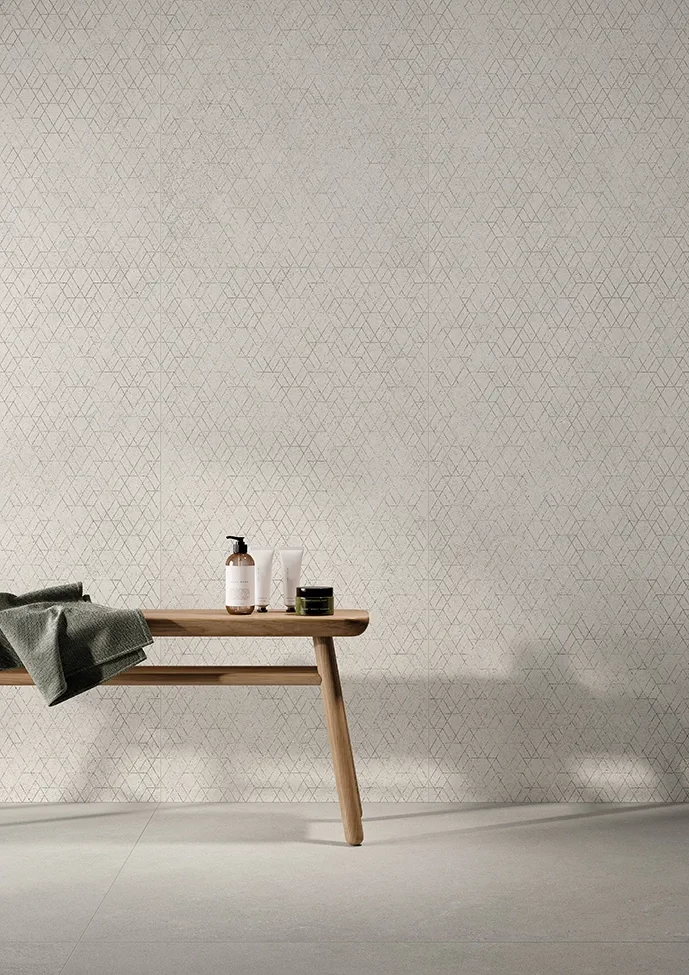
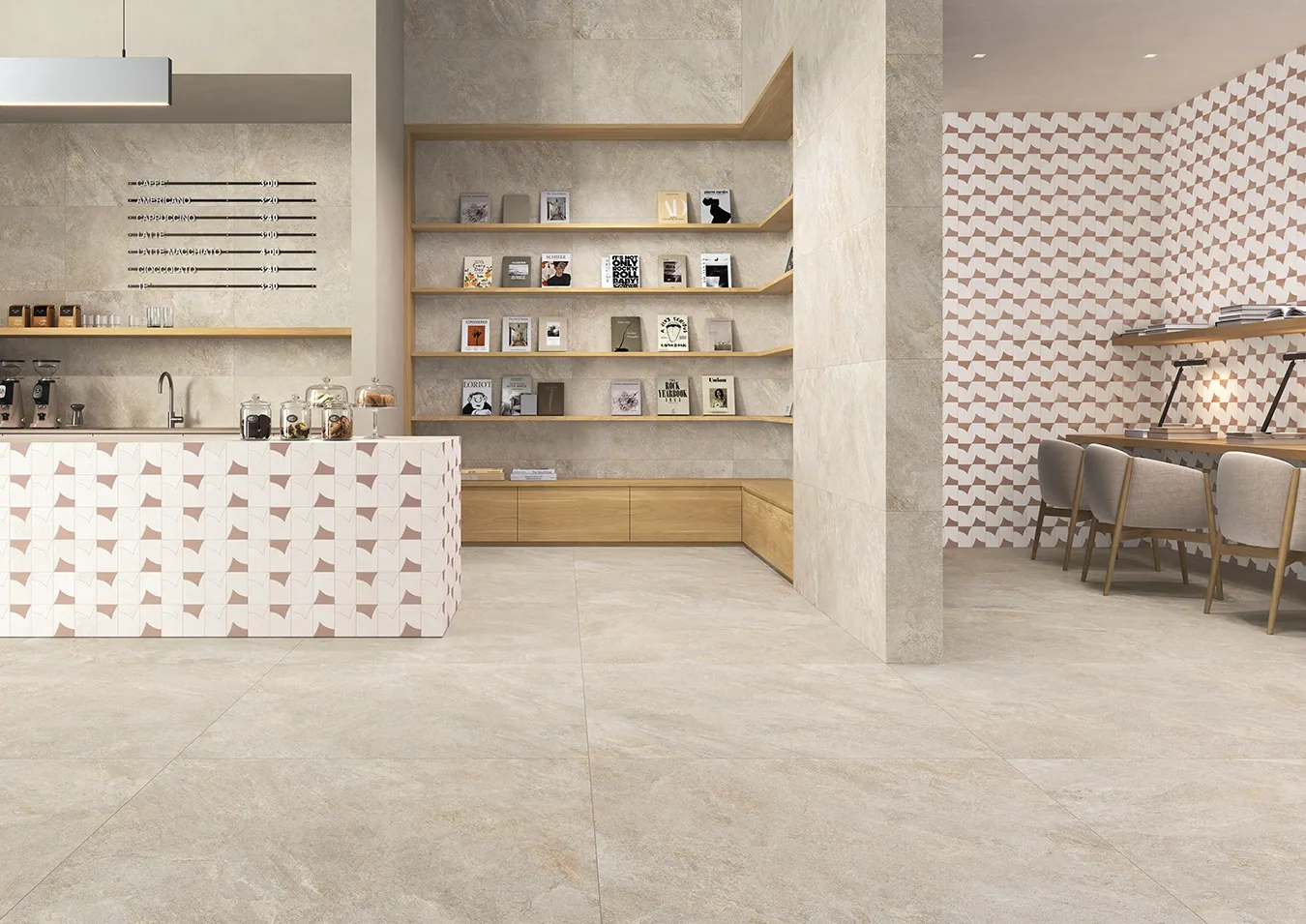
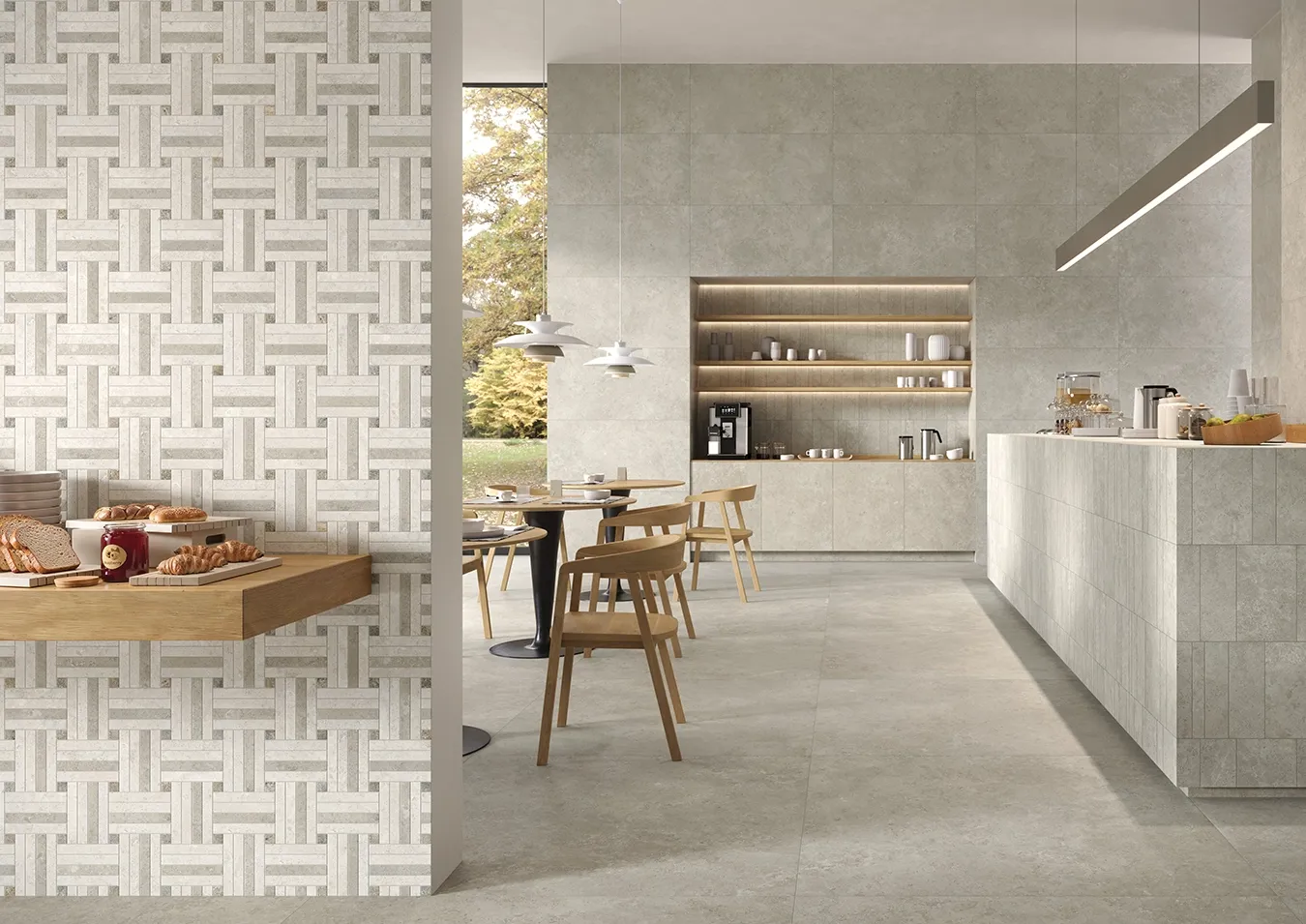
Light gray sandstone-look porcelain wall tiles with geometric surface pattern
Grace Silver
Grace Silver

Coastal sandstone-look tiles

Coastal sandstone-look tiles operate within a lighter, cooler register, favoring pale creams, soft grays, and bleached sandy tones that reflect the weathered character of shoreline stone. Their understated palette pairs naturally with natural linen, whitewashed timber, and open, airy spatial compositions.

Rustic sandstone-look tiles

Rustic sandstone-look tiles lean into the raw, unrefined quality of naturally weathered stone, with higher surface variation, coarser grain patterns, and deeper tonal contrasts. This style suits farmhouse, Mediterranean, and organic modern interiors where visible material character is a deliberate design choice.

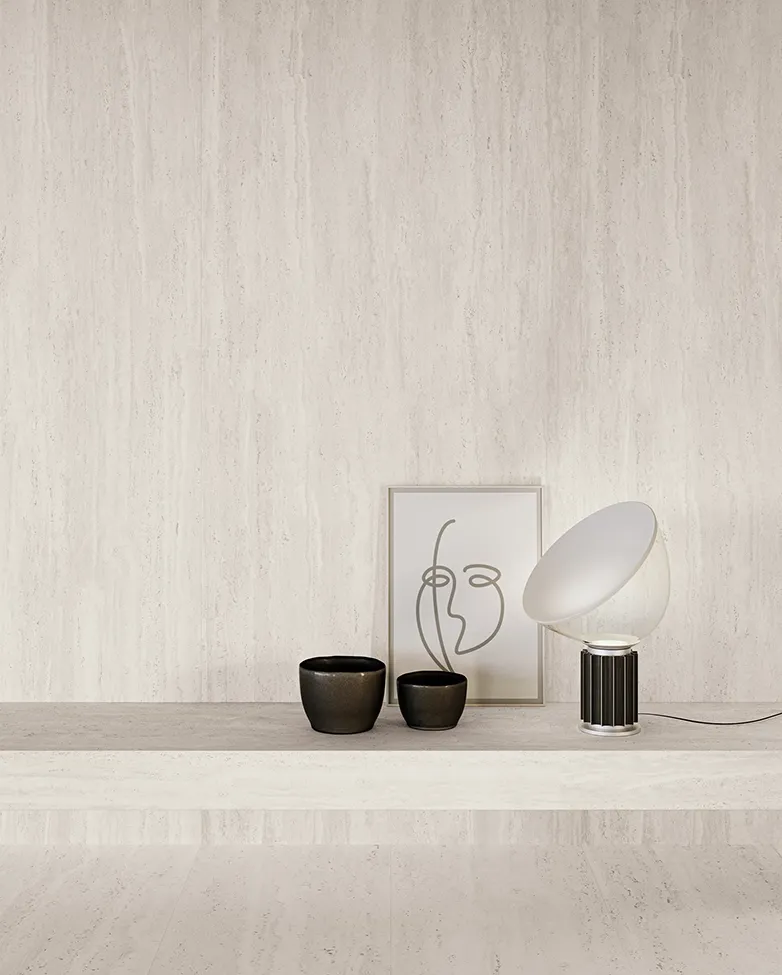
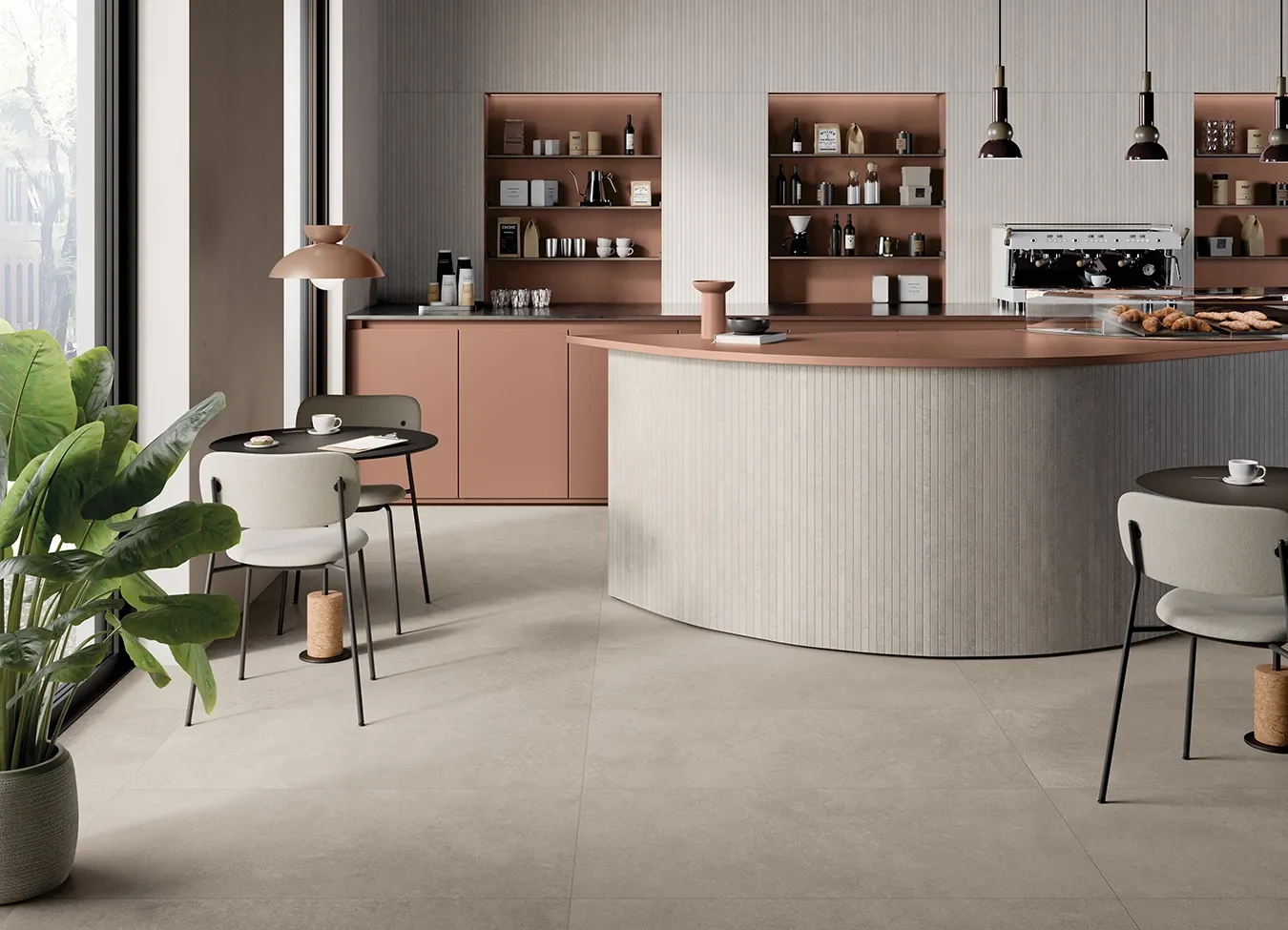
White sandstone-look porcelain wall tiles with fine vertical grain
Trevi White
Trevi White

Contemporary sandstone-look tiles

Contemporary sandstone-look tiles refine the sedimentary aesthetic into cleaner, more restrained surfaces, with tighter tonal ranges and subtler grain definition. They integrate seamlessly into minimalist and transitional interiors, delivering natural warmth without unnecessary visual complexity.

Outdoor sandstone-look pavers

Outdoor porcelain tiles in a sandstone look bring the warmth of sedimentary stone to patios, pool decks, outdoor kitchens, front porches, garden walkways, and courtyards, combining authentic visual character with the frost resistance, low water absorption, and structural performance that natural sandstone cannot reliably deliver. Specified as pavers at 3/4-inch (2 cm) thickness, they withstand heavy foot traffic, weather exposure, and freeze-thaw cycling season after season. Matching them to interior floor tiles in the same sandstone palette creates one continuous surface from entryway to patio.

Sandstone-look tile colors trending in 2026

Sandstone-look tile colors trending in 2026 reflect a broader design shift toward warm neutrals, sun-aged earths, and mineral-rich tones that bring geological depth into both residential and commercial interiors. The dominant palettes move decisively away from cool grays, favoring the iron-rich, sediment-layered warmth that defines authentic sandstone character:

  • Warm greiges and toasted creams: seeing increased demand across floor tile applications, versatile enough to read as both natural and contemporary

  • Deep ambers and ochres: seeing increased use on accent walls and feature surfaces where a bolder mineral presence is desired

  • Pale ivory and bleached sand tones: the defining palette for coastal and Scandinavian-influenced interiors, where light diffusion and spatial openness are the priority

Across all these palettes, the most sought-after tiles share one quality: multi-tonal shading within a single tile body, replicating the natural mineral deposit patterns of quarried sandstone. A tile visualizer previews how each sandstone palette reads in your specific space before you commit to a color. The surface finish chosen to carry that palette is equally critical to the final result.

Best finishes for sandstone-look porcelain tiles

The best finishes for sandstone-look porcelain tiles are those that reinforce the material’s natural, sedimentary character rather than competing with it. Reflective and polished surfaces work against the sandstone aesthetic, while matte and textured finishes reinforce it.


The following finishes best express the character of the category:

  • Natural R9: the standard choice for indoor floor and wall tile applications, delivering a soft, non-reflective surface that closely mirrors the appearance of freshly quarried stone

  • Natural R10: delivers certified traction where moisture is present, while maintaining the same understated matte quality as R9

  • Spazzolato R10: introduces a subtle brushed texture that deepens the sedimentary impression, making it particularly effective where material authenticity is the priority

  • Structured R11: the finish specified for pool decks, patios, outdoor kitchens, and interior wet areas including laundry rooms, mudrooms, garage floors, and utility spaces, delivering documented slip resistance through a three-dimensional surface texture that amplifies the tactile depth of the sandstone aesthetic

For how each finish performs across different environments, the ultimate guide to porcelain tile surface finishes covers the technical distinctions in full. Glossy and lappato finishes are best avoided in this category, as their reflective quality reads as inconsistent with the grounded, light-absorbing character of natural sandstone.

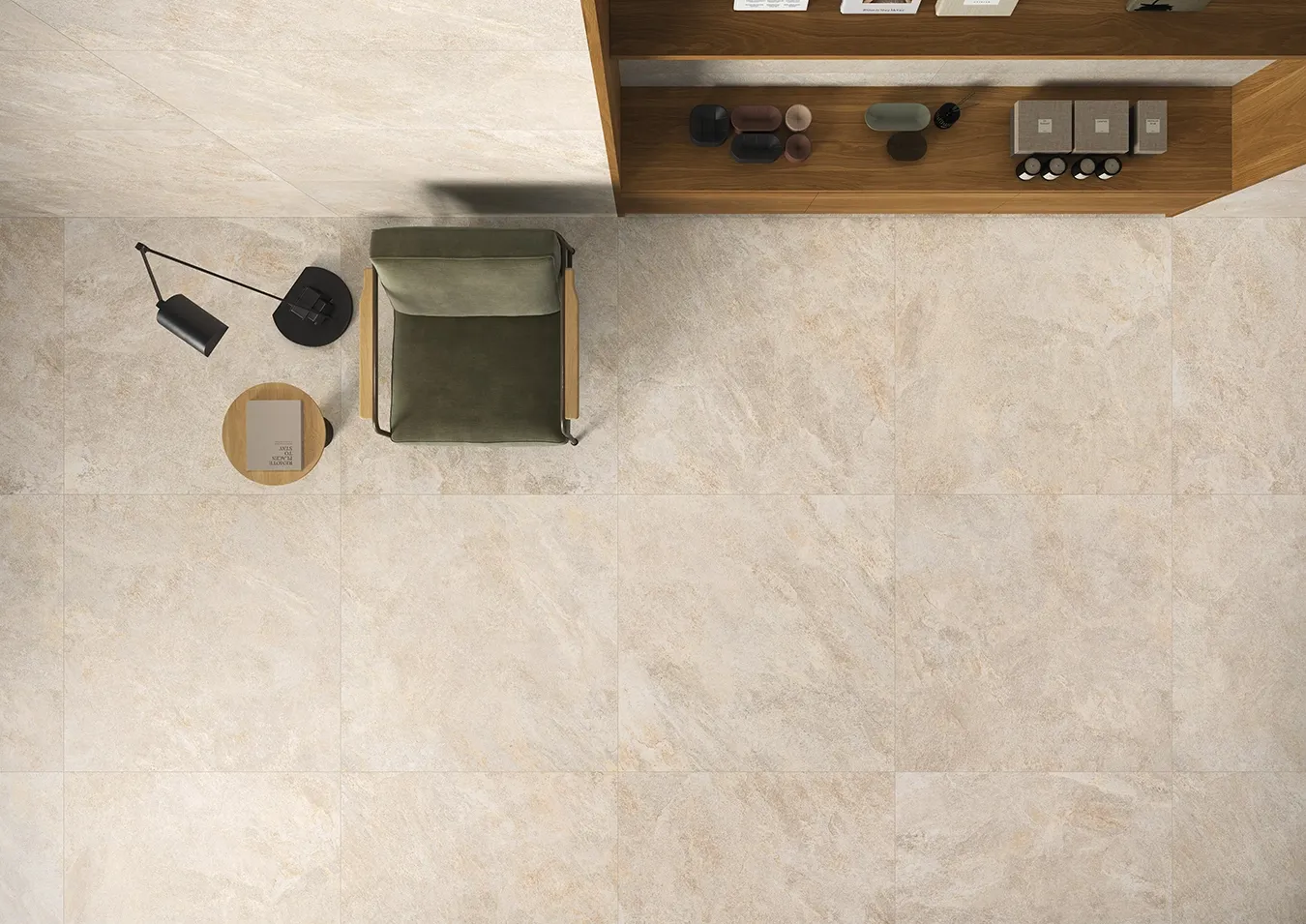
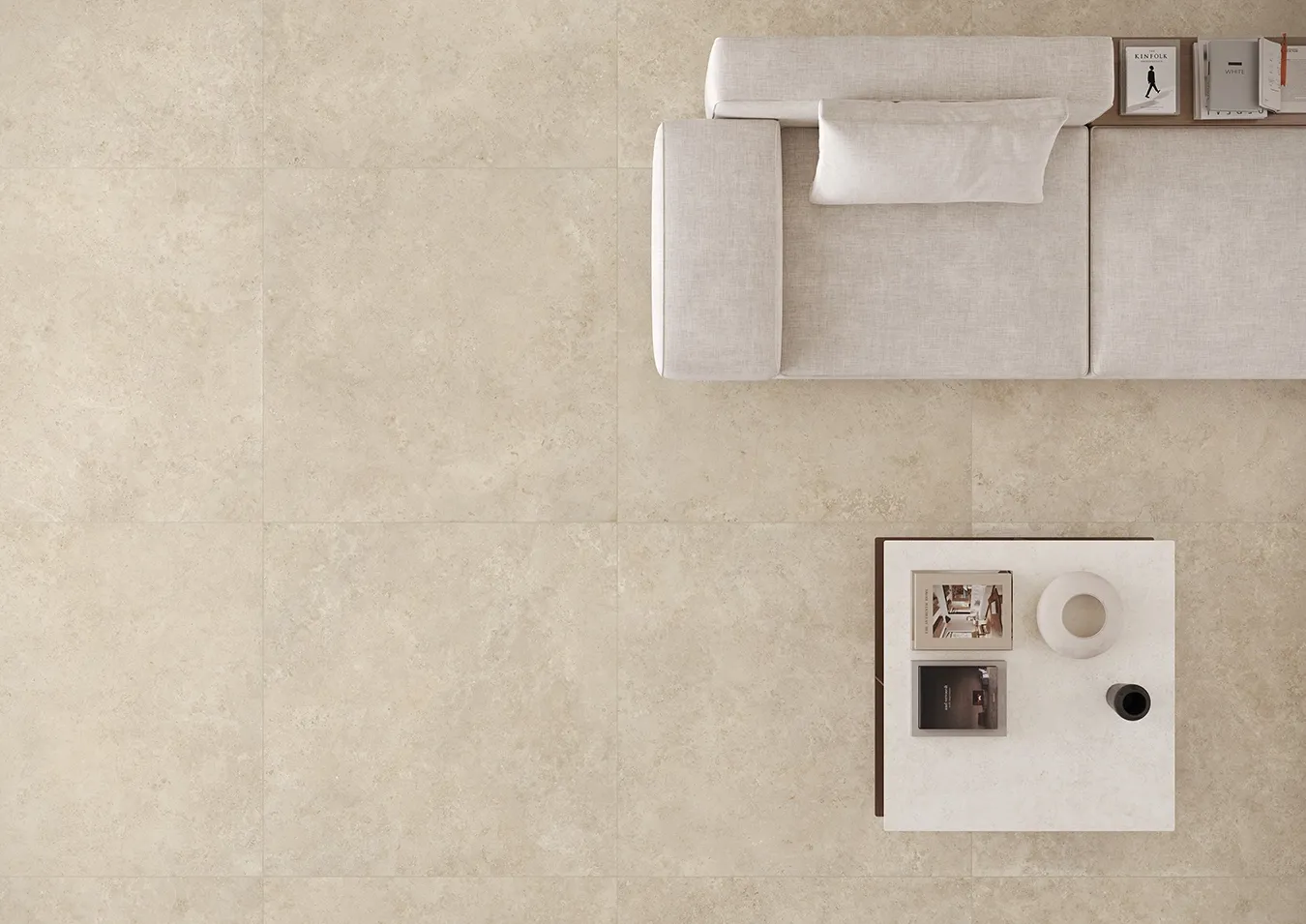
Living room with warm beige sandstone-look porcelain floor tiles in large format
Grace Fossil Beige
Grace Fossil Beige

Sandstone-look porcelain tiles for bathrooms, kitchens & living spaces

Sandstone-look porcelain tiles perform effectively across every interior zone of a home, from bathrooms, kitchens, and living rooms to the service spaces that see the heaviest daily use. In laundry rooms, mudrooms, and utility areas, the same earth-tone palette extends material continuity well beyond the primary rooms.

In bathrooms, lighter sandstone tones in ivory, pale cream, and warm gray create a spa-like atmosphere that feels both grounded and refined. Specifying R10-certified finishes across the full range of tiles for bathrooms combines that matte stone aesthetic with the documented slip resistance wet environments require. In kitchens, sandstone-look floor tiles in deeper ochres and toasted tans introduce warmth that balances the cooler surfaces of stone countertops and stainless steel fixtures. For living rooms, larger format surfaces in warm greige and bleached sand tones reinforce the biophilic, material-rich character that defines 2026’s most compelling residential interiors.

Large-format sandstone-look slabs for seamless design

Large-format porcelain tiles in a sandstone aesthetic create an uninterrupted sedimentary surface that reads as architecturally unified across open-plan spaces. Fewer grout lines allow the tonal variation and grain patterns of the tile to develop continuously across the floor or wall, replicating the visual language of a single expanse of quarried stone. Formats starting at 24x48 inches (60x120 cm) achieve this seamless quality.

Sandstone-look porcelain vs natural sandstone: pros & cons

Sandstone-look porcelain tiles and natural sandstone occupy the same aesthetic territory but differ significantly in technical performance, long-term maintenance, and installation demands. The comparison below covers the most relevant factors for residential and commercial decision-making.

Sandstone-look porcelain tiles:

  • <0.5% water absorption, requiring no sealing
  • Frost resistant and suitable for outdoor installation without special treatment
  • High stain resistance across all surface finishes
  • Consistent dimensional tolerances, simplifying installation
  • Available in large formats up to 48x110 inches (120x278 cm)
  • Superior abrasion resistance compared to natural stone

Natural sandstone:

  • Authentic geological variation that cannot be fully replicated digitally
  • Requires routine sealing to resist staining and moisture penetration
  • Susceptible to frost damage in cold climates without protective treatment
  • Significant variation in dimensional consistency between pieces
  • Limited in available format sizes
  • Softer surface that is more vulnerable to scratching and wear over time

For most residential and commercial applications, porcelain tiles deliver the visual character of natural sandstone with a technical performance profile that natural stone cannot match. Where the irreplaceable authenticity of quarried material is not the primary requirement, sandstone-look porcelain is the more practical and durable choice. Selecting the right tile within the category is the logical next step.

How to choose the right sandstone-look porcelain tile

The right sandstone-look porcelain tile is determined first by the surface finish, since finish governs both technical performance and how authentically the sedimentary aesthetic reads in a given environment. Matte and textured finishes are the only surfaces that genuinely honor the material’s geological character; anything more reflective pulls the aesthetic in a different direction entirely.

The next decision is format. Large-format tiles allow the grain patterns and tonal variation of the sandstone print to develop across a continuous surface, producing the kind of visual depth that mid-size formats cannot replicate. 

Color is the third decision, aligned with the room’s ambient light conditions: warm ochres and ambers intensify under warm artificial light, while pale creams and bleached sand tones perform best in naturally lit spaces. For rooms that receive direct sunlight through south-facing windows, lighter palettes prevent the surface from reading as visually heavy. With finish, format, and color resolved, the pattern in which the tiles are laid becomes the final variable.

Installation patterns that enhance sandstone-look tiles

Stack bond, the 1/3 offset brick pattern, and the diagonal lay are the three installation patterns that enhance sandstone-look porcelain tiles, each highlighting a different dimension of the material’s geological character:

  • Stack bond: aligns the grain lines of adjacent tiles into a continuous horizontal register, reinforcing the natural stratigraphy of sedimentary stone and lending contemporary and minimalist interiors a quiet architectural coherence

  • 1/3 offset brick pattern: breaks tile alignment intentionally, a standard US installation convention, introducing a more organic, irregular rhythm that suits rustic and desert-inspired styles particularly well

  • Diagonal lay: rotates the tile 45 degrees, expanding the perceived width of narrower spaces and adding a dynamic quality that pairs particularly well with pale coastal sandstone palettes

Maintenance & cleaning tips for sandstone-look porcelain tiles

Sandstone-look porcelain tiles are among the lowest-maintenance floor and wall surfaces available, requiring none of the routine sealing, conditioning, or specialized treatment that natural sandstone demands. Their <0.5% water absorption and vitrified surface prevent liquids, oils, and staining agents from penetrating the tile body, keeping daily upkeep straightforward.

For routine cleaning, the following practices keep sandstone-look porcelain surfaces in optimal condition:

  • Daily maintenance: sweep or dry-mop to remove loose particles and surface dust, which act as fine abrasives under foot traffic

  • Weekly cleaning: mop with warm water and a pH-neutral detergent, avoiding acidic or bleach-based cleaners, which degrade grout joints

  • Textured and structured finishes: use a soft-bristle brush periodically to clear any residue from surface recesses, particularly in high-traffic areas or outdoor installations

  • Outdoor pavers: rinse regularly with clean water and treat with a mild alkaline cleaner seasonally to remove organic buildup

  • Grout joints: apply a grout sealer after installation and reseal periodically, since grout remains the most porous element of any tiled surface

From post-installation grout removal to routine upkeep and the correct detergents for each surface, the complete cleaning guide for porcelain tiles covers every stage of maintenance in practical detail. One of the most consistent advantages of sandstone-look porcelain over natural stone is that its appearance requires very little effort to maintain.

Frequently asked questions about sandstone-look porcelain tiles

Are sandstone-look tiles durable?

Sandstone-look porcelain tiles withstand abrasion at levels natural sandstone does not reach, with surface wear graded under ISO 10545-7 and PEI classifications that qualify them for residential and commercial foot traffic. Their vitrified body delivers water absorption below 0.5% per ISO 10545-3, documented stain resistance, and dimensional stability under heavy traffic loads and freeze-thaw cycling.

Do sandstone-look tiles look realistic?

Sandstone-look porcelain tiles read convincingly as authentic sedimentary stone because digital printing reproduces the grain structure, tonal variation, and cross-bedding detail of quarried material across multiple non-repeating tile faces. Premium collections pair that print with a synchronized surface texture, so the grain the eye registers is also the grain the hand and foot perceive.

Are sandstone-look tiles good for bathrooms?

Sandstone-look tiles are specified for bathrooms in an R10-certified finish, which combines the matte stone aesthetic with the documented slip resistance wet environments require. US specifiers confirm performance against a DCOF of 0.42 or higher per ANSI A137.1. Lighter ivory and warm cream tones are particularly effective for creating a spa-like atmosphere.

Are sandstone-look tiles good for outdoor spaces?

Sandstone-look tiles are specified for outdoor spaces in a Structured R11 finish and a minimum 3/4-inch (2 cm) paver thickness. Their frost resistance and <0.5% water absorption make them a more reliable outdoor surface than natural sandstone.

Do sandstone-look tiles require sealing?

Sandstone-look porcelain tiles do not require sealing. Their non-porous vitrified surface resists moisture and staining without any protective treatment, unlike natural sandstone, which requires routine sealing to maintain its appearance and integrity.

Are sandstone-look tiles slippery?

Sandstone-look tiles deliver documented slip resistance when specified in the correct finish for the intended environment. Natural R10, Spazzolato R10, and Structured R11 finishes each carry documented ratings for wet interior and exterior applications. US specifiers verify performance against DCOF values per ANSI A137.1, where 0.42 is the minimum for level interior floors expected to be walked on while wet.

You might also be interested in