R10 porcelain tiles: medium‑grip slip resistance explained for homeowners & professional

R10 porcelain tiles: medium‑grip slip resistance explained for homeowners & professional

What is an R10 slip-resistant tile?

An R10 slip-resistant tile is a porcelain tile classified for medium grip under the DIN 51130 ramp test, achieving a slip-resistance angle between 10° and 19°. This classification places R10 directly above R9, making it the standard choice for indoor wet areas where moisture is consistently present, such as bathrooms, kitchens, and light commercial spaces.

The rating is determined by a controlled test in which workers wearing safety boots walk on an oil-wetted tile surface at increasing angles. R10 tiles deliver enough traction for everyday indoor use without the coarse texture required by outdoor-grade finishes.

When R10 slip resistance is recommended indoors

R10 slip resistance is recommended in any indoor space where water, humidity, or cleaning products regularly reach the floor. Common residential applications include:

  • Bathrooms and walk-in showers

  • Kitchen floors

  • Laundry rooms, mudrooms, and garage floors

In commercial settings, R10 is the baseline requirement for:

  • Restrooms and locker rooms

  • Break rooms and bars

  • Office corridors and high-traffic areas subject to wet cleaning

R9 is sufficient for dry spaces such as bedrooms and hallways, but falls short where wet conditions are predictable. R10 bridges that gap, delivering certified grip without compromising the clean, refined aesthetics that interior spaces demand.

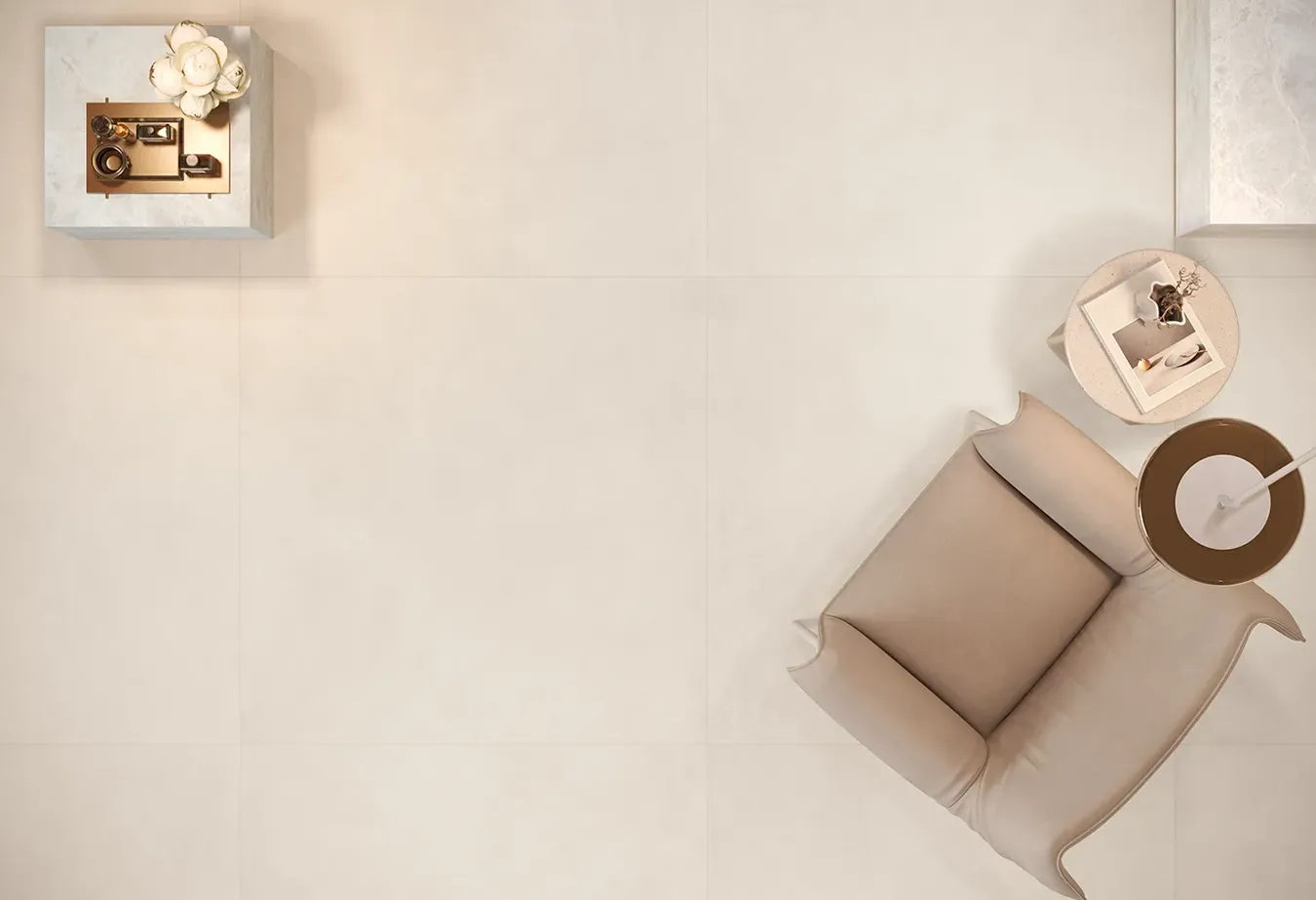
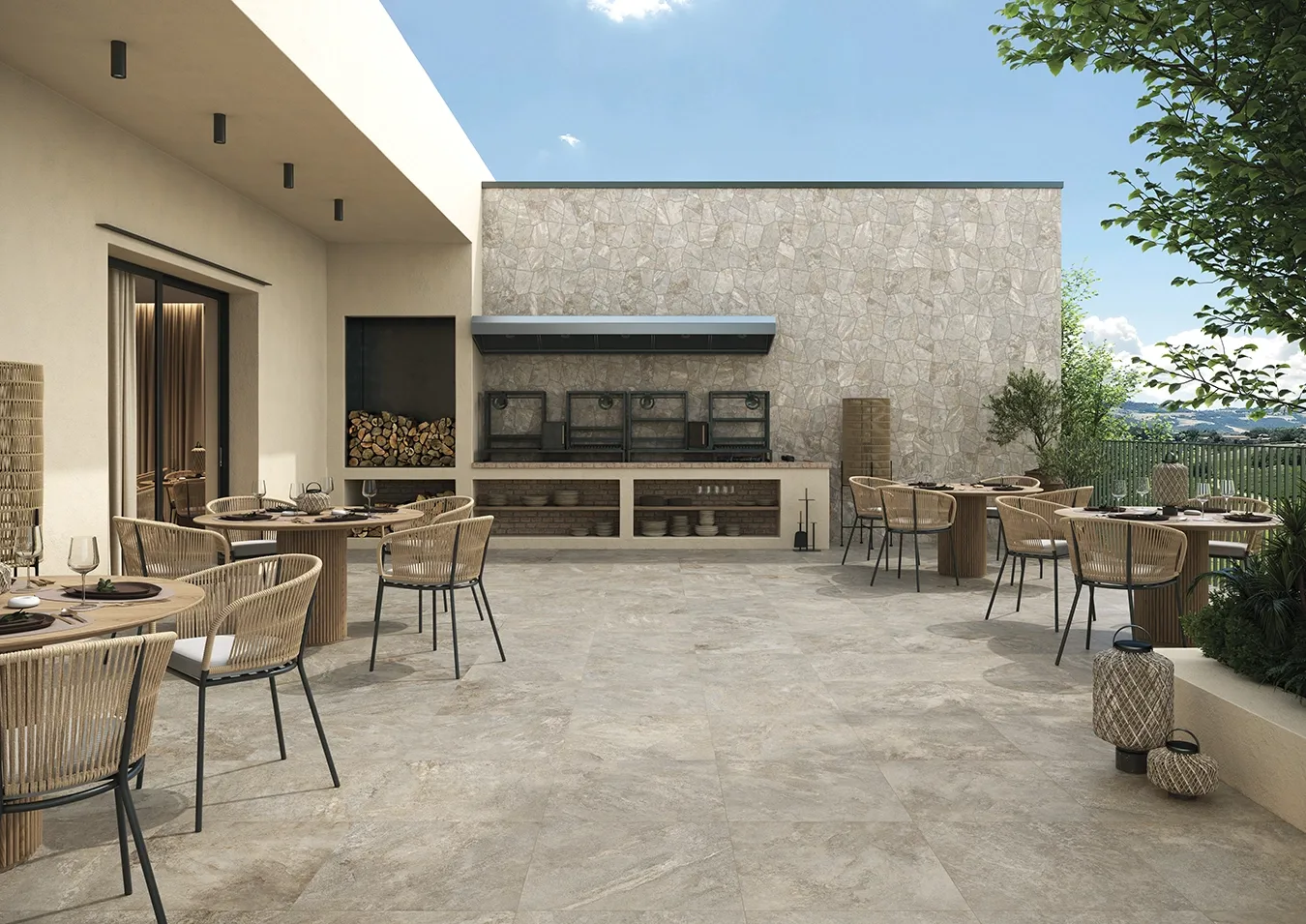
R10 concrete look porcelain tiles in silver tone on a contemporary outdoor terrace
Street Milano Silver
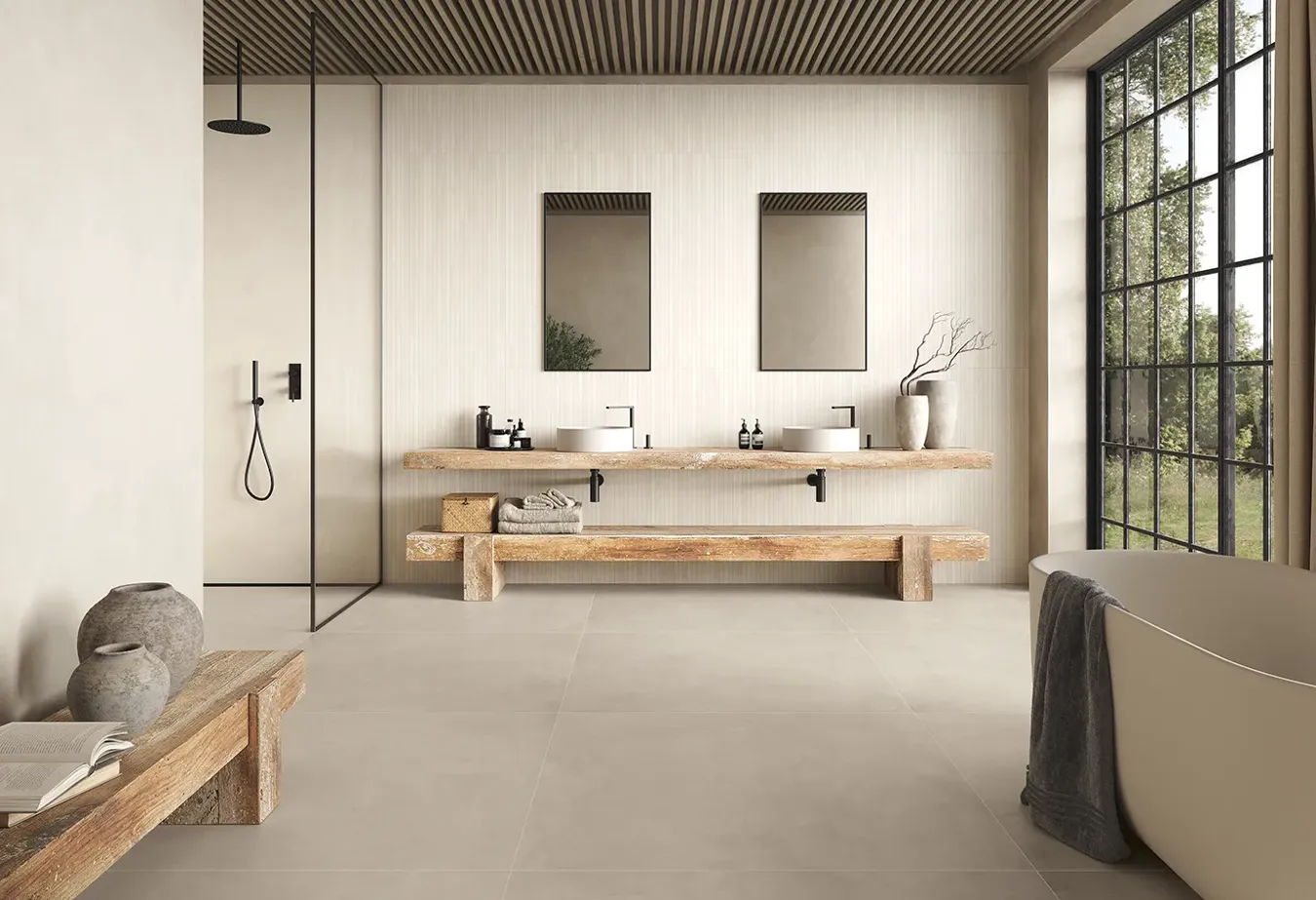
R10 concrete look porcelain tiles in clay tone on a modern bathroom floor
Moov Up Clay
Moov Up Clay

Best R10 tile styles for indoor wet areas

The best R10 tile styles for indoor wet areas pair the right finish with the right visual effect, ensuring both safety and a coherent design. Several combinations work particularly well:

  • Stone look porcelain tiles in Spazzolato R10 gain an extra layer of tactile authenticity from the lightly brushed surface, reinforcing the natural character of the material

  • Concrete look porcelain tiles pair naturally with a Natural R10 finish, where the smooth extra-matte surface complements the raw, understated aesthetic of cement-inspired effects

  • Grip R10 suits spaces that prioritize safety without surface texture, delivering slip resistance through applied grit on a visually clean, smooth finish

Benefits of R10 porcelain tiles

R10 porcelain tiles offer a reliable combination of safety, durability, and design flexibility that makes them one of the most versatile options for indoor wet areas. Their key advantages include:

  • Certified slip resistance for environments where water and moisture are consistently present, meeting medium-grip requirements under the DIN 51130 standard

  • Aesthetic range across multiple porcelain tile finishes, from smooth matte to lightly textured and structured surfaces, without compromising on grip

  • Easy maintenance, as the non-porous vitrified surface resists staining, prevents bacteria buildup, and can be cleaned with standard neutral detergents

  • Compatibility with radiant floor heating, thanks to the low thermal resistance and excellent conductivity of porcelain tile

  • Long-term durability, with resistance to abrasion, frost, household chemicals, and heavy foot traffic built into the material itself

These properties make R10 suitable for both residential and commercial applications, covering a wide spectrum of design and performance needs within a single slip-resistance rating. That versatility, however, has defined boundaries, and understanding where R10 reaches its limits is equally important before making a final specification.

Drawbacks and considerations before choosing R10

R10 porcelain tiles perform reliably across a broad range of indoor wet environments, yet four specific limitations define the boundaries of their appropriate use. A few considerations are worth addressing before specifying them:

  • Not suited for outdoor use: patios, pool decks, outdoor kitchens, front porches, garden walkways, entryways, and courtyards all require at least an R11 rating to meet documented safety requirements in open-air wet conditions

  • Insufficient for barefoot wet areas: spaces such as pool decks and spa environments require a barefoot slip-resistance rating of B or C under EN 16165, which R10 does not cover

  • Textured surfaces require more attention during cleaning: structured R10 finishes, while easy to maintain overall, demand slightly more care than smooth surfaces to prevent residue from settling into the surface texture over time

  • May fall short in high-risk commercial environments: industrial kitchens and food processing areas typically require R11 or higher for compliance with safety regulations

Understanding these limitations helps clarify whether R10 is the appropriate specification or whether a higher classification such as R11 tiles is the more suitable option.

Safety standards for R10 tiles

R10 porcelain tiles are evaluated against two primary safety standards: the European DIN 51130 ramp test and the US ANSI A326.3 dynamic coefficient of friction (DCOF) protocol. Both confirm certified traction under wet conditions and together provide a reliable framework for specifying slip-resistant floor tiles in residential and commercial interiors.

DIN 51130 (R-ratings) explained

DIN 51130 is the European standard used to classify slip resistance for floors walked on with footwear under oil‑wet conditions. The test is straightforward: a person walks on an oil‑covered tile surface, which is gradually tilted to a steeper angle. The point at which slipping occurs determines the R rating. R10 corresponds to an angle between 10° and 19°, placing it in the medium-grip category.

In the US, slip resistance is measured differently. The ANSI A326.3 standard uses a device called a BOT-3000E tribometer to calculate the dynamic coefficient of friction (DCOF) on a wet surface. A result above 0.42 confirms the tile is certified for interior wet environments. R10 porcelain tiles certified under DIN 51130 perform above this 0.42 DCOF threshold, making them compliant with both systems.

In practical terms, a tile carrying an R10 rating and a DCOF above 0.42 is certified for wet indoor floors under both European and US standards.

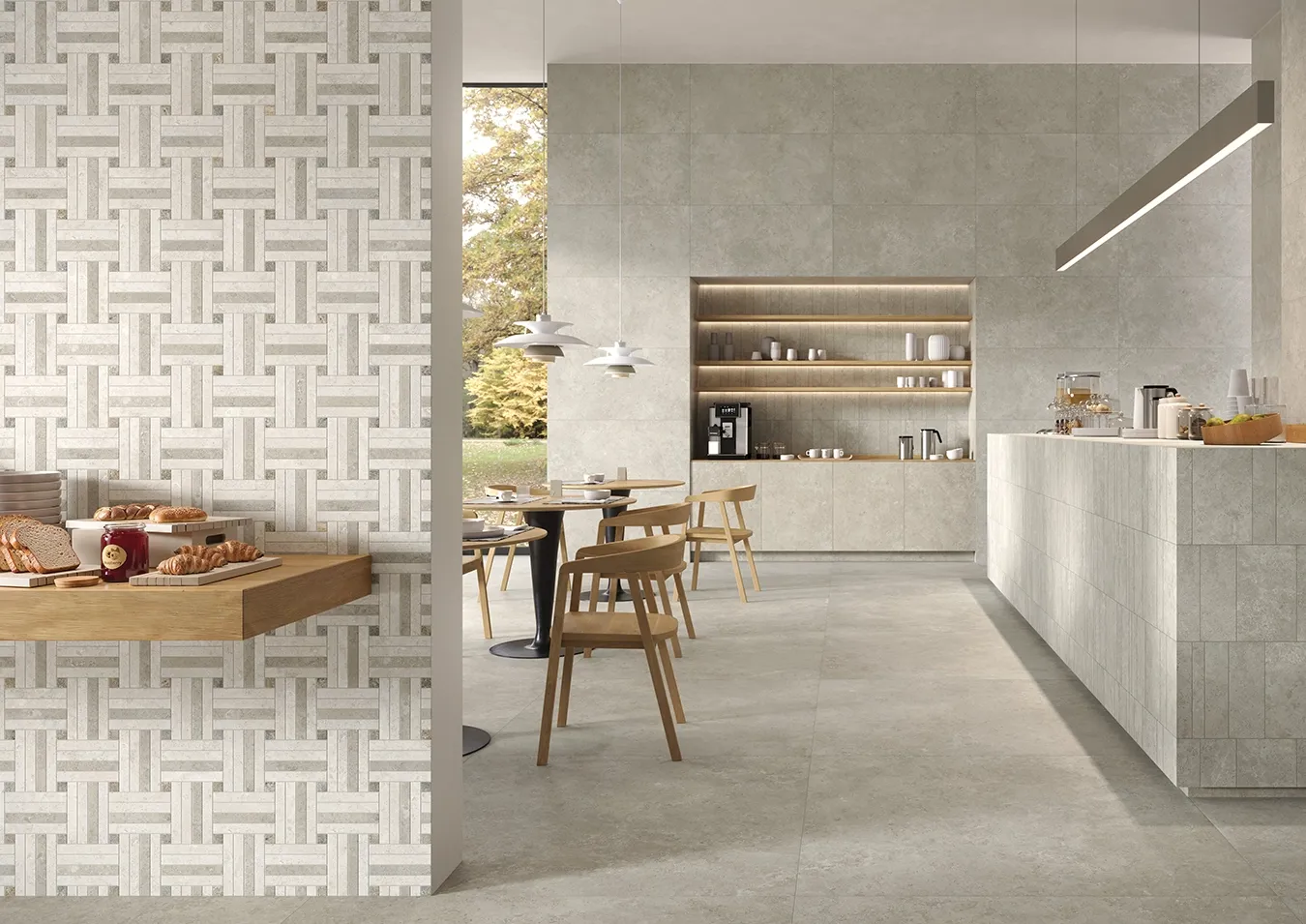
R10 stone look porcelain tiles in mixed gray and brown tones in a residential interior
Pietra di Lavis
Percorsi Smart pietra di lavis
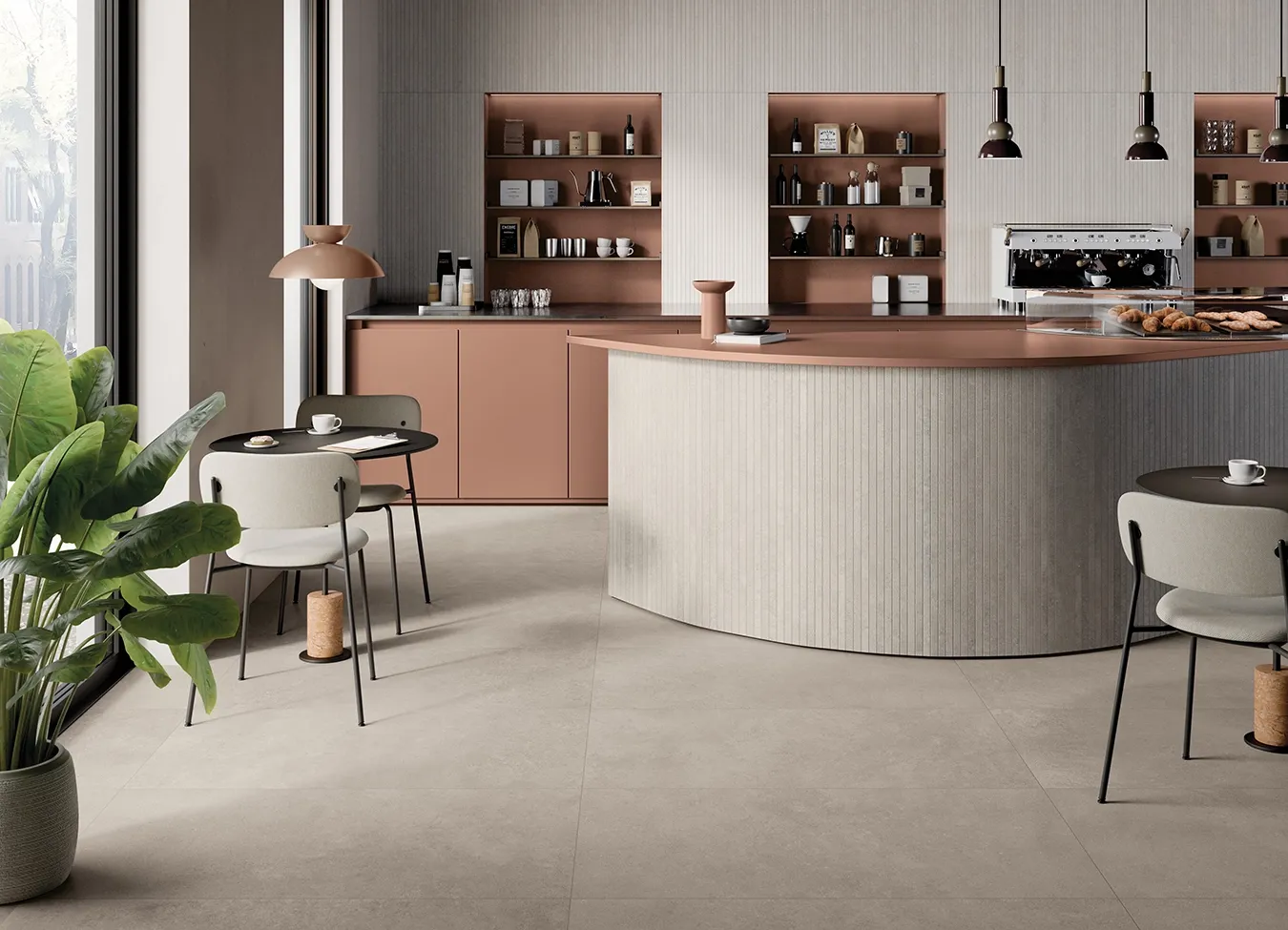
R10 limestone look porcelain tiles in beige tone on the floor of a contemporary dining room
Grace Beige
Grace Beige

Best places to use R10 porcelain tiles

R10 porcelain tiles are the right choice for any indoor space where the floor is regularly exposed to water, moisture, or cleaning products. The most suitable applications include:

  • Bathrooms: R10-rated bathroom floor tiles provide reliable grip in walk-in showers, around bathtubs, and in open shower areas where the floor stays damp

  • Kitchens: porcelain tiles for kitchen floors benefit from R10's combination of slip resistance, stain resistance, and easy cleaning in a high-use environment

  • Laundry rooms, mudrooms, and garage floors: areas subject to water splashes, tracked-in moisture, and frequent mopping, where a smooth, hygienic, and durable surface is essential

  • Commercial restrooms and locker rooms: spaces that require certified slip resistance under regular wet-cleaning maintenance routines

  • Office floors and break rooms: light commercial environments where spills and cleaning cycles make medium grip a practical baseline requirement

R10 is not recommended for outdoor installations or barefoot wet areas such as pool surrounds, where higher-rated slip-resistant tiles are required.

R10 vs other slip-resistance ratings

R10 occupies the medium-grip tier of the DIN 51130 scale, positioned directly above R9 for dry interior spaces and below R11 for high-demand outdoor and industrial environments. Knowing how these ratings compare against one another makes it straightforward to specify the right tile for any given application.

R10 vs R9: when medium grip is needed

R9 is the standard finish for dry indoor spaces such as living rooms, bedrooms, and hallways, where moisture on the floor is not a regular occurrence. R10 becomes necessary when water exposure is consistent and predictable. Bathrooms, kitchens, and commercial wet areas all fall into this category. Choosing R9 in these environments creates a genuine safety risk, as the surface offers insufficient grip when wet.

R10 vs R11: comfort vs traction

R11 tiles provide high grip through a more pronounced three-dimensional surface texture, making them the preferred choice for patios, pool decks, outdoor kitchens, front porches, garden walkways, and courtyards. Indoors, however, that same texture can feel uncomfortable underfoot in barefoot areas and can make routine cleaning more demanding. R10 delivers the right balance for indoor wet applications, providing certified slip resistance without the coarser feel of R11 tiles. The step up to R11 is only necessary indoors in exceptional circumstances, such as commercial kitchens or industrial environments with specific safety requirements.

How to choose the right R10 tile

Choosing the right R10 tile requires evaluating three factors in sequence: the safety requirements of the space, the conditions it will be exposed to, and the aesthetic direction of the project.

Evaluate slip-resistance needs

Start by confirming that R10 is the appropriate rating for the intended use:

  • Dry indoor spaces such as living rooms and bedrooms: R9 is sufficient

  • Indoor wet areas in residential and light commercial settings: R10 is the correct specification

  • Outdoor areas such as patios, pool decks, outdoor kitchens, front porches, and garden walkways: R11 or higher is required

  • Barefoot wet areas such as spa environments: verify a barefoot rating of B or C under EN 16165

Consider water exposure and foot-traffic patterns

The intensity of water exposure and the volume of foot traffic both influence which R10 finish performs best. High-traffic wet areas such as commercial restrooms benefit from Grip R10, which prioritizes safety on a smooth, easy-to-clean surface. Residential bathrooms and kitchens are well served by Natural R10 or Spazzolato R10. Tile thickness is also worth considering: 3/8-inch (9 mm) is the standard for most indoor floor tiles, while renovation projects may benefit from a thinner profile laid directly over existing floors.

Match style to interior design goals

The finish is as much a design decision as it is a technical one. Matte and ultra-matte surfaces suit contemporary and minimalist interiors, while lightly textured finishes bring warmth and depth to natural or transitional schemes. Thinking about larger format tiles early in the process helps define the perceived scale of the room, as fewer grout lines create a cleaner, more seamless result. From that point, tile and grout color combinations determine whether the layout reads as a continuous surface or as a deliberate pattern, giving the design its final character.

Selecting the right tile is only part of the process. How it is installed and maintained over time determines whether that performance is sustained.

Maintenance, cleaning, and installation tips for R10 tiles

R10 porcelain tiles are low-maintenance by nature, but a few consistent habits keep them performing well over time.

Cleaning:

  • Smooth R10 surfaces such as Natural R10 and Grip R10 can be cleaned with warm water and a neutral pH detergent

  • Structured R10 finishes benefit from a soft-bristle brush to prevent residue from settling into the surface texture

  • Avoid acidic or abrasive cleaners, as they can degrade the surface finish over time

For a complete routine, refer to our detailed guide on how to clean and maintain porcelain tiles.

Installation:

  • Use a polymer-modified thin-set appropriate for the tile format and subbase type

  • Ensure the subbase is flat to within 1/8 inch (3mm) per 10 feet (3m) for large format tiles, as R10 structured surfaces can accentuate any unevenness beneath

  • Back-buttering is recommended for tiles above 15 inches (38 cm) on any side to ensure full coverage and adhesion

  • Allow adequate curing time before grouting and exposing the floor to foot traffic

For format-specific guidance, our porcelain tile installation guide covers subbase preparation, layout planning, and movement joint requirements in full detail.

Frequently asked questions about R10 tiles

Is R10 good for shower floors?

R10 is a suitable rating for shower floors in residential settings, provided the tile also carries a barefoot wet rating of B or C under EN 16165. This dual certification ensures the surface performs safely both with footwear and when walked on barefoot in wet conditions.

Is R10 slippery when wet?

R10 tiles are not slippery when wet under typical indoor conditions. The medium-grip classification is specifically designed for surfaces exposed to moisture, and tiles meeting DCOF above 0.42 are certified safe for interior wet environments under ANSI A326.3.

Can R10 tiles be used outdoors?

R10 tiles are not recommended for outdoor use. Exposed areas such as balcony flooring, patios, and pool surrounds require a minimum R11 rating to provide adequate grip in open-air wet conditions.

Are R10 tiles easy to clean?

R10 tiles are easy to clean. Smooth finishes such as Natural R10 and Grip R10 require only warm water and a neutral detergent. Structured R10 surfaces require slightly more attention, as a soft-bristle brush helps remove residue from the texture.

What is the difference between R10 and R11?

The difference between R10 and R11 is the level of grip and surface texture. R10 provides medium grip suitable for indoor wet areas, while R11 tiles offer high grip through a more pronounced texture designed for outdoor and high-risk environments.

Do R10 tiles feel uncomfortable underfoot?

R10 tiles do not feel uncomfortable underfoot in everyday use. R10 finishes range from smooth to lightly textured, making them comfortable for daily use in bare feet or with footwear in residential and commercial spaces.

Is R10 good for kitchen floors?

R10 is an excellent choice for kitchen floors. Porcelain tiles for kitchen use benefit from R10's certified grip against spills, combined with the stain resistance, easy maintenance, and durability that porcelain tile provides as a material.

You might also be interested in