R9 tiles: low‑grip surfaces explained for homeowners and professionals

R9 tiles: low‑grip surfaces explained for homeowners and professionals

What does R9 mean in tile slip ratings?

R9 is a slip-resistance classification defined by the German DIN 51130 standard, indicating that a tile surface provides normal grip under shoe contact on an oil-wetted ramp inclined between 6° and 10°. This rating sits at the entry level of the R-scale, which runs from R9 through R12, with each step representing a progressively higher degree of traction. For dry or low‑moisture interior environments, where aesthetics and ease of maintenance take priority over maximum traction, R9 is the standard choice. Areas with consistent moisture exposure, such as shower floors, pool decks, mudrooms, and laundry rooms, call for higher ratings such as R10 or R11, a distinction covered in detail later in this guide.

Key characteristics of R9 tiles

R9 porcelain tiles feature a smooth or lightly textured matte surface that absorbs and diffuses light rather than reflecting it, producing a clean, understated appearance that suits contemporary interiors. This surface profile is what places them in the normal grip category under DIN 51130, making them the go-to choice for indoor spaces where dry or low-moisture conditions are the norm.

The defining characteristics of an R9 surface are:

  • Smooth or lightly textured finish with a soft, matte appearance

  • Normal grip rating: oil-wetted ramp angle between 6° and 10°

  • Optimized for dry or low‑moisture interior environments 

  • Light‑diffusing surface that helps conceal minor imperfections and everyday wear 

  • Easy to clean, with no raised texture to trap dirt or residue

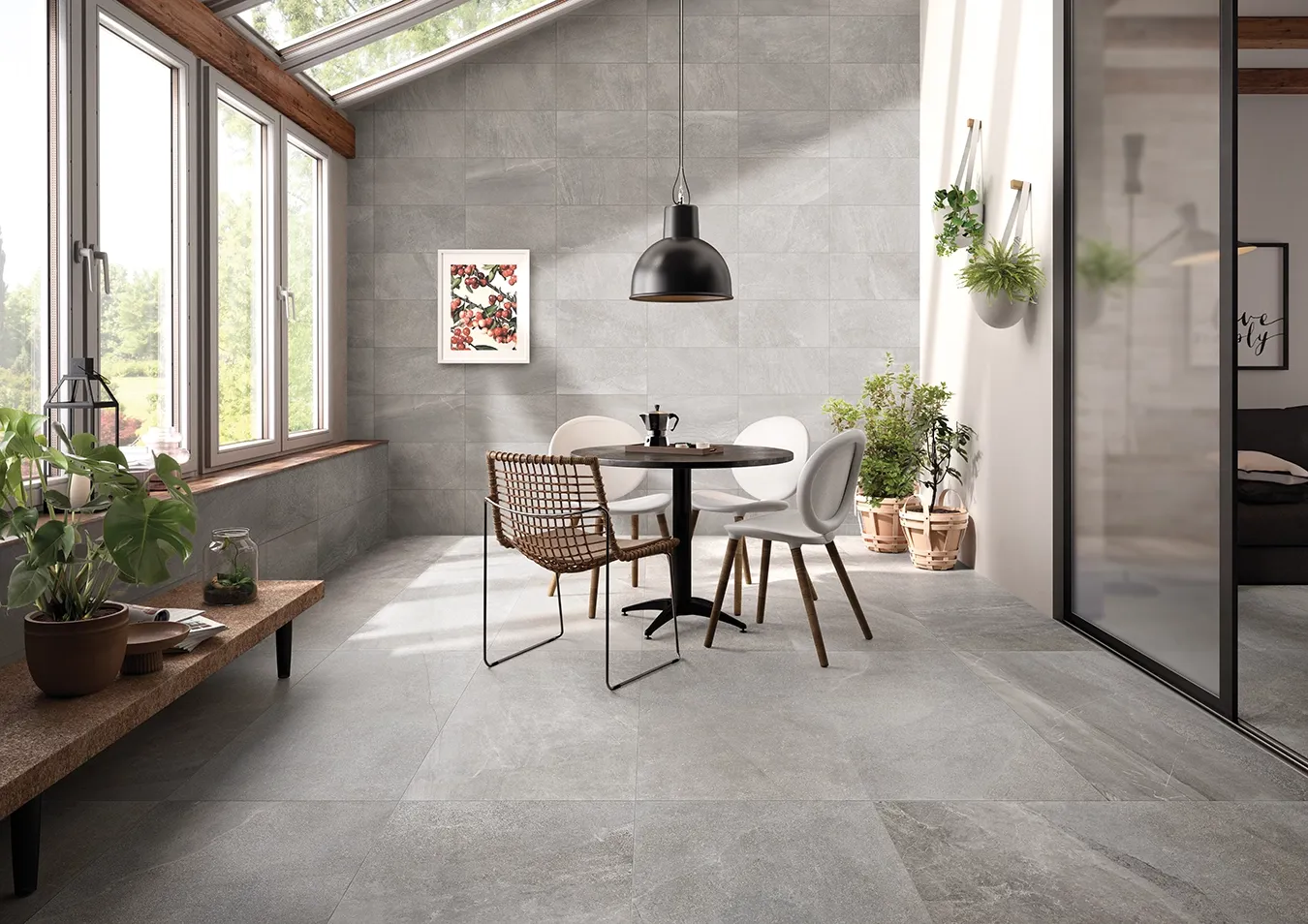
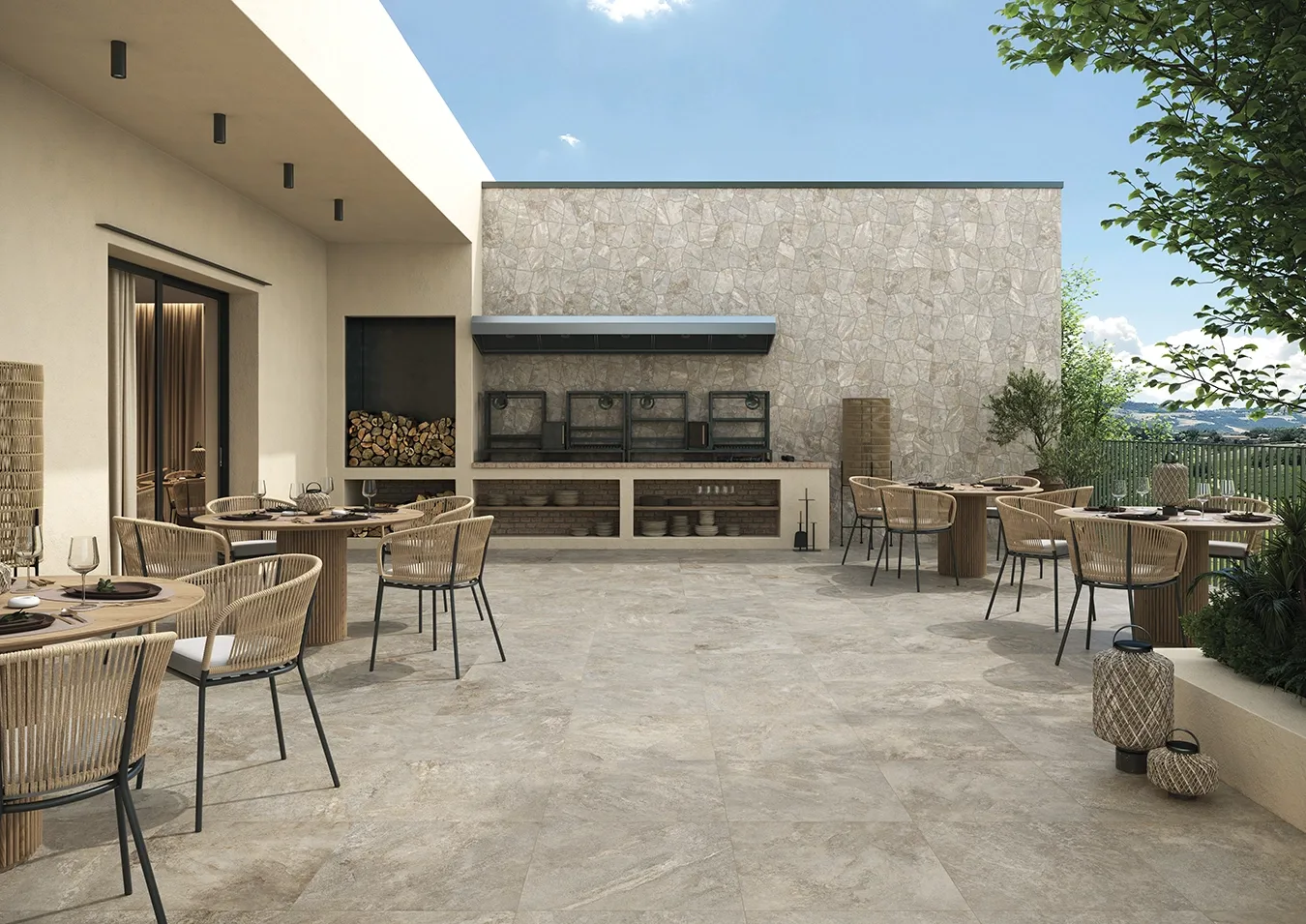
Gray stone look R9 porcelain tiles in a modern open-plan dining area
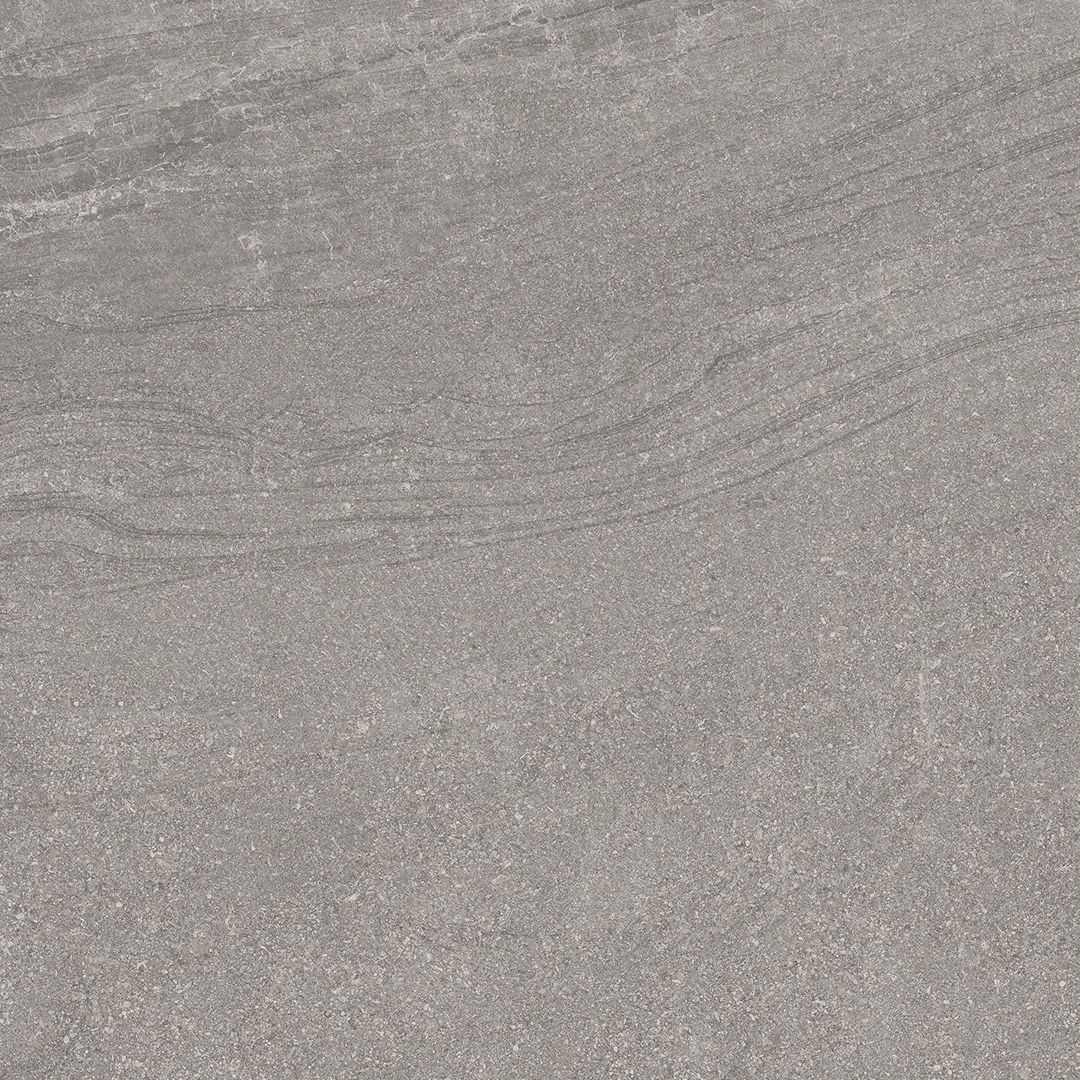
Dunstone Grey
dunstone grey

Best R9 tile styles for modern interiors

The best R9 tile styles for modern interiors are those that benefit from an uninterrupted surface. The smooth, light‑diffusing R9 finish preserves the full visual integrity of whatever material it replicates, so the pattern, veining, and tonal depth appear exactly as designed.

This makes the R9 rating particularly well suited to three interior directions that define contemporary residential design:

  • Urban and industrial: the absence of surface glare allows the raw character of concrete look and stone look effects to come through with maximum authenticity

  • Organic and natural: wood look and terracotta look tiles gain warmth and tactile presence through the soft, matte quality of an R9 finish

  • Refined and minimal: marble look and resin look surfaces deliver their strongest visual performance when specified with a smooth, light-diffusing finish that keeps the focus on pattern and depth

Benefits of R9 porcelain tiles

For interior applications where moisture is not a major concern, R9 porcelain tiles represent the most balanced choice across aesthetics, performance, and maintenance. Their smooth matte surface delivers the cleanest expression of any material effect, making them the preferred option for living rooms, bedrooms, hallways, and open-plan spaces where design continuity matters.

From a practical standpoint, the benefits are equally compelling:

  • Effortless maintenance: the absence of raised texture means dirt and residue sit on the surface rather than settling into grooves, making daily cleaning straightforward

  • Design versatility: compatible with every material effect and available across the full range of porcelain floor tiles formats, from mosaic to large porcelain slabs

  • Radiant heating compatibility:  porcelain tile’s low thermal resistance makes R9 floor tiles an efficient and responsive choice for underfloor heating systems

  • Long-term stability: UV resistance, abrasion resistance, and chromatic stability allow the surface to maintain its appearance through years of daily use

Understanding where these benefits apply most effectively begins with identifying the right spaces for R9 porcelain tiles.

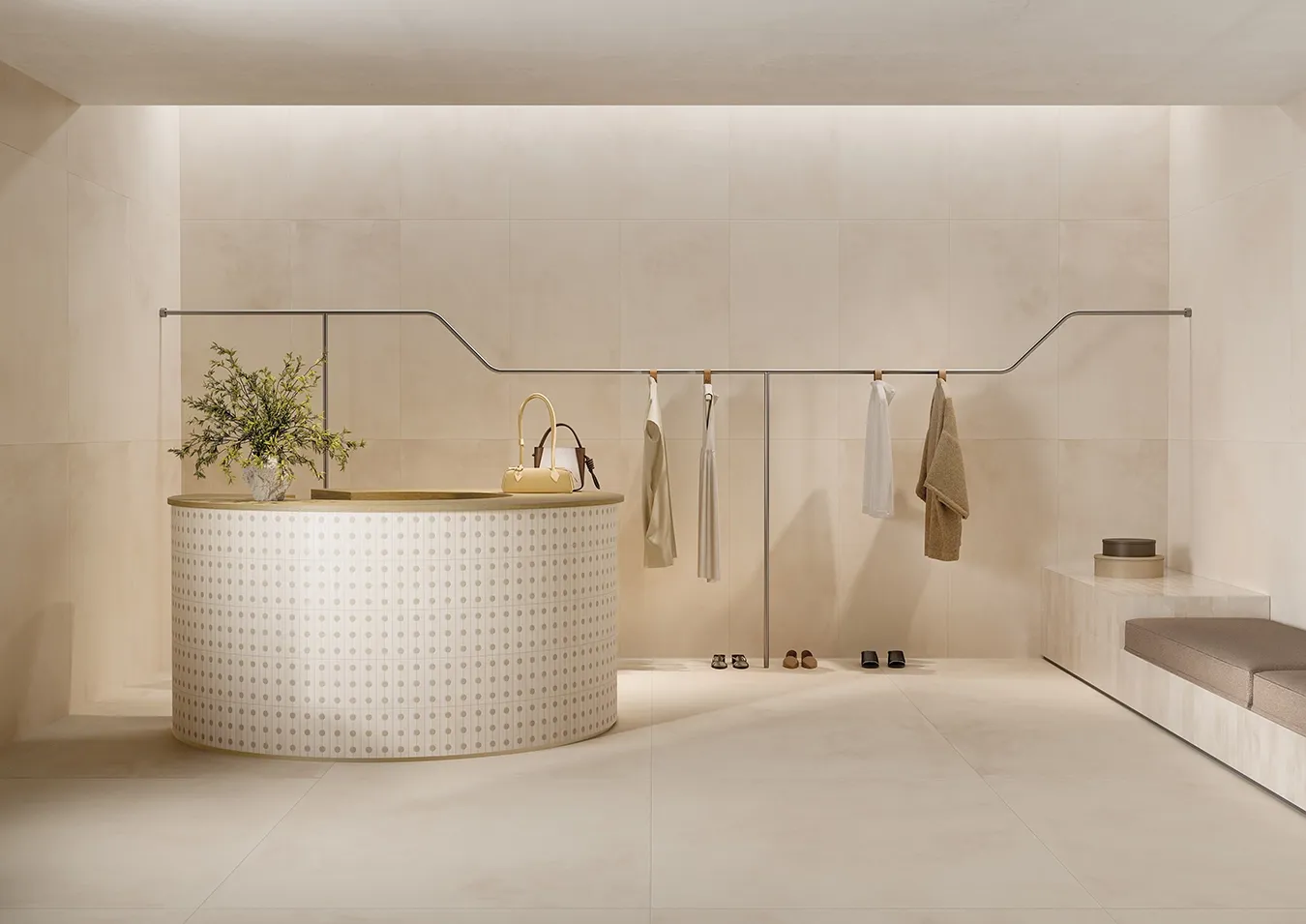
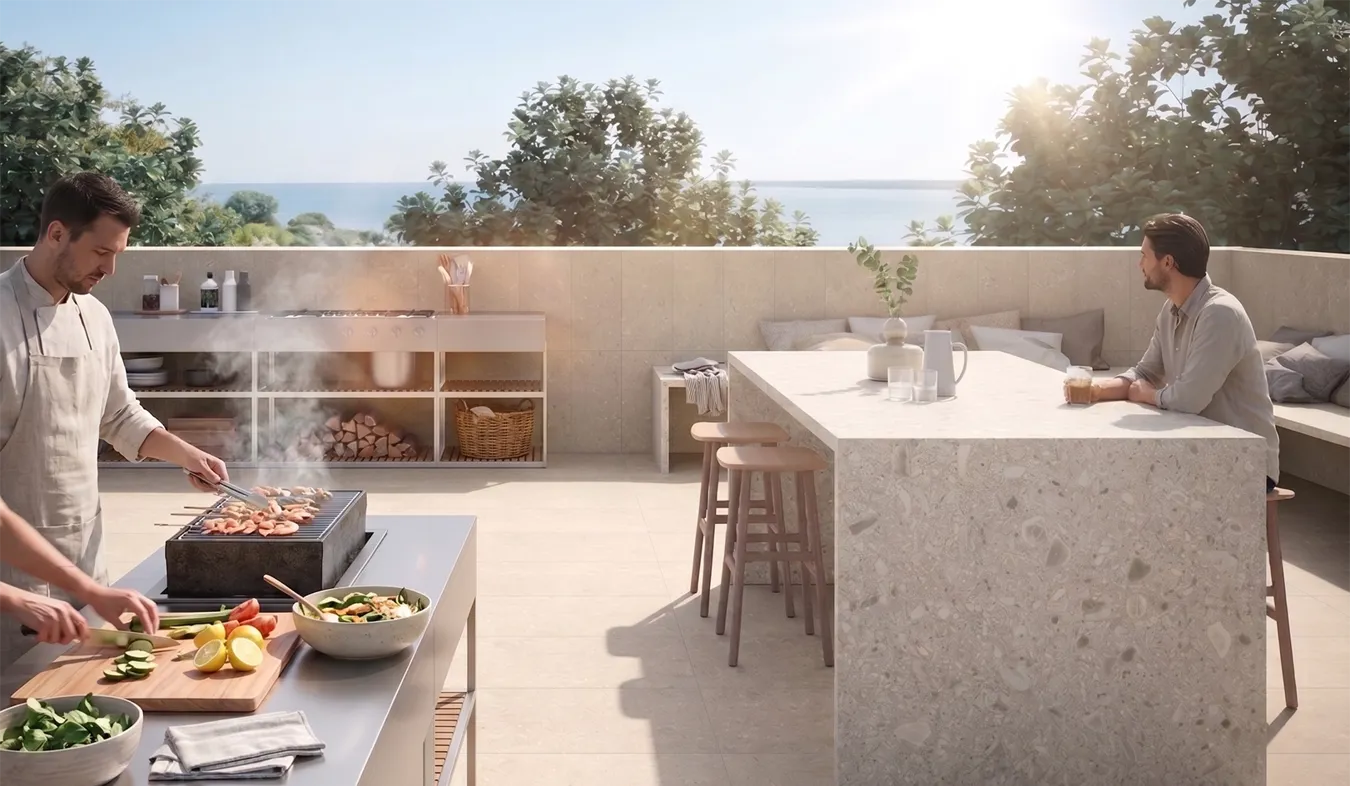
Beige R9 porcelain floor tiles in a refined contemporary retail space
CottoMilano Talco
CottoMilano Talco

Best places to use R9 porcelain tiles

R9 porcelain tiles perform at their best in interior spaces where dry conditions are consistent and the design intent favors a refined, seamless surface. Their smooth matte finish and broad compatibility with every material effect make them a natural fit for the rooms where people spend the most time.

The strongest applications for R9 floor tiles include:

  • Living rooms and open-plan spaces: large porcelain slabs in an R9 finish are a natural choice for living rooms because the smooth surface allows the material effect, whether stone look, concrete look, or wood look, to read without interruption

  • Bedrooms and hallways: low moisture exposure and moderate foot traffic make these ideal environments for the Natural R9 finish across wood look and stone look tiles

  • Laundry rooms, mudrooms, and utility spaces: suitable only for dry zones within these spaces where moisture is contained and the floor finish calls for easy upkeep

R9 vs other slip resistance ratings (R10, R11, R12)

Understanding where R9 sits relative to higher-rated surfaces is essential for making the right specification decision. Each step up the R-scale represents a measurable increase in grip, achieved through progressively more pronounced surface texture or grit application, and each rating corresponds to a distinct set of appropriate environments.

R9 vs R10: dry vs light-moisture areas

R9 tiles are engineered for dry interior environments only, while R10 tiles extend reliable performance into spaces with occasional moisture exposure. Kitchens, commercial restrooms, and light wet areas where water contact is intermittent call for an R10 rating, which achieves a ramp angle between 10° and 19° under the DIN 51130 test.

R9 vs R11: indoor comfort vs outdoor safety

The jump from R9 to R11 represents a major shift in both grip performance and surface character. R11 tiles are designed for outdoor porcelain tiles and wet indoor environments such as pool surrounds and shower floors, where a three-dimensional structured surface provides the traction that a smooth R9 finish cannot.

R9 vs R12: residential use vs high-risk environments

R12 tiles are reserved for industrial or high-risk environments such as commercial kitchens, workshops, and areas with consistent oil or grease exposure. They are rarely specified in residential projects, where R9 through R11 cover the full range of practical requirements.

When to upgrade from R9 to R10 or R11

R10 porcelain tiles are the right choice when moisture is an occasional factor, and R11 anti-slip tiles are required whenever the space is regularly wet, exposed to the elements, or subject to barefoot traffic on wet surfaces.

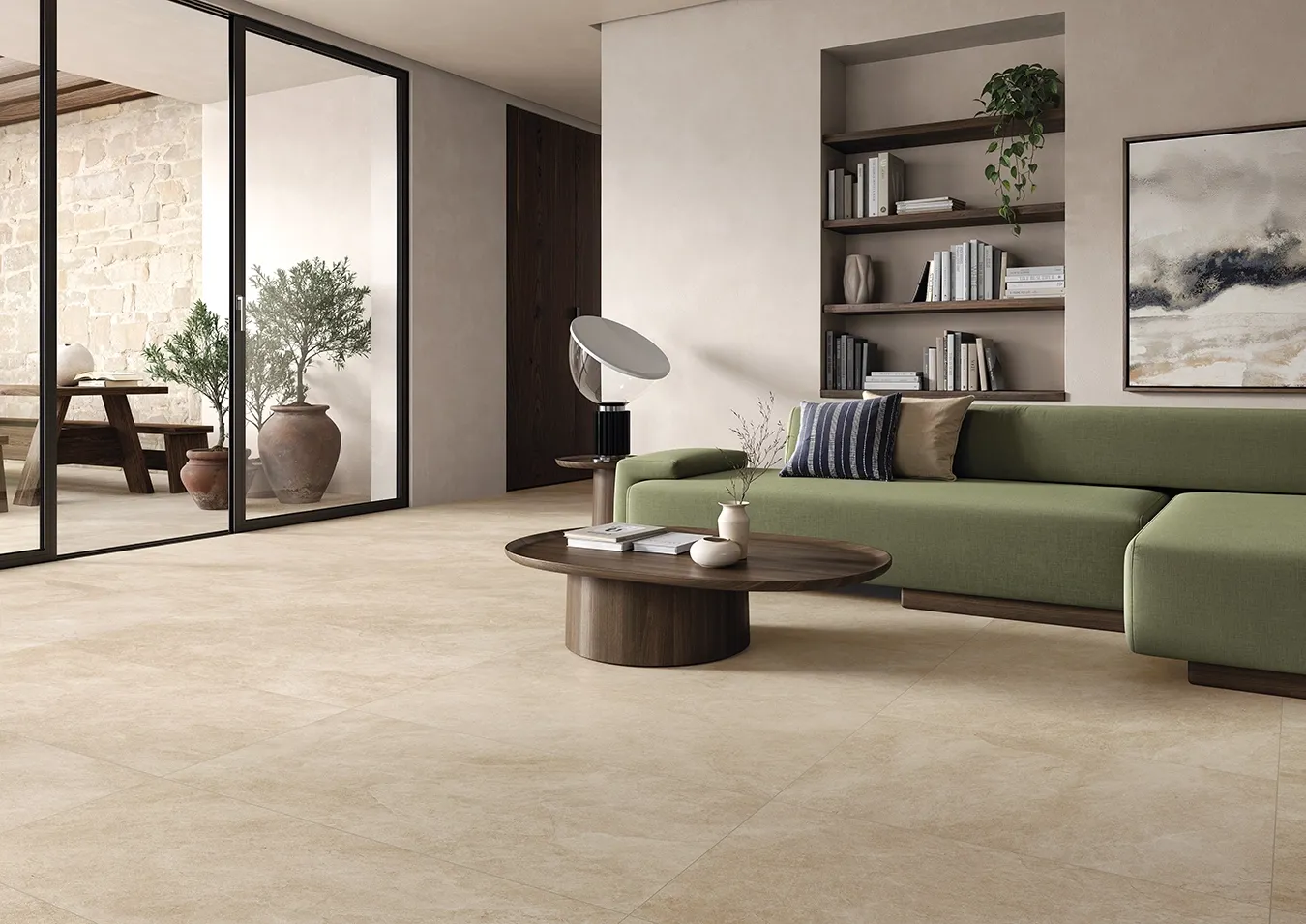
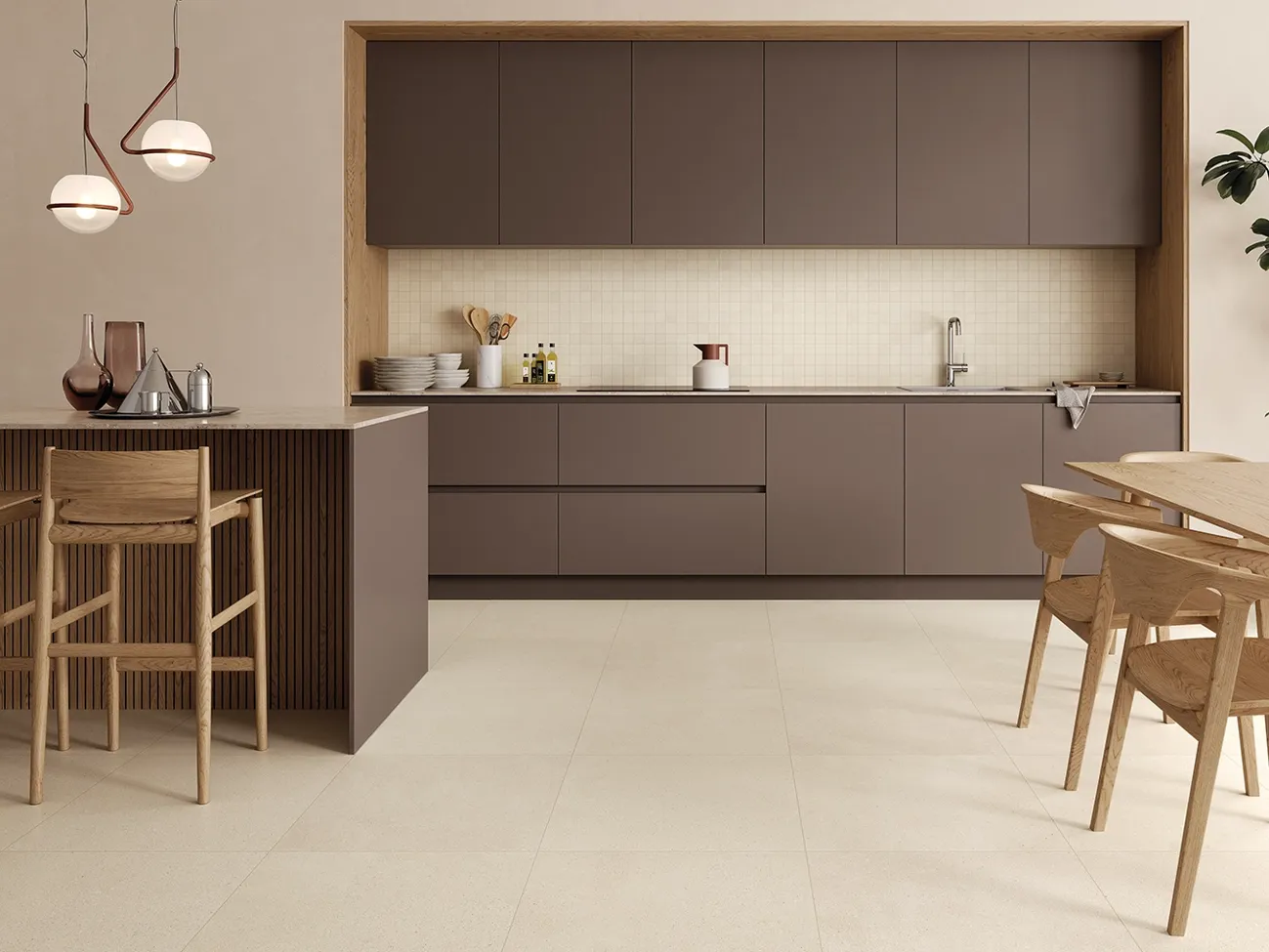
Grandi Cream R9 porcelain floor tiles and mosaic backsplash in a modern kitchen gres porcellanato R9 per soggiorno, collezione Harbor
Harbor Ivory
Harbor Ivory

How to choose the right R9 tile

Choosing the right R9 porcelain tile comes down to three practical factors: foot traffic patterns, moisture exposure, and format. Each one shapes the performance and visual outcome of the specification and should be evaluated before committing to a format or finish.

Evaluate foot traffic patterns

High-traffic areas such as hallways and open-plan living spaces benefit from larger porcelain floor tiles in an R9 finish, where fewer grout lines reduce maintenance and reinforce visual continuity. In lower-traffic rooms such as bedrooms, smaller formats and more decorative effects become viable without compromising durability.

Consider moisture exposure

R9 is the right choice when dry conditions are consistent. Even in spaces that are predominantly dry, identifying any zone with intermittent moisture, such as the area immediately around a kitchen sink or a bathroom vanity, is essential. Those specific zones require porcelain tiles with a higher slip resistance rating, while the rest of the floor performs correctly at R9.

Select the right format for the room size

Format selection directly affects how a room reads spatially. Large porcelain slabs minimize grout lines and expand the perceived floor area, making them ideal for open-plan spaces and primary bedrooms. In compact rooms, mid-size porcelain tiles between 12x24 inches (30x60 cm) and 24x24 inches (60x60 cm) strike the right balance between proportion and visual weight.

Maintenance, cleaning, and installation tips for R9 tiles

R9 porcelain tiles are among the easiest surfaces to maintain, precisely because their smooth matte finish leaves nowhere for dirt or residue to settle. Key cleaning practices include:

  • Routine maintenance: a damp mop and a pH-neutral detergent are sufficient for everyday cleaning

  • Deeper cleaning: a mild alkaline cleaner applied periodically addresses any buildup from cooking residue or foot traffic

  • Products to avoid: acidic or abrasive cleaners can dull the matte surface over time and compromise the finish

For a complete overview of best practices, explore the dedicated guides on maintenance and cleaning of porcelain tiles.

Correct installation is equally important to long-term performance. The following principles apply regardless of format:

  • Sub-base preparation: flat, stable, and dry, with no variation exceeding 1/8 inch (3 mm) over 10 feet (300 cm) for large format porcelain floor tiles

  • Thin-set selection: use a modified thin-set appropriate for the tile format, ensuring full coverage across the back of each tile

  • Back-buttering: required for large porcelain slabs to eliminate voids and secure a full mortar bond across the tile surface

For a full breakdown of laying methods and technical requirements, the guide on installation tips for porcelain tiles is the recommended starting point.

Frequently asked questions about R9 tiles

Is R9 tile slippery?

R9 tiles are not considered slippery in dry indoor conditions. The rating indicates normal grip performance under the DIN 51130 standard, making them appropriate and reliable for most interior spaces. In wet conditions, however, the smooth matte surface offers limited traction, and a higher-rated anti-slip tile is recommended for safety in those areas. 

Can R9 tiles be used in bathrooms?

R9 tiles are well suited for bathroom walls, vanity areas, and other dry zones within the space. For shower floors and wet areas, porcelain tiles rated R10 or higher provide the documented traction required for barefoot use on wet surfaces. 

Is R9 good for kitchen floors?

R9 is a good choice for kitchen floors in dry cooking zones away from the sink or dishwasher area. In areas where spills and moisture are frequent, R10 porcelain floor tiles offer a more appropriate level of slip resistance without compromising aesthetics.

Are R9 tiles easy to clean?

Yes. The smooth matte surface of R9 porcelain tiles is one of the easiest finishes to maintain, requiring only a damp mop and a pH-neutral detergent for routine cleaning. The absence of raised texture means dirt and residue remain on the surface rather than settling into grooves. 

What is the difference between R9 and R10?

R9 covers a ramp angle between 6° and 10° and is suited for dry interior environments. R10 tiles extend that range to between 10° and 19°, making them the right choice for spaces with intermittent moisture exposure such as kitchens, bathrooms, and light commercial areas.

Can R9 tiles be used outdoors?

R9 tiles are not recommended for outdoor use under any conditions. Outdoor porcelain tiles require a minimum R11 rating to perform reliably on patios, pool decks, garden walkways, front porches, and courtyards, where wet surfaces, temperature fluctuations, and variable conditions demand documented traction performance.

Is R9 suitable for commercial spaces?

R9 is suitable for dry commercial spaces such as offices, showrooms, and retail environments where foot traffic is consistent but moisture exposure is minimal. For commercial spaces with water present, anti-slip tiles rated R10 or higher are the appropriate specification.

You might also be interested in