Glossy porcelain tiles: high‑shine finishes explained for homeowners & professionals

Glossy porcelain tiles: high‑shine finishes explained for homeowners & professionals
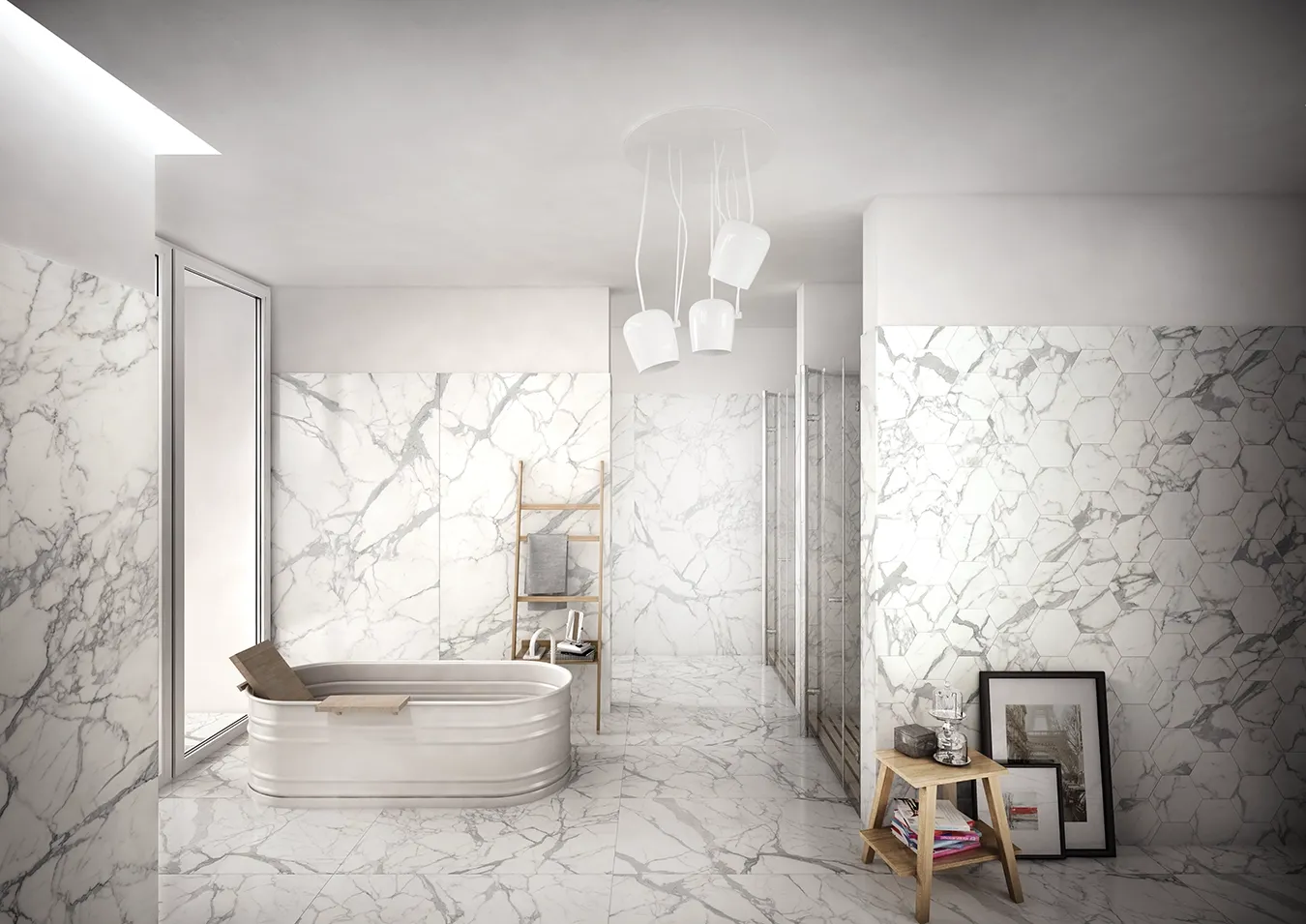
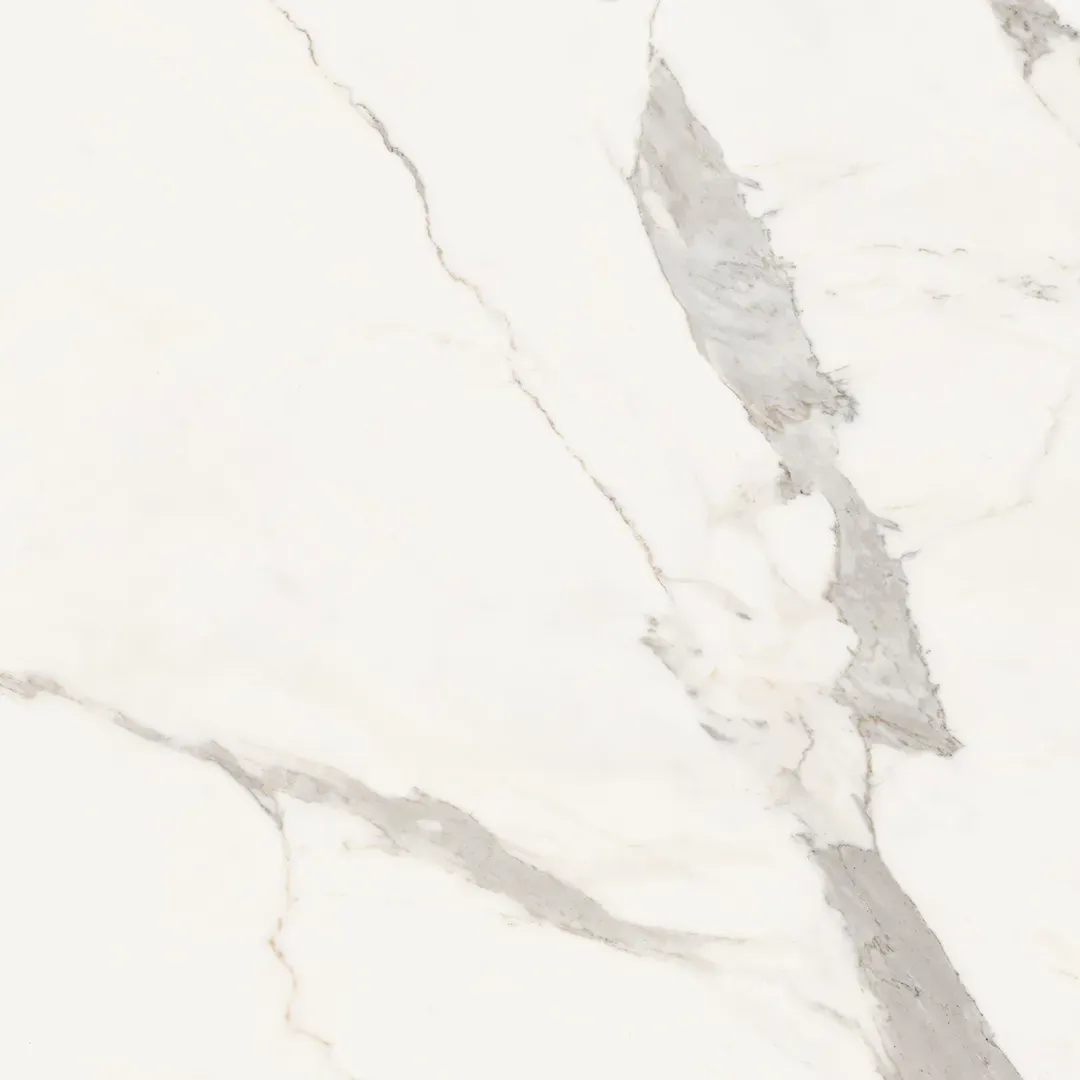
Glossy marble look porcelain tiles showing the smooth, reflective vitreous glaze surface
Versilia Nuvolato Grey

What is a glossy tile finish?

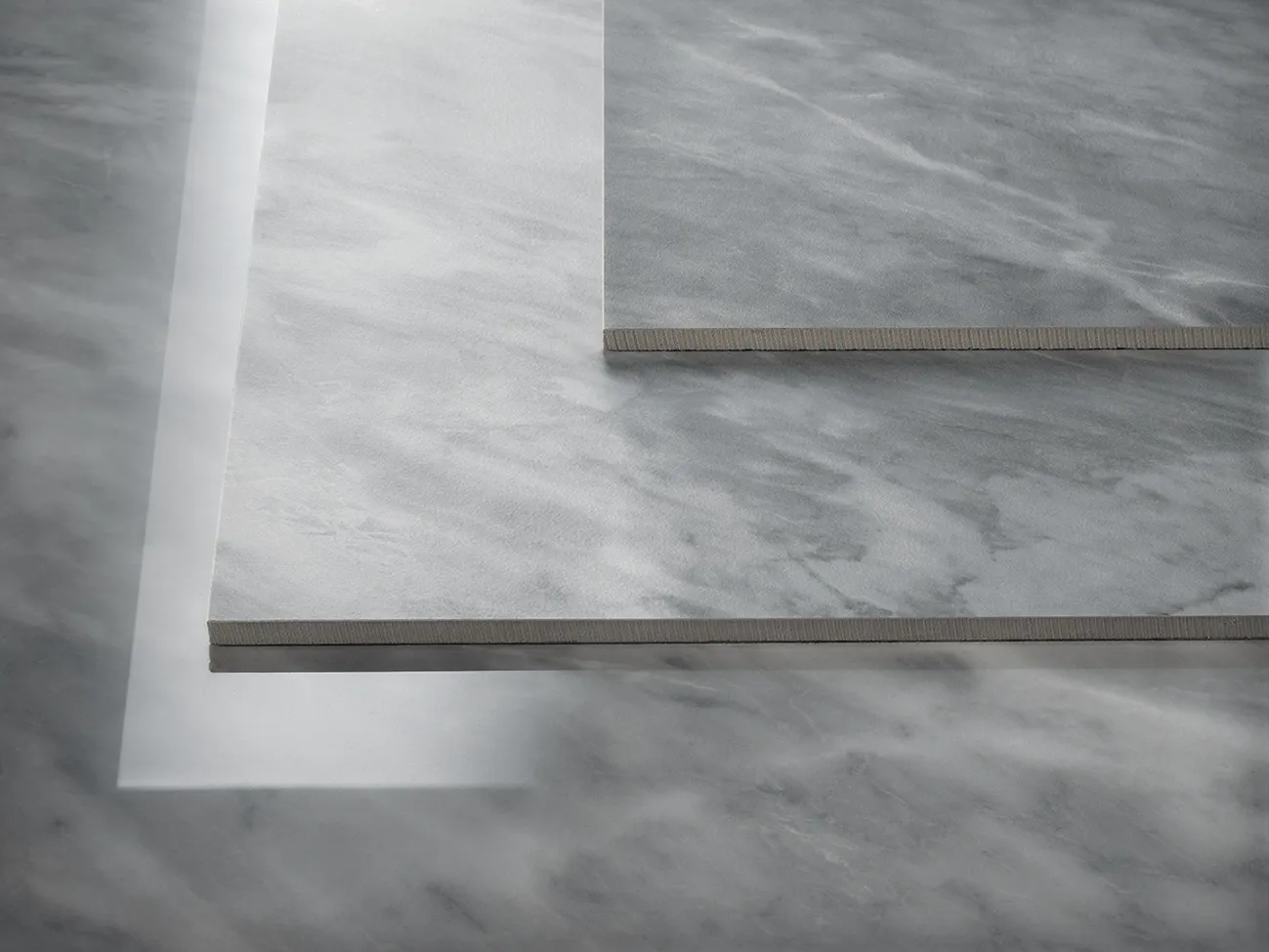
A glossy tile finish is a highly reflective surface created by applying a vitreous glaze to the tile during manufacturing. Unlike semi-polished finishes, which achieve their sheen through mechanical buffing, a glossy surface relies on a glass-based coating that fuses permanently with the tile body during firing, producing a smooth, sealed layer that amplifies light and enriches color saturation.

Understanding how that translates into real visual and technical performance starts with its defining characteristics.

Key characteristics of glossy tiles

Three properties set glossy porcelain tiles apart from every other finish on the market.

High reflectivity and visual brightness

Glossy tiles reflect light more intensely than any other porcelain finish, making them a reliable tool for brightening interiors. In compact or poorly lit spaces like small bathrooms and narrow entryways, this reflectivity creates a sense of openness that matte or structured surfaces cannot match.

Smooth, glass-like surface

The vitreous glaze produces a perfectly flat, non-porous surface with no texture or micro-relief. This makes glossy tiles exceptionally easy to wipe clean and resistant to moisture absorption, which is why they're a go-to choice for shower walls and kitchen backsplashes.

Color depth and pattern clarity

The glaze acts as a magnifying layer, intensifying the colors and sharpening the patterns printed beneath it. Marble-look tiles, in particular, benefit from this effect: veining appears more vivid and the overall composition gains visual depth that closely mirrors the luminosity of polished natural stone.

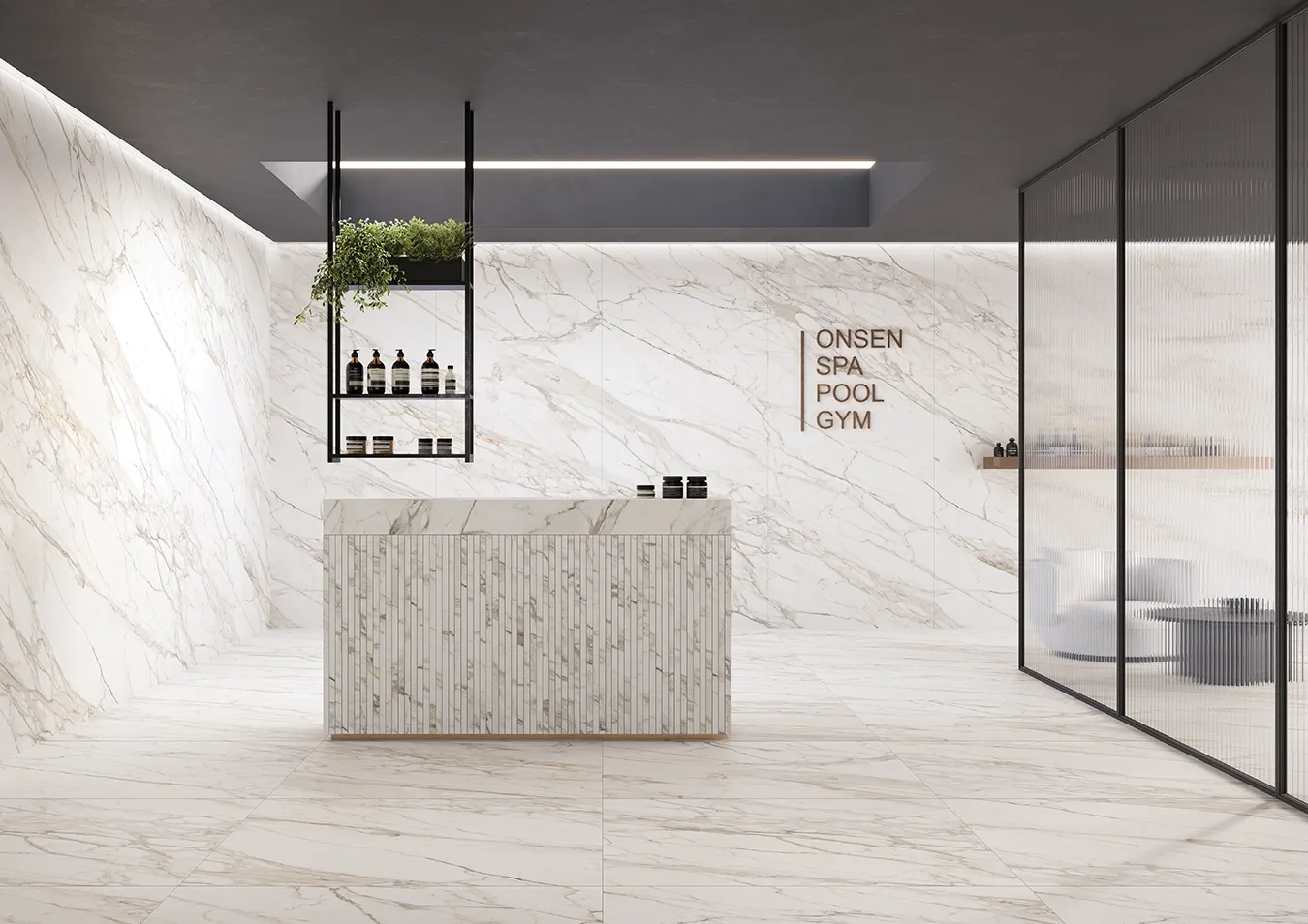
Spa interior with glossy white marble look porcelain tiles on walls and floors
Versilia Borghini White

Benefits of glossy porcelain tiles

Glossy porcelain tiles deliver immediate visual impact while offering a durable, low-maintenance surface built to perform in demanding interiors:

  • Color stability: the fired glaze will not fade, dull, or alter its appearance with exposure to light, humidity, or household chemicals

  • Design versatility: works across a wide range of styles, from classic to contemporary, pairing naturally with bold colors and intricate pattern work

  • Space enhancement: one of the most effective finishes for visually expanding the room, particularly when used on walls in a continuous layout

  • Durability: the glaze is permanent, consistent, and resistant to wear in appropriate applications

Drawbacks and considerations before choosing glossy tiles

Glossy tiles offer striking results, but a few practical factors are worth considering before specifying:

  • Visible smudges and water marks: the reflective surface makes fingerprints and residue immediately noticeable, requiring more frequent cleaning than matte alternatives

  • Lower slip resistance: the smooth glaze produces a lower DCOF rating on wet surfaces, making glossy floor tiles unsuitable for wet areas, outdoor spaces, or any setting where water is regularly present

  • Glare in bright spaces: in rooms with strong natural light, high reflectivity can create uncomfortable glare if not balanced with the right lighting design

For floors in wet or high-traffic environments, a slip-resistant finish with a certified DCOF rating of 0.42 or higher is the safer and more appropriate choice.

Best places to use glossy tiles

Glossy porcelain tiles perform best in interior spaces where light amplification and visual impact take priority over slip resistance:

  • Bathroom walls and shower enclosures: the reflective surface brightens the space while the vitreous glaze resists moisture, making glossy wall tiles a reliable choice for vertical wet-area surfaces

  • Kitchen backsplashes: easy to wipe clean and visually effective behind countertops, where the finish adds depth without competing with surrounding design elements

  • Powder rooms and entryways: compact spaces where the light-amplifying effect delivers maximum visual impact with minimal floor traffic

  • Accent walls in living rooms and hallways: a single glossy wall creates contrast and visual depth when paired with matte floor tiles or structured surfaces

  • Mudrooms and laundry rooms: on vertical surfaces only, the non-porous glaze resists splashes and wipes down easily, making maintenance straightforward in high-use utility spaces

Glossy tiles vs other tile finishes

Each finish serves a distinct design and functional purpose. Here's how glossy compares to the closest alternatives across the full range of porcelain tile finishes.

Glossy vs matte: shine vs softness

Where glossy surfaces reflect light outward, matte finishes absorb and diffuse it, producing a softer, more understated look. Matte tiles conceal smudges and imperfections more effectively, making them the practical choice for floors and high-traffic areas, while glossy tiles are better suited to walls where visual impact is the primary design goal. 

Glossy vs polished: glaze vs mechanical polishing

Glossy tiles get their reflectivity from a vitreous glaze applied before firing, while polished achieves its sheen through mechanical buffing after firing. The result is a subtle but meaningful difference: Polished tiles produce a deeper, more nuanced luminosity that closely mimics polished natural stone, whereas glossy tiles deliver a brighter, more uniform, glass-like surface.

Glossy vs silky: reflectivity vs tactile softness

The Silky finish is perfectly smooth like glossy but anti-reflective, delivering a velvety, low-sheen surface with a refined tactile quality. ULTRAsilky goes further, achieving interior wet DCOF certification, making it a more versatile option for bathrooms where glossy tiles would require careful slip resistance planning.

Are glossy tiles slippery? Safety considerations

Glossy tiles can be slippery when wet, which is why their use on floors requires careful evaluation of DCOF ratings before installation. Per ANSI A326.3, a tile intended for interior floors expected to be walked upon when wet must achieve a DCOF value above 0.42. Glossy porcelain tiles typically fall below this threshold, classifying them as suitable for dry environments only.

For wall applications, shower enclosures, and backsplashes, slip resistance is not a relevant concern. On floors, if a glossy finish is the preferred aesthetic, specifying a format with a certified IW rating or pairing glossy wall tiles with a slip-resistant floor finish is the most practical and code-compliant approach.

Best glossy tile styles for modern interiors

Glossy porcelain tiles have a natural affinity with contemporary design, where clean lines, intentional contrast, and the interplay of light and surface define the aesthetic. While the finish works across a wide range of colors, two directions stand out for their ability to define a room's aesthetic most effectively.

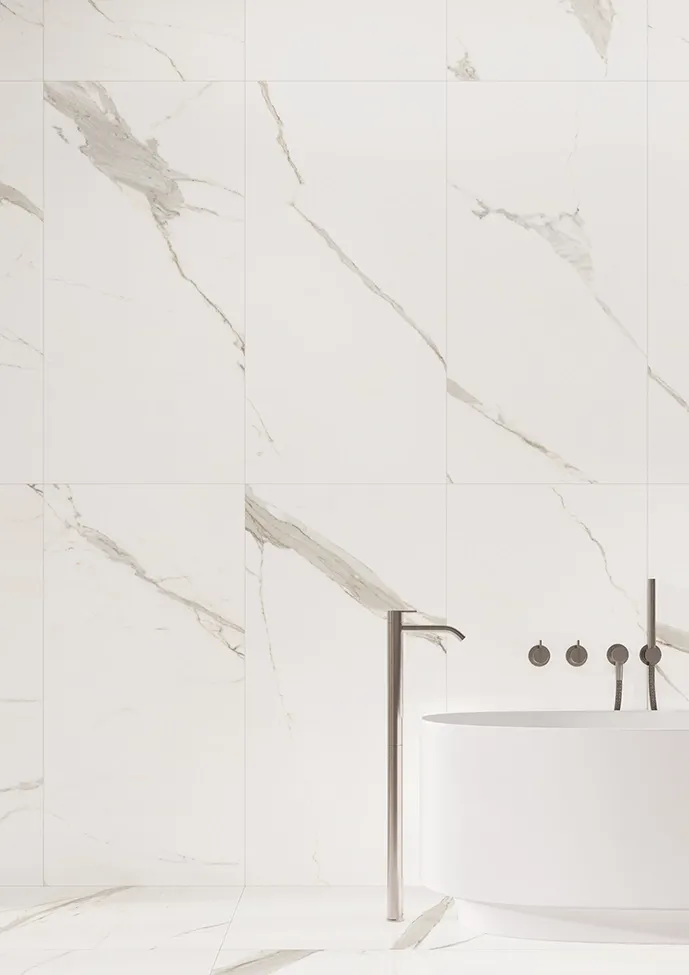
White glossy marble look porcelain tiles in a minimalist bathroom
Versilia Assoluto White

White glossy tile for bright, clean interiors

White porcelain tiles in a glossy finish are the preferred option for clean, minimalist interiors where brightness and perceived space are the priority. The combination of a white base and a reflective glaze maximizes light return, making them particularly effective in bathrooms, powder rooms, and kitchen backsplashes paired with white or light-toned cabinetry.

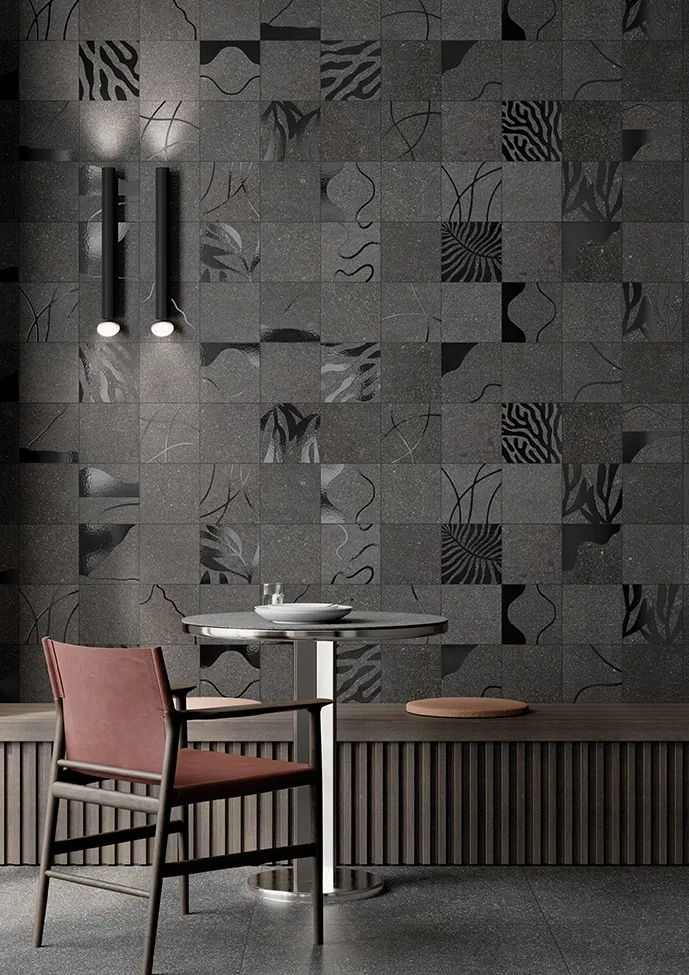
Black glossy porcelain tiles with decorative botanical inserts on an accent wall
Lavica Etna Anthracite

Black glossy tile for bold, high-contrast designs

Black porcelain tiles with a glossy finish deliver a dramatic, high-contrast look that works especially well as accent walls or in bathrooms designed around a luxury aesthetic. The reflective glaze adds depth to the dark surface, and the finish pairs naturally with brass, gold, or matte black fixtures for a cohesive, design-forward result.

How to choose the right glossy tile

Selecting the right glossy tile comes down to four practical decisions that shape both the look and the long-term performance of the surface.

Evaluate lighting conditions

Glossy tiles perform best in rooms with controlled or diffused light. In spaces with intense direct sunlight, the high reflectivity can produce glare that reduces visual comfort. North-facing or artificially lit interiors tend to benefit most from a glossy finish, where the added brightness works in your favor rather than against you.

Match gloss level to room style

Glossy finishes suit contemporary, minimalist, and classic interiors naturally. In rustic, industrial, or organic design schemes, a matte or structured finish typically reads as more cohesive. If the overall palette leans toward natural materials like wood look or concrete look tile, glossy accents work best used sparingly rather than as the dominant surface.

Pair glossy walls with matte floors

Combining glossy wall tiles with a matte or structured floor finish is one of the most reliable design strategies in modern interiors. It balances visual energy, addresses slip resistance requirements on the floor, and creates a layered aesthetic that feels intentional rather than uniform.

Choose the right format for the space

Format scale affects how a glossy finish reads in a room. Large format tiles on walls create seamless, uninterrupted reflections ideal for contemporary bathrooms, while smaller formats like subway tiles add rhythm and texture to the reflective surface without overwhelming compact spaces.

Maintenance, cleaning & installation tips for glossy tiles

Keeping glossy porcelain tiles in top condition comes down to using the right products and approach:

  • Use a microfiber cloth and a neutral pH detergent for routine care

  • Avoid abrasive cleaners or scouring pads, which can cause micro-scratches in the glaze and dull its reflective quality

  • No sealing is required since the vitreous glaze is non-porous by design

For a complete routine, refer to our detailed guide on how to maintain porcelain tiles.

On the installation side, a few details make a significant difference:

  • Subbase flatness: even slight unevenness is amplified by the reflective surface, making lippage far more visible than on a matte tile

  • Thin-set coverage: full back-buttering is recommended for large format glossy tiles to prevent hollow spots that can cause the glaze to crack under pressure

  • Grout joint width: keep joints consistent and apply a grout sealer after installation to protect against staining

For full installation specifications, refer to our detailed guide on laying porcelain tiles.

Frequently asked questions about glossy tiles

Are glossy tiles good for bathrooms?

Glossy tiles are an excellent choice for bathrooms, particularly on walls and shower enclosures, where their brightness and non-porous surface perform well. For bathroom floors, a slip-resistant finish with a certified DCOF rating of 0.42 or higher is the safer option.

Can glossy tiles be used on shower walls?

Yes, glossy tiles work very well on shower walls. The vitreous glaze resists moisture and is easy to wipe clean, making it one of the most practical finishes for vertical wet-area applications.

Do glossy tiles scratch easily?

The fired glaze is durable under normal use, but it can show micro-scratches if exposed to abrasive materials or harsh cleaning products. Using a microfiber cloth and a neutral detergent keeps the surface in good condition over the long term.

Are glossy tiles hard to clean?

Glossy tiles are not hard to clean, but they require more frequent attention than matte tiles because smudges and water marks are immediately visible on the reflective surface.

Can glossy tiles be used on floors?

Yes, glossy tiles can be used on floors in dry, low-traffic areas. In wet environments or high-traffic spaces, a finish with a certified interior wet DCOF rating is the appropriate choice.

Do glossy tiles make a room look bigger?

Yes. The high reflectivity of glossy tiles bounces light around the room, creating a visual sense of depth and openness. This effect is strongest when glossy tiles are used on walls in marble look or white finishes across a continuous surface.


You might also be interested in