The complete guide to matte tile finishes

The complete guide to matte tile finishes

What is a matte tile finish?

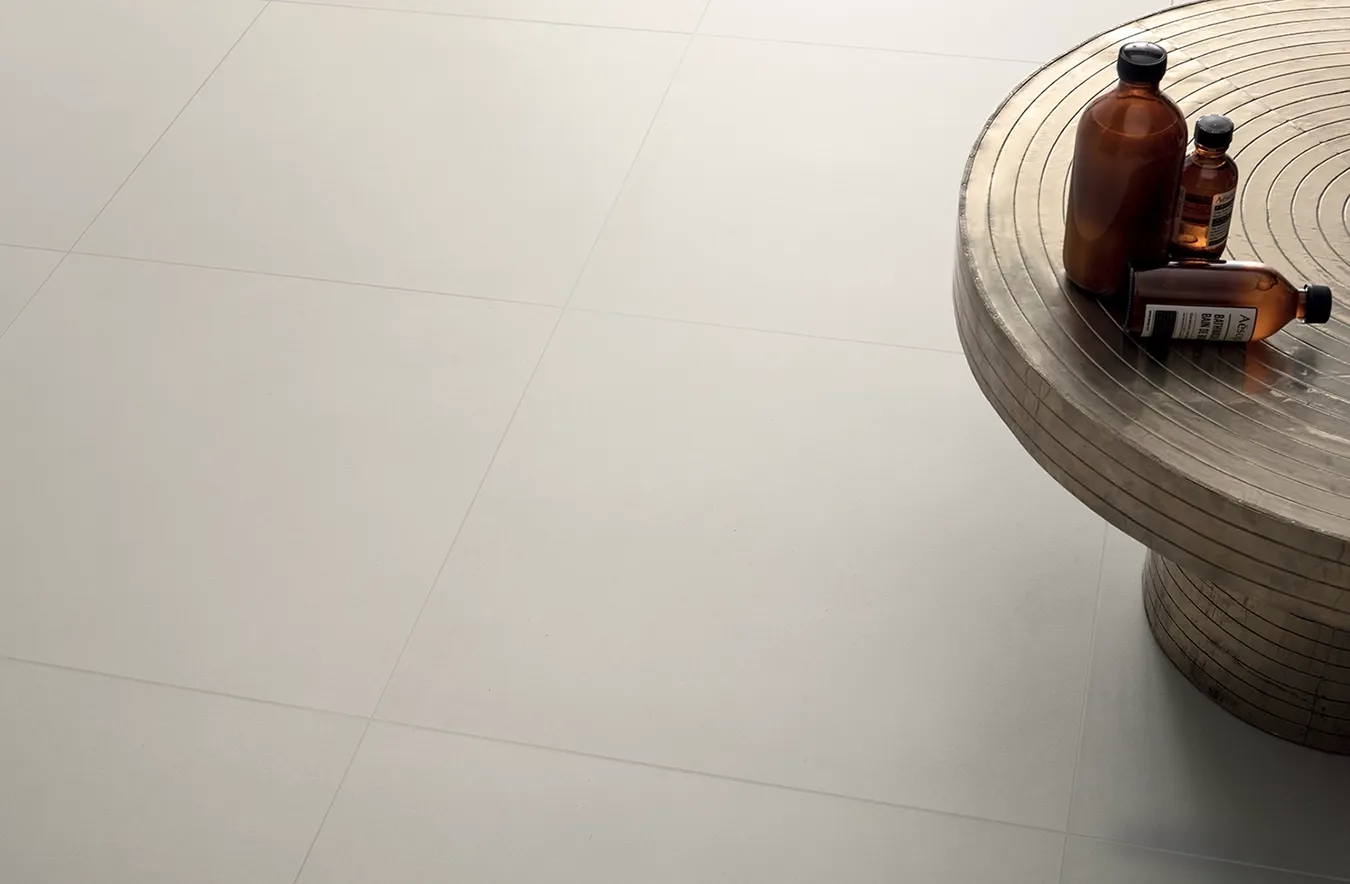
A matte tile finish is a low-sheen surface treatment applied during manufacturing that absorbs and diffuses light rather than reflecting it. This creates a soft, non-reflective appearance with a natural, understated aesthetic that has become a hallmark of contemporary interior design. Unlike polished or glossy surfaces, a matte finish porcelain tile minimizes glare and delivers a more authentic representation of the material it replicates, whether stone, concrete, or wood.

In technical terms, matte porcelain tiles are categorized by slip resistance ratings, starting at R9 for standard indoor applications and reaching R10 for enhanced grip. The Natural R9 finish is a soft and timeless option ideal for interior floor tiles and wall tiles, while Natural R10 adds improved anti-slip performance while maintaining a refined surface texture.

The versatility of matte tile makes it equally suited for residential spaces, commercial environments, and high-traffic areas, offering a practical yet refined foundation for any design project.

Matte tile vs polished tile: key differences

The difference between matte and polished tile finishes lies primarily in how each surface interacts with light. Matte porcelain tiles absorb light, producing a soft, understated appearance with minimal glare. Polished tiles, such as those with a Lappato finish, reflect light to create luminosity and depth that enhance the visual richness of veining and color patterns.

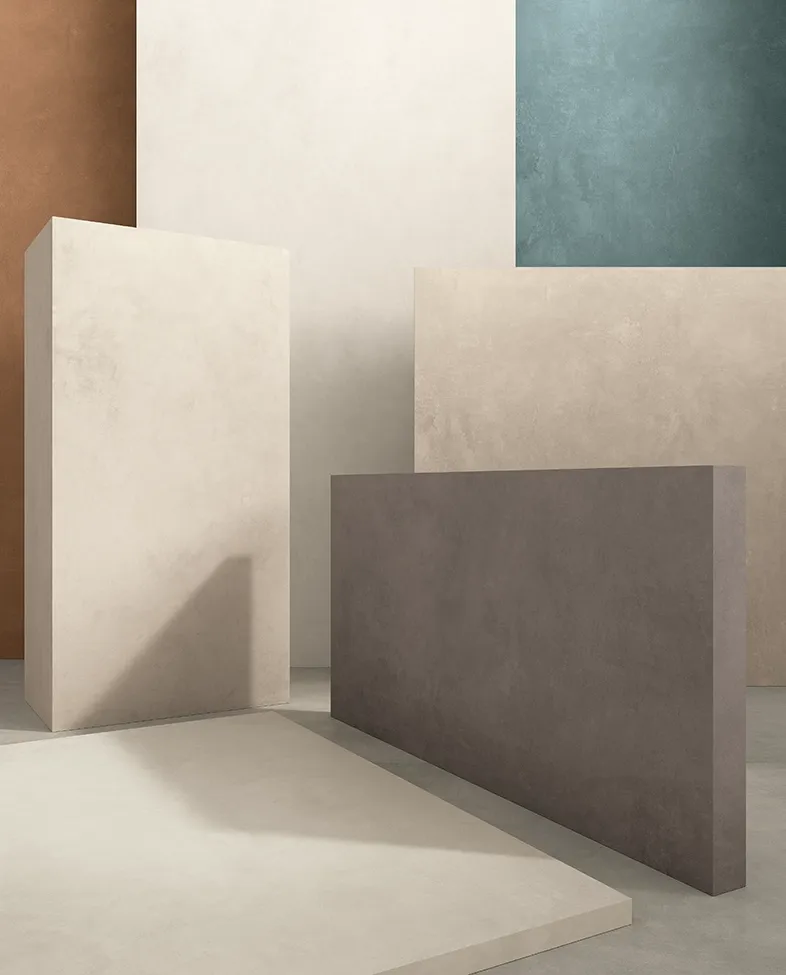
Matte porcelain tile slabs in neutral tones displaying the soft, non-reflective surface texture of different matte finishes

Slip resistance:

  • Matte finishes offer inherently better grip with R9 and R10 ratings, making them safer in moisture-prone areas
  • Polished tiles have a lower friction coefficient due to their smooth surface, making them best suited for dry indoor environments

Maintenance:

  • Matte surfaces resist visible buildup of dust, water marks, and everyday smudges, requiring less frequent attention
  • Polished tiles show smudges and fingerprints more readily, demanding regular upkeep to maintain their luster

Imperfections:

  • Matte tile naturally conceals minor surface marks and micro-scratches thanks to its light-absorbing texture
  • Polished tile highlights even the smallest surface detail, making minor blemishes more noticeable

Choosing between matte and polished tile ultimately depends on the function of the space and the desired design effect.

ULTRAmatt & soft‑touch finishes: how they compare to standard matte tiles

ULTRAmatt is an advanced porcelain tile finish that improves on standard matte surfaces in three key areas: anti-glare performance, tactile smoothness, and ease of cleaning. It replaces traditional matting agents with ultra-fine refractory particles, creating a denser surface that diffuses light more evenly and feels noticeably softer to the touch.

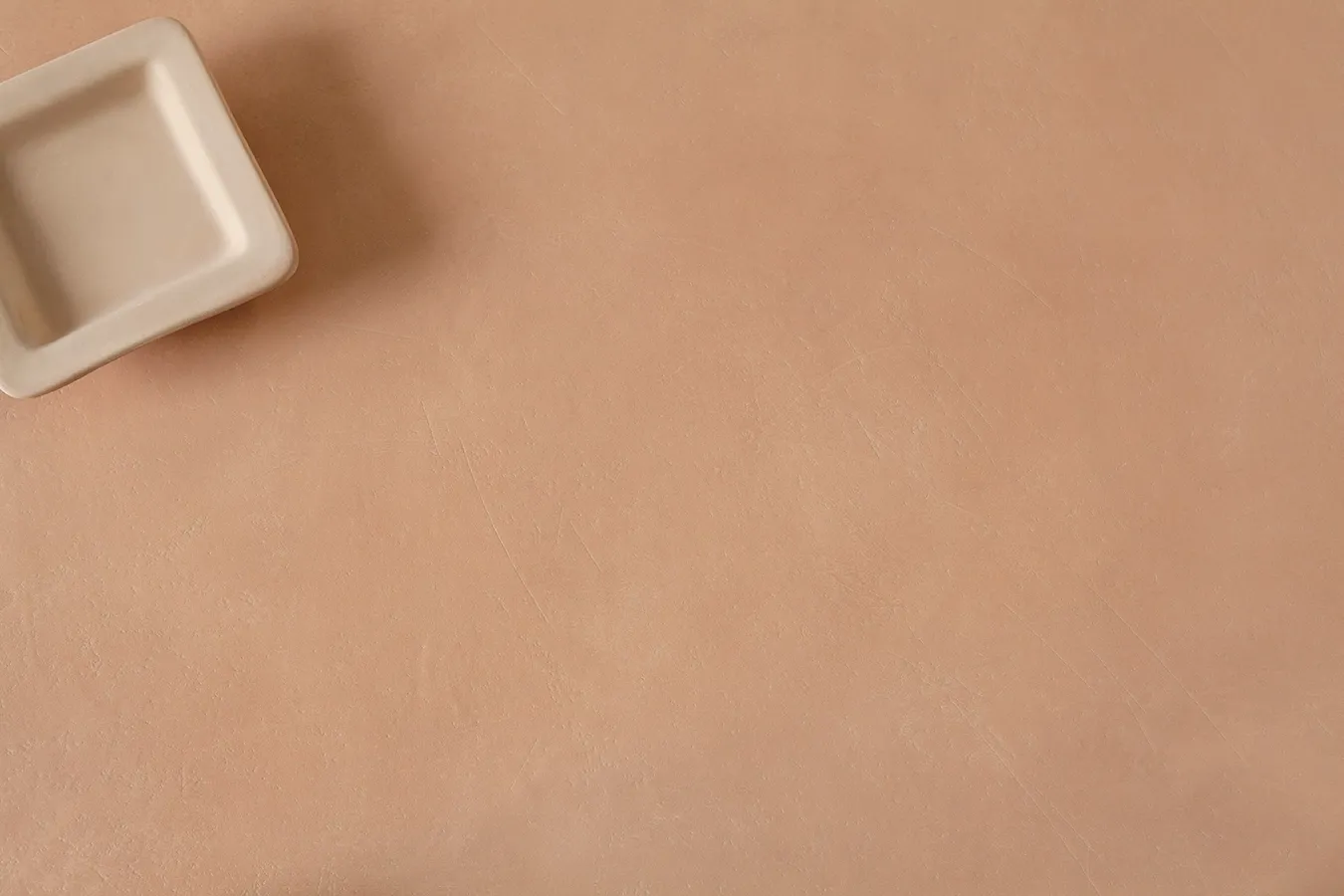
ULTRAmatt terracotta look porcelain tile with a velvety, anti-glare surface finish
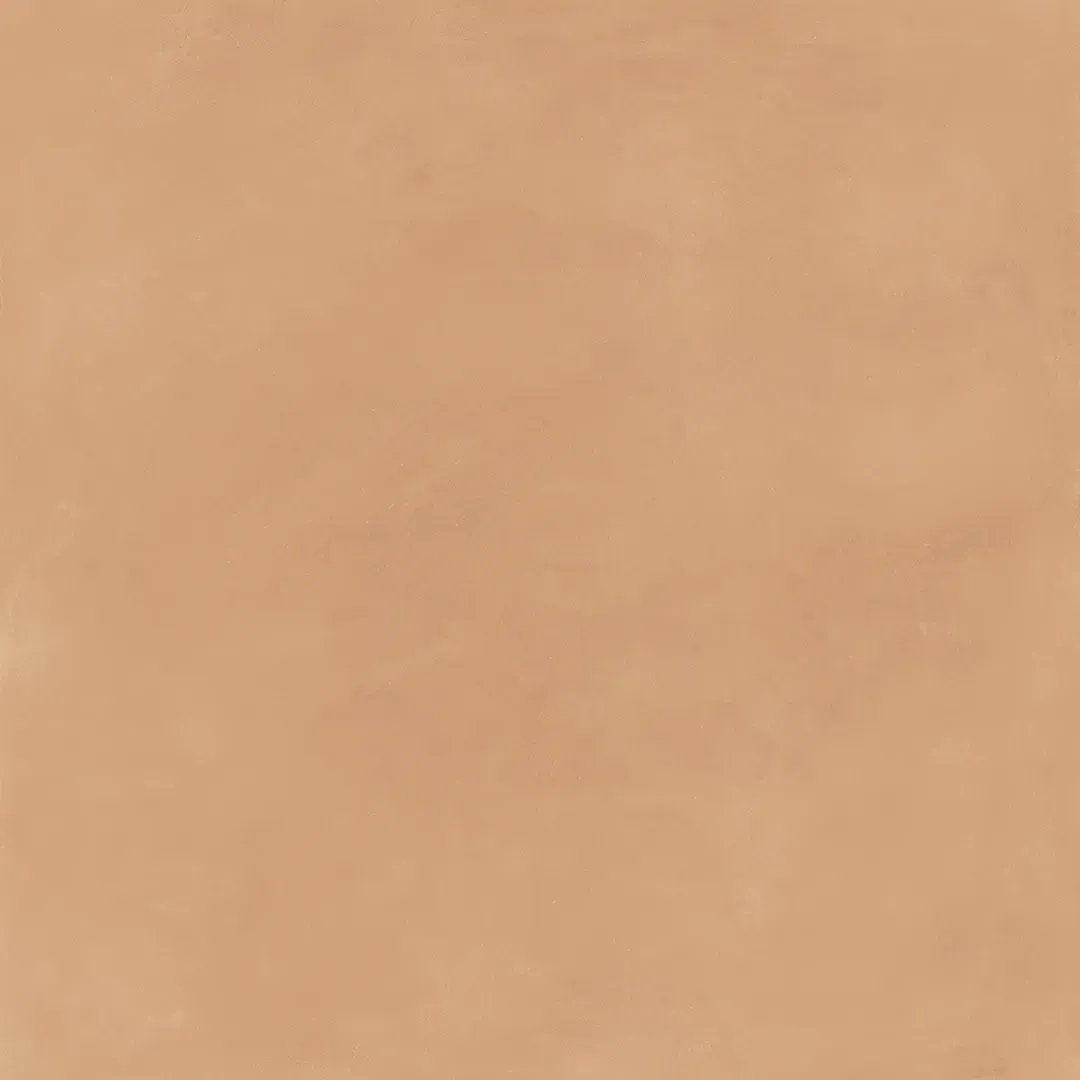
CottoMilano Terracotta Ultramatt
CottoMilano Terracotta

Here is what sets ULTRAmatt apart from standard matte finishes:

  • Enhanced opacity: reduced light reflection produces a visibly deeper and more balanced low-sheen surface, virtually eliminating glare even under direct or intense lighting

  • Refined tactile sensation: the denser particle distribution creates a velvety, pleasantly smooth touch that is uncommon in high-performance anti-slip surfaces

  • Simplified cleaning: reduced surface roughness eliminates the deep micro-valleys where dirt and contaminants typically accumulate on traditional matte textures, improving resistance to stains and everyday cleaning chemicals

  • Unchanged slip resistance: despite the smoother feel, ULTRAmatt maintains certified R10 B slip resistance, tested and verified according to European (EN) and US (ANSI) standards

This technology, subject to a patent application filed with the Italian Patent and Trademark Office, bridges the gap between high‑end aesthetics and advanced technical performance, making it ideal for residential and commercial projects alike.

Benefits of matte porcelain tile finishes

Matte porcelain tile finishes combine understated elegance with practical performance, making them one of the most versatile choices for both residential and commercial spaces. From visual comfort to enhanced safety, the benefits extend well beyond aesthetics.

Non-reflective, soft aesthetic

A matte tile finish creates a soft, anti-glare surface that absorbs light instead of bouncing it across the room. This non-reflective quality reduces visual noise and produces a calm, grounded atmosphere that complements a wide range of design styles, from minimalist and contemporary to warm and organic. These surfaces also deliver a more authentic representation of the material they replicate, allowing the natural texture of stone, concrete, or wood look effects to come through with greater depth and realism.

Better slip resistance

Matte porcelain tiles offer inherently better slip resistance than polished or glossy alternatives. Standard options such as Natural R9 provide normal grip suitable for most indoor floor tiles, while R10 options deliver medium grip for areas where moisture may be present. This positions them among the top-performing non-slip tiles for kitchens, bathrooms, and commercial environments where safety is essential without the need for heavily textured finishes.

Hides smudges & imperfections

One of the most practical advantages of a matte tile finish is its ability to conceal everyday wear. Because the surface diffuses rather than reflects light, smudges, fingerprints, water spots, and minor scratches stay far less visible than on polished or glossy tiles. This smudge-concealing quality makes it an especially practical option for busy households, kitchens, and high-traffic commercial spaces where a flawless appearance matters. 

Versatile for floors & walls

Matte porcelain tiles perform equally well on both horizontal and vertical surfaces, making them a versatile solution for cohesive room designs. On floors, their slip resistance and durability handle heavy foot traffic with ease. On walls, their low-sheen surface adds depth and texture without competing with other design elements. Available across a full range of effects, from stone to concrete and wood look porcelain tiles, matte finishes adapt seamlessly to any interior vision.

Is matte tile easy to clean?

Matte tile is easy to clean and requires minimal maintenance to keep its surface looking pristine. The non-porous composition of porcelain prevents dirt and liquids from penetrating the material, allowing most stains to be removed with warm water and a pH-neutral cleaner.

Standard options like Natural R9 and R10 perform well in everyday cleaning routines, though micro-valleys in the surface texture may require occasional attention to prevent buildup. ULTRAmatt takes this a step further, with reduced surface roughness that eliminates the small recesses where contaminants typically accumulate, resulting in faster and more effective cleaning.

To maintain the best results over time, avoid harsh abrasive tools and use soft cloths or microfiber mops. 

For specific stain types or deeper maintenance routines, our detailed guide on how to clean porcelain tiles covers everything you need to keep your surfaces looking their best.

Modern bathroom with matte porcelain tile floors and wall tiles in light neutral tones
Trevi Ivory
Trevi Ivory Cross
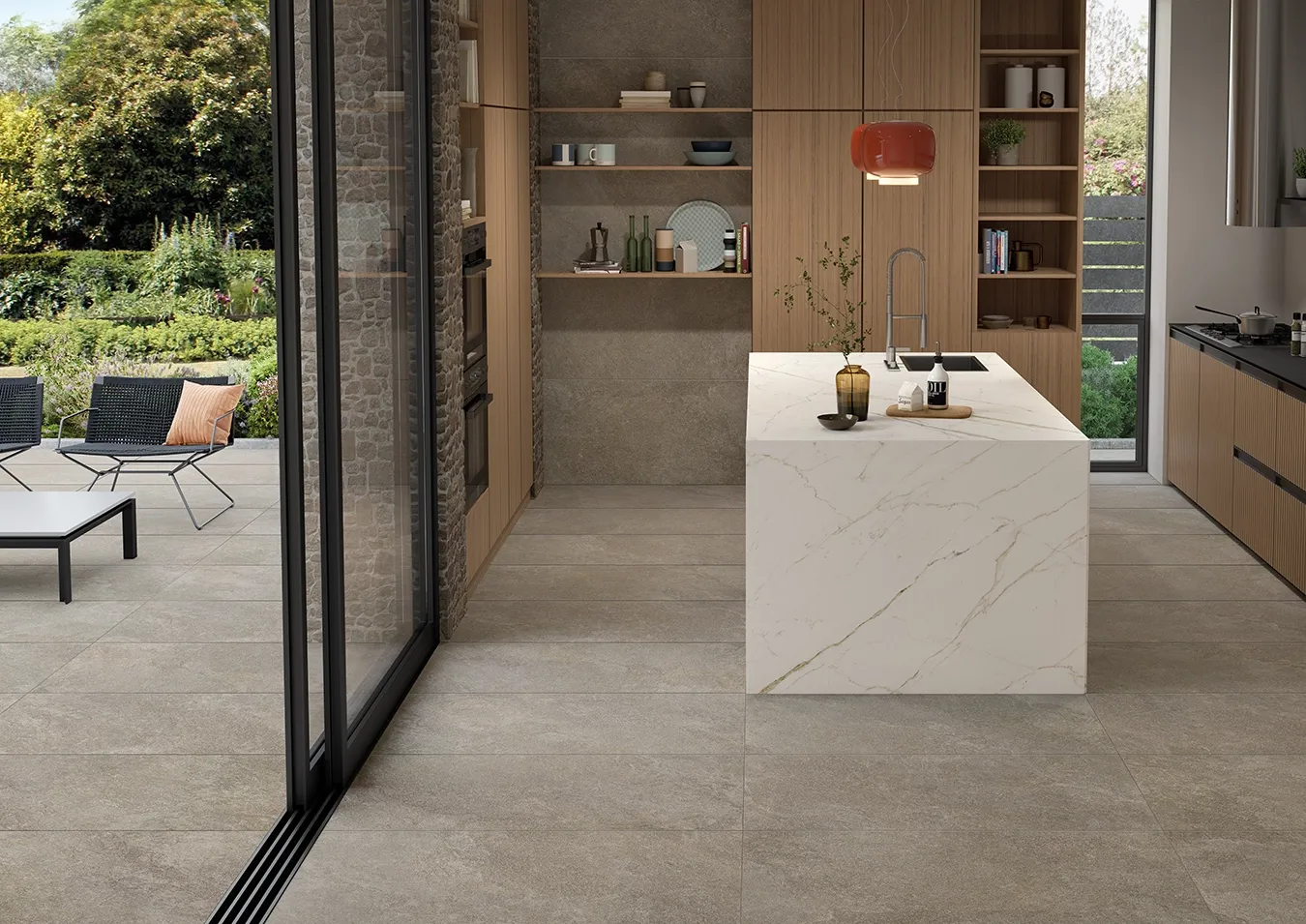
Open-plan kitchen with matte stone look porcelain tile flooring and marble effect porcelain tile countertop connecting to an outdoor terrace
Arke Clay
Arkè Clay
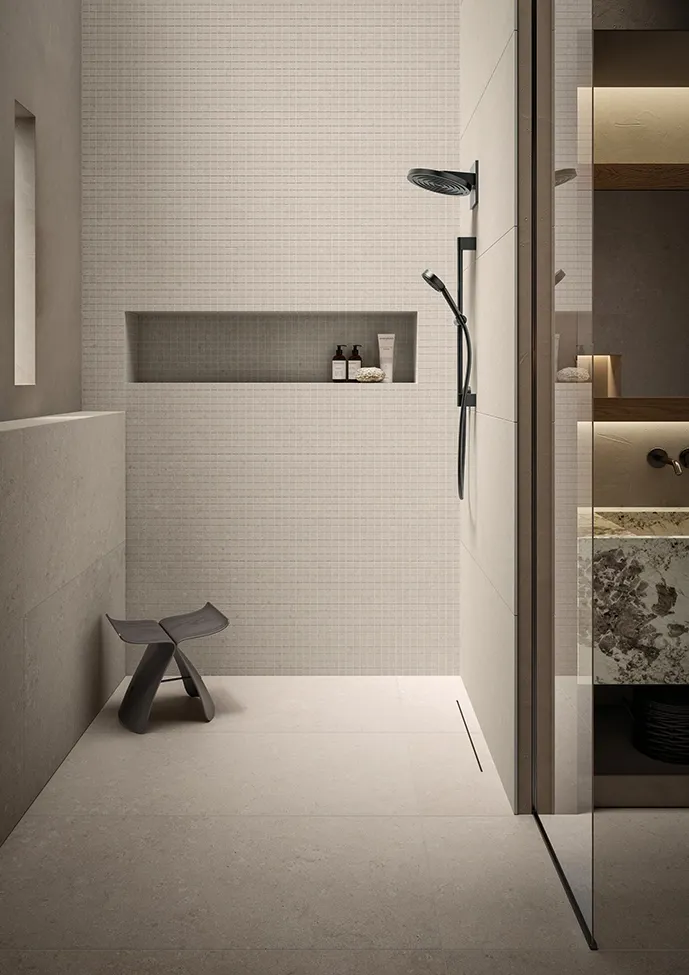
Walk-in shower with matte porcelain tile walls and mosaic feature in pearl tones with a built-in recessed niche
Heritage Pearl
Heritage Pearl

Where to use matte porcelain tile: bathrooms, kitchens & showers

Matte porcelain tile is an ideal choice for any space where slip resistance, moisture protection, and effortless maintenance are essential. Its combination of technical performance and refined aesthetics makes it suitable for the most demanding rooms in the home.

  • Bathrooms: an R10 matte finish provides certified grip on wet surfaces while maintaining a clean, contemporary look. Finishes like Natural R10 or Spazzolato R10 are well suited for both floors and walls, making them one of the most popular porcelain tile choices for modern bathrooms.

  • Kitchens: where spills and heavy foot traffic are part of daily life, a matte finish balances stain resistance with anti-slip safety. Kitchen porcelain tiles with an anti-glare surface also hide smudges from daily cooking activity, keeping the space looking clean and consistent between cleanings.

  • Showers: constant water exposure requires finishes that combine traction with moisture resistance. R10 or Structured R11 options provide reliable grip in walk-in showers and wet areas. Matte porcelain tiles for showers resist moisture absorption and inhibit mold and bacteria growth, ensuring long‑term hygiene.

In all of these environments, the versatility of matte finishes allows for a seamless visual flow between rooms. Large format tiles in stone or concrete effects reduce grout lines and create a sense of continuity, while smaller formats add detail and character to feature walls and shower niches.

Popular design ideas with matte tiles

Matte porcelain tiles offer a versatile design foundation that adapts to a wide range of interior styles, from understated minimalism to bold contemporary statements. Their low-sheen surface and natural texture make them an ideal backdrop for creative expression.

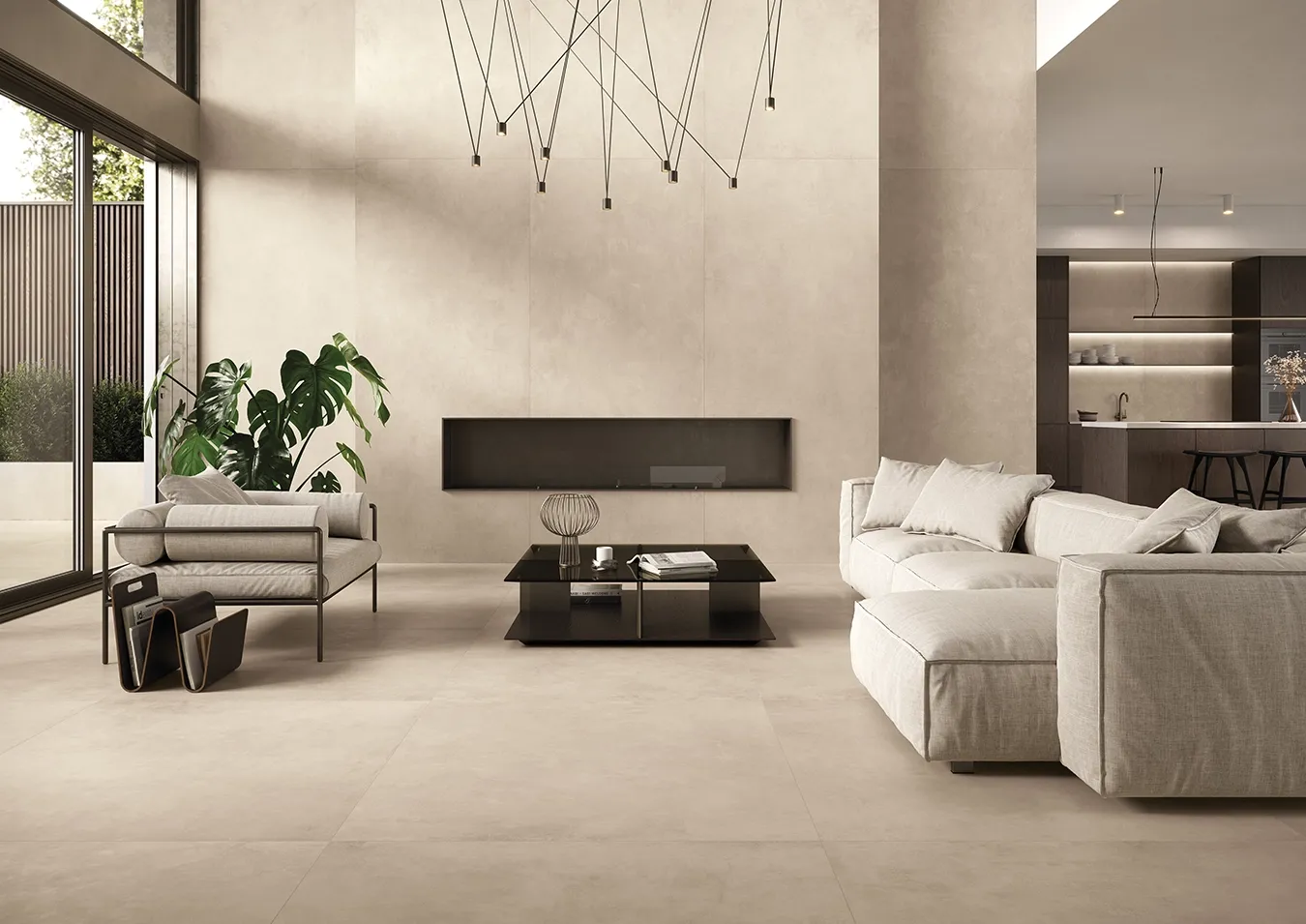
Matte concrete look porcelain tiles on floors and walls in a contemporary living room with large format slabs in light neutral tones
Moov Up Cream
Moov Up Cream
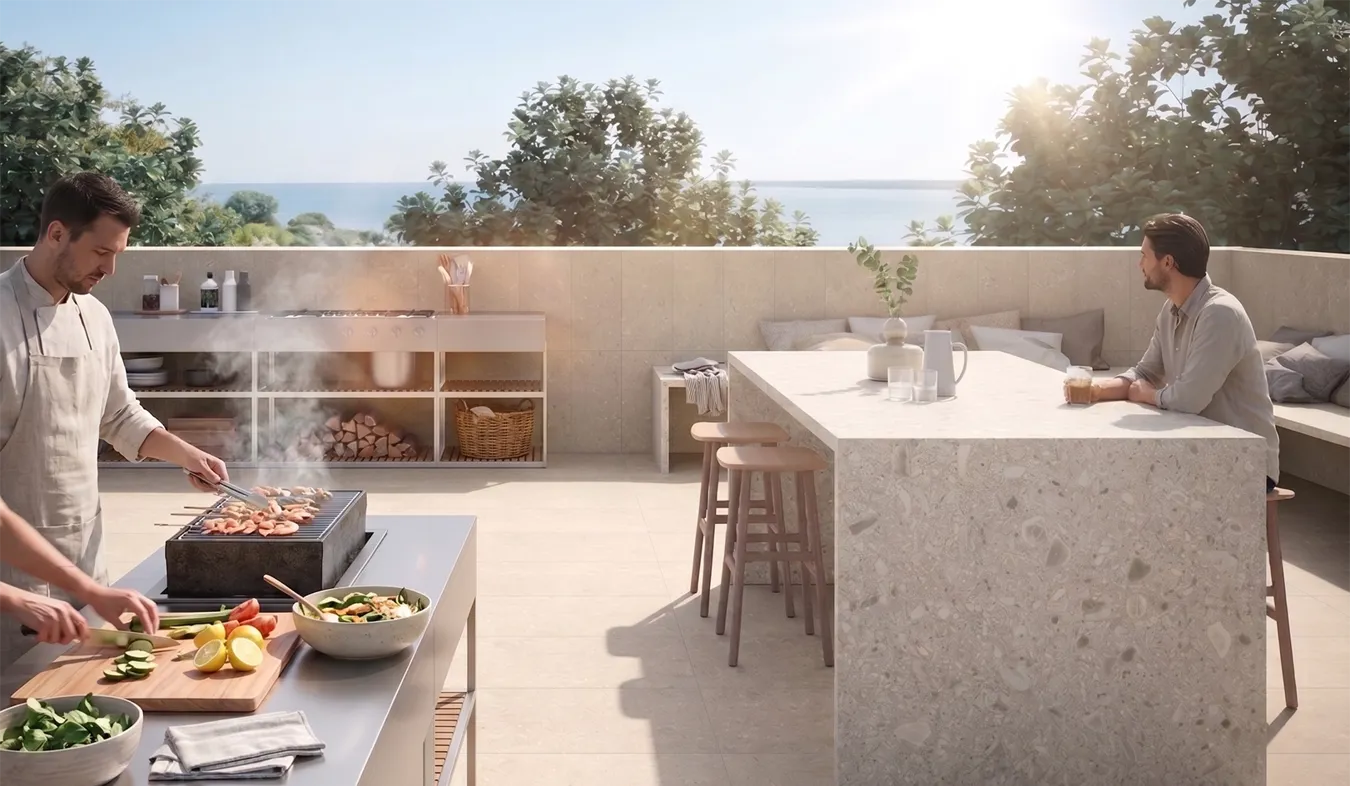
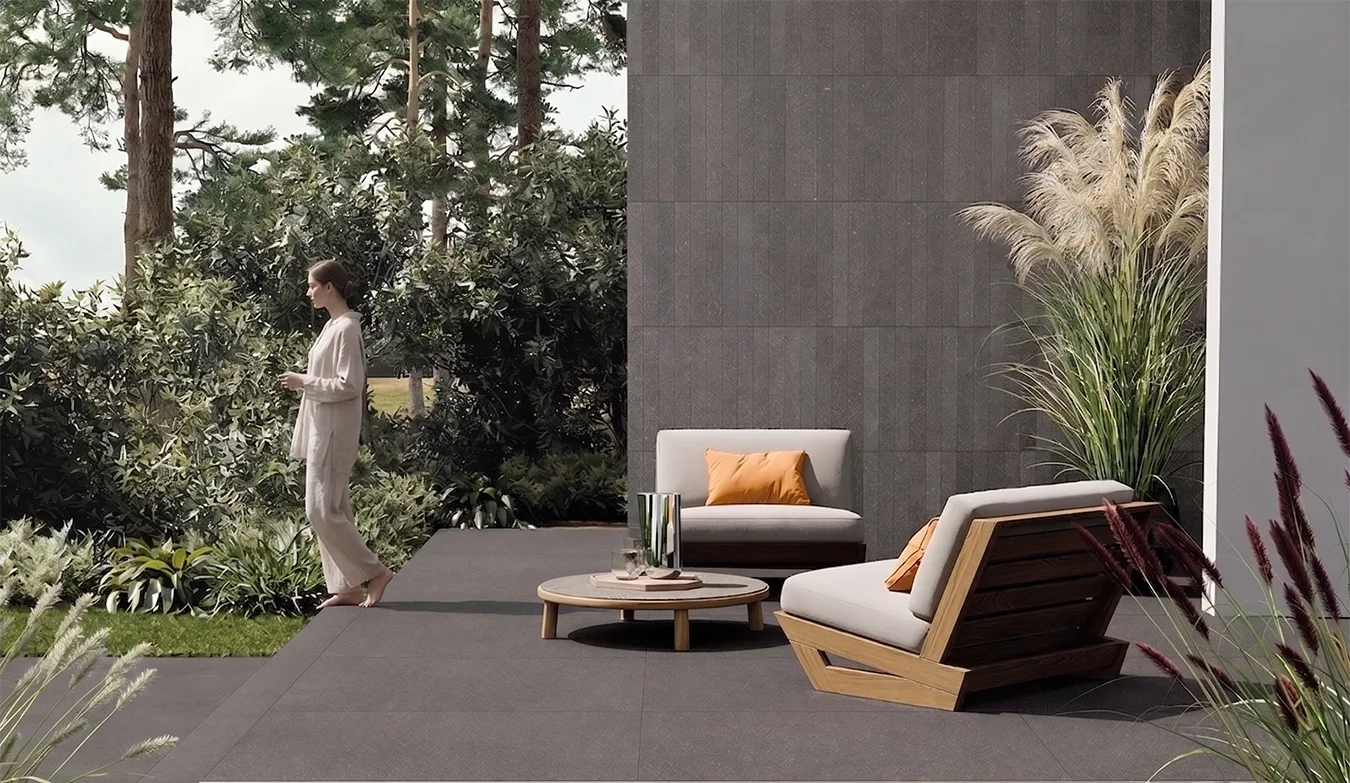
Matte stone look porcelain tiles on an outdoor terrace with dark stone effect wall tiles and contemporary furniture
Percorsi Extra Pietra di Vals

Urban minimalism: concrete look porcelain tiles in low-sheen finishes bring an industrial yet refined edge to open-plan living areas, kitchens, and lofts. Neutral tones like gray, white, and charcoal pair naturally with the anti-glare surface to create calm, architecturally driven spaces

Organic warmth: stone look tiles in matte tones capture the authentic texture and subtle tonal variation of natural stone, adding depth and character to bathrooms, entryways, and living rooms. The non-reflective finish enhances the realism of the material, creating interiors that feel grounded and inviting

Tactile surfaces and ultra-low reflectivity: current trends lean toward finishes that invite touch and minimize light reflection to their fullest extent. Ultra-matte technologies like ULTRAmatt are leading this evolution, combining velvety soft-touch surfaces with advanced technical performance to meet the growing demand for sensory-focused design in both residential and commercial spaces

Our Match App tile visualizer lets you preview how different matte effects and formats will appear in your environment before making a final selection.

How to choose the right matte tile finish

Choosing the right matte tile finish goes beyond personal taste. It requires a careful evaluation of the space, its function, and the conditions the surface will be exposed to. Here are the key factors to consider before making a final decision.

Consider slip resistance

The level of slip resistance should match the environment where the tile will be installed. For standard indoor areas like living rooms and bedrooms, an R9 rating provides sufficient grip for everyday use. In kitchens, bathrooms, and commercial spaces where water or spills may be present, an R10 finish provides safer footing. For wet areas such as walk-in showers, an R11 rating or higher provides the traction needed for maximum safety. Always check the DCOF value alongside the R rating to ensure compliance with both European and US standards.

Evaluate color variation (V1–V4)

Color variation plays a significant role in how a matte tile will appear once installed. Porcelain tiles are classified on a scale from V1 to V4, where V1 indicates uniform color and V4 features substantial variation between tiles. A matte finish with higher color variation, such as V3 or V4, adds visual depth and realism, particularly in stone and wood effects. Lower variation like V1 or V2 creates a more consistent, uniform look suited for minimalist or monochromatic design schemes.

Choose the right format

The right tile format defines the visual impact of an entire room. Large format tiles such as 48x96 inches (120x240 cm) minimize grout lines and create a seamless, expansive surface ideal for open-plan living areas. Mid-size tiles like 12x24 inch (30x60 cm) offer versatile proportions that adapt well to bathrooms, kitchens, and wall tile applications. Elongated plank formats work best with wood look porcelain tiles, reinforcing the natural grain and directional flow of the design.

Consider natural light

The amount of natural light in a room affects how a matte tile finish will be perceived. In well-lit spaces with generous natural light, matte surfaces absorb excess brightness and create a balanced, comfortable atmosphere. In darker rooms with limited natural light, lighter matte tones in white, beige, or soft gray help reflect available light without the glare associated with polished finishes, maintaining warmth and visual openness.

Frequently asked questions about matte tile finishes

Does matte tile stain?

Matte porcelain tile is highly resistant to staining, thanks to its non-porous, vitrified surface. Most common household stains can be removed with warm water and a pH‑neutral cleaner. Advanced finishes like ULTRAmatt further improve stain resistance by reducing surface roughness, preventing contaminants from settling into the material.

Is matte tile slippery?

No, matte tile is noticeably less slippery than polished or glossy alternatives. With slip resistance ratings starting at R9 for standard indoor use and reaching R10 for moisture-prone areas, these tiles provide reliable grip in both dry and wet conditions. Always check the DCOF value to ensure the tile meets the safety requirements of your specific environment.

Are matte tiles in style?

Yes, matte tiles are one of the most prominent trends in contemporary interior design. The demand for low-sheen, tactile surfaces continues to grow, driven by styles that prioritize natural authenticity and visual serenity. Advanced finishes like ULTRAmatt are pushing this trend further, offering refined soft-touch finishes that combine sensory appeal with advanced performance.

Is matte tile good for bathrooms?

Yes, matte tile is one of the best options for bathroom environments where wet surfaces, daily humidity, and frequent cleaning are the norm. R10 finishes such as Natural R10 or Spazzolato R10 deliver certified grip without sacrificing visual elegance, making them ideal for both floor tiles and wall tiles. Their non-porous surface prevents moisture absorption and inhibits the growth of mold and bacteria, ensuring a hygienic, low-maintenance bathroom that stays refined over time.

Is matte tile good for kitchen floors?

Yes, matte tile is one of the best options for kitchen floors, offering a practical balance of stain resistance, anti-slip safety, and low maintenance. Finishes like Natural R10 or ULTRAmatt provide reliable grip in case of spills while their anti-glare surface conceals smudges from daily cooking activity. For kitchen walls and backsplashes, glossy finishes complement matte floors by adding brightness and easy wipe-clean functionality.

Can matte tile be used in showers?

Yes, matte porcelain tile can be used in showers, provided the finish meets the appropriate slip resistance standards for wet environments. R10 finishes are suitable for most shower floors, while Structured R11 options offer enhanced traction for walk-in showers and curbless designs. The non-porous nature of porcelain tiles prevents water absorption and inhibits the growth of mold and bacteria, ensuring a hygienic and long‑lasting shower enclosure.

You might also be interested in