The Art Deco porcelain tile styles shaping 2026

The Art Deco porcelain tile styles shaping 2026

What defines an Art Deco tile?

An Art Deco tile is defined by geometric precision, bold contrast, and a deliberate sense of luxury rooted in the decorative movement that flourished during the 1920s and 1930s. Drawing from Egyptian motifs, Cubist abstraction, and the streamlined optimism of the Machine Age, the style developed a visual language built on symmetry, order, and unapologetic decorative ambition. American interpretations gave the movement some of its most enduring landmarks, from the Chrysler Building lobby in New York to the pastel facades of the Miami Beach Architectural District.

In tile design, these qualities translate into fans, sunbursts, chevrons, and stepped geometric outlines, combined with strong color contrasts such as black paired with gold and high-gloss finishes that evoke the era's glamour. Today, porcelain reproduces these characteristics with a level of precision and durability that original ceramic and glass installations rarely achieved. Understanding what makes Art Deco so visually distinctive also explains why this aesthetic has returned with such force in 2026.

Why are Art Deco porcelain tiles trending again?

Art Deco porcelain tiles are trending again as a compelling alternative to the minimalist aesthetics that have defined interior design for the past decade. Where warm minimalism favors restraint and quiet surfaces, Art Deco offers an equally intentional but fundamentally different proposition: pattern, contrast, and decorative ambition as primary design tools.

Several forces are converging at once. The broader maximalist shift in interior design has made ornament aspirational again, and social media has driven demand for spaces with strong visual identity, something Art Deco delivers instantly. The movement's inherent sense of order also means that even bold geometric patterns feel controlled rather than chaotic, making them accessible to a wide range of design sensibilities.

Porcelain's ability to reproduce metallic accents, high-gloss surfaces, and intricate geometric motifs with exceptional precision has made it the ideal material for this revival.

Art Deco porcelain tile patterns & motifs

The patterns of Art Deco design form an immediately recognizable visual system built on geometric precision, radial symmetry, and rhythmic repetition. Porcelain reproduces these motifs with exceptional definition across large surface areas, maintaining the sharpness of every edge and the clarity of every line that makes this decorative vocabulary so distinctive.

Geometric patterns: arches, fans & sunbursts

Arches, fans, and sunbursts are among the most iconic motifs in the Art Deco tile repertoire. The fan pattern, absorbed into Art Deco from Japanese decorative traditions, creates rhythm and movement when repeated across a floor or wall. Sunburst compositions radiate outward from a central point, naturally anchoring a room's visual focus and reinforcing the era's fascination with energy and forward motion. Arched forms, often nested or layered rhythmically, introduce a softer geometric note that balances the harder angularity found elsewhere in Art Deco design. On porcelain, geometric decorative tiles reproduce all three motifs with consistent edge definition, making them as effective across large-format floor installations as on smaller decorative wall panels.

Chevron & zigzag motifs

Chevron and zigzag patterns are among the most versatile motifs in Art Deco tile design, equally effective as all-over layouts and as directional accents that guide movement through a space. Where chevron arranges tiles with mitered ends to form a continuous V-shaped progression, zigzag works in a sharper, more angular rhythm that emphasizes the energy and speed central to the Machine Age spirit.

Both patterns respond well to color contrast. A black and white chevron floor reads as a bold graphic statement, while tonal variations in warm golds or soft champagnes produce a more restrained but equally structured result. Layout direction also plays an important role: running the pattern along the length of a room visually extends it, while running it across the width makes the room read wider. In either case, choosing the right grout color for high-contrast geometric layouts deserves as much attention as the tile selection itself.

Stepped shapes & layered geometry

Stepped shapes and layered geometry are among the most architecturally grounded motifs in the Art Deco tradition, reflecting the era's fascination with the setback skyscrapers that transformed the Manhattan skyline during the 1920s and the monumental facades they produced. In tile design, this translates into staggered outlines, receding frames, and repeating rectangular progressions that build visual depth through structure alone rather than through color or contrast.

These patterns work particularly well in combination with small and medium-format porcelain tiles, where the interplay between tile size and the stepped geometry creates a finely detailed surface. On larger formats, the same motif reads with greater architectural weight, making it a natural fit for feature walls and entryway floors.

Radiating lines & symmetrical layouts

Radiating lines and symmetrical layouts translate the Art Deco obsession with order and centrality directly onto tile surfaces. Lines extending outward from a focal point, whether a room's center, a fireplace surround, or a vanity wall, create a sense of controlled movement that is immediately readable and visually authoritative.

Symmetrical compositions reinforce this effect by ensuring that every element has a corresponding counterpart, producing surfaces that feel deliberately composed rather than simply tiled. Porcelain mosaic tiles are particularly well suited to radiating layouts, where their small format allows the pattern to curve and expand with precision across complex compositions.

Metallic-effect details (gold, brass, chrome)

Metallic-effect porcelain tiles bring one of Art Deco's defining qualities into contemporary interiors without the maintenance demands of real metal surfaces. Gold and brass tones reference the movement's original glamour palette, while chrome and platinum effects introduce a cooler, more industrial inflection that aligns with modern interpretations of the style.

These finishes work most effectively as accents rather than field tiles, framing geometric compositions, defining borders, or punctuating symmetrical layouts with concentrated luminosity. 3D relief tiles with metallic-effect surfaces add a further dimension, catching light differently throughout the day and reinforcing the dynamic, shadow-play quality that defines Art Deco surfaces at their most refined.
Art Deco porcelain tile colors trending in 2026

The Art Deco porcelain tile colors trending in 2026 divide into two registers: the movement's original high-contrast combinations of black, gold, and jewel tones, and the softer neutrals and pastels that carry the same geometry into contemporary interiors. Color is never incidental in Art Deco design. It reinforces geometry and amplifies contrast with deliberate precision. Each palette performs differently depending on the surface. A saturated tone grounds a floor and reads as graphic, while a neutral opens up a compact powder room or entryway. The first of these palettes remains the movement's signature expression.

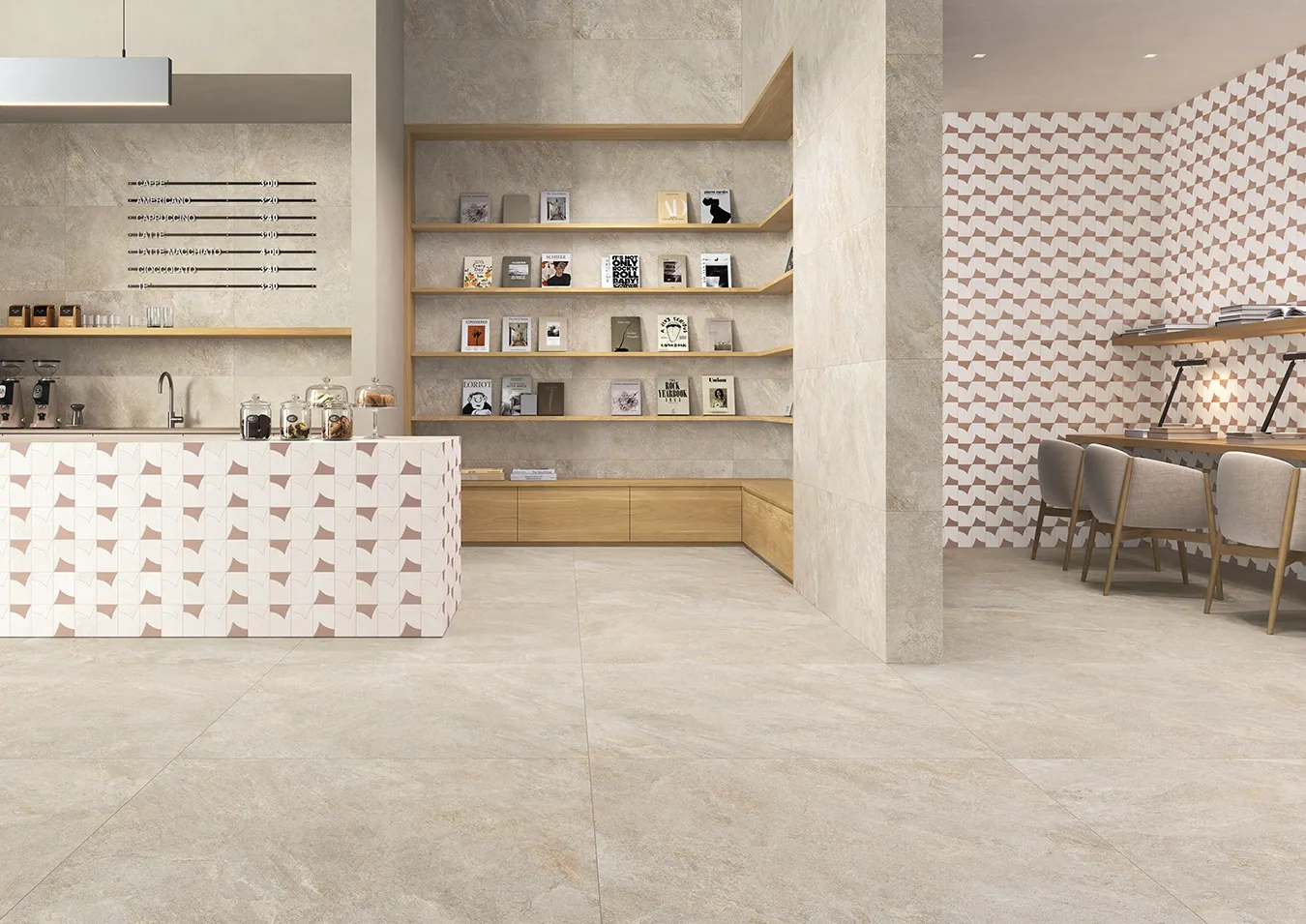
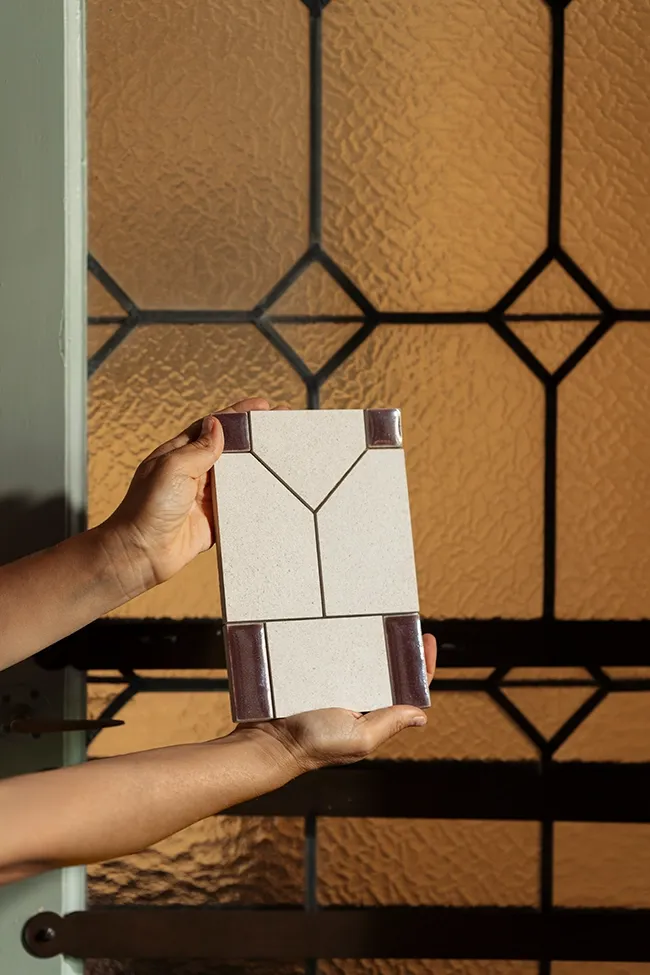
Champagne Art Deco porcelain tile with fan motif and dark metallic corner accents

Black & gold: the iconic 1920s palette

Black and gold remains the defining color combination of Art Deco design and the most immediately recognizable expression of the style in tile form. Black porcelain tiles with a polished or glossy finish provide the deep, light-absorbing ground that makes gold and brass metallic accents stand out with maximum visual impact. This palette works equally well on floors, where the contrast reads as graphic and grounding, and on walls, where it creates a sense of depth and concentrated glamour.

Teal, emerald & deep blue tones

Teal, emerald, and deep blue are among the most sophisticated entries in the Art Deco color palette, drawing from the jewel-toned interiors and lacquerwork that defined the movement's most luxurious expressions. In porcelain tile, these tones bring particular depth to bathrooms and powder rooms, pairing beautifully with gold or brass metallic accents and high-gloss finishes that amplify their natural richness.

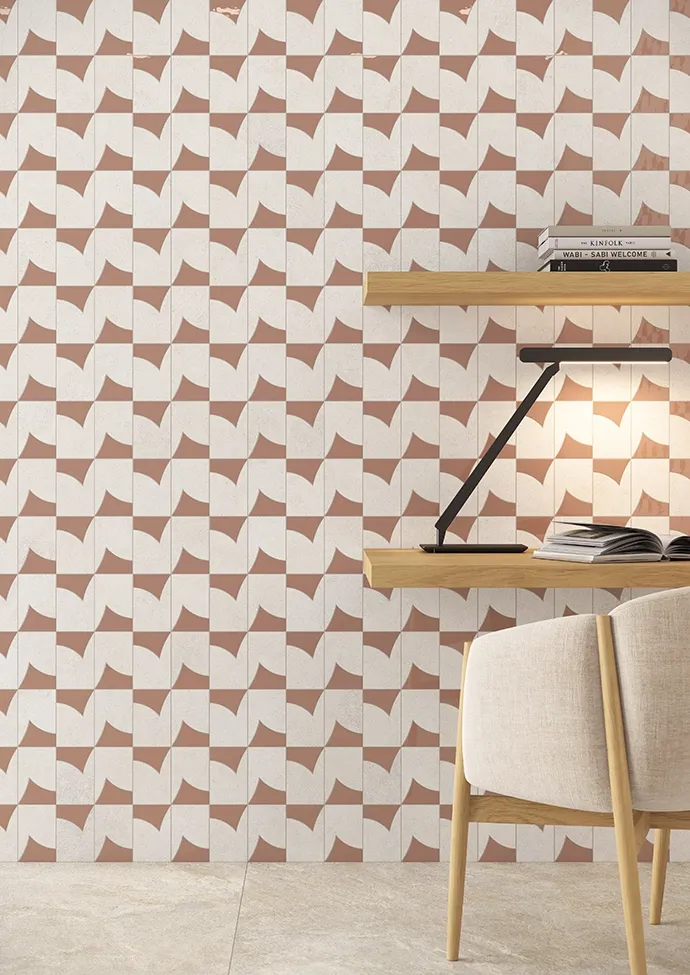
White and terracotta Art Deco porcelain wall tiles with geometric fan pattern

White & champagne neutrals

White and champagne neutrals serve as an essential counterbalance within Art Deco tile design, providing the luminous ground against which bolder colors and metallic accents register their full effect. White porcelain tiles with a polished or silky finish amplify natural light while maintaining the refined surface quality that Art Deco interiors demand. Champagne tones introduce warmth without sacrificing the palette's inherent sophistication, making them a natural choice for living spaces and primary bathrooms where elegance and comfort coexist naturally.

Blush, coral & soft pastels

Blush, coral, and soft pastels represent the gentler register of the Art Deco palette, rooted in the powder rooms, hotel lobbies, and ocean liner interiors of the 1930s. In contemporary tile design, these tones offer a way to bring Art Deco geometry and surface quality into residential spaces without the visual intensity of the style's darker combinations. Paired with champagne grout and polished finishes, they produce interiors that feel refined and quietly decorative, referencing the era's sensibility while remaining highly livable.

Charcoal, graphite & metallic grays

Charcoal, graphite, and metallic grays bring a cooler, more contemporary inflection to the Art Deco palette, aligning the movement's geometric precision with the industrial character of modern interiors. These tones work especially well on large-format floor tiles, where their depth and tonal variation create a surface that feels both structured and immersive. Against white or brass accents, they sharpen the geometric clarity of chevron, stepped, and radiating layouts, producing spaces that read as unmistakably Art Deco while remaining firmly grounded in 2026 design sensibilities.

Best finishes for Art Deco porcelain tiles

The best finishes for Art Deco porcelain tiles are those that interact dramatically with light, reinforcing the style's inherent glamour and surface intensity. A thorough overview of porcelain tile finishes covers each option's technical performance alongside its aesthetic application. For Art Deco interiors specifically, these finishes stand out:

  • Lappato (polished): mechanically polished after firing to a mirror-like clarity, this is perhaps the most naturally Art Deco finish in the range. Polished porcelain tiles amplify the depth of dark tones and the brilliance of metallic-effect surfaces and carry an R9 rating, which specifies them for dry interior floors and for walls in any room.

  • Silky and ULTRAsilky: a velvety, anti-reflective surface that delivers refined elegance with a softer sheen. Silky tile finishes are particularly well suited to powder rooms and primary bathrooms where tactile quality matters as much as visual impact. ULTRAsilky carries an interior wet classification, which qualifies it for bathroom floors as well as walls.

  • ULTRAmatt: the understated choice for contemporary Art Deco interpretations, where geometric precision becomes the primary design statement without relying on surface glare. Matte tile finishes work especially well with stepped and chevron layouts in transitional interiors.

  • Structured R11: three-dimensional surface relief adds tactile depth to geometric compositions. Structured porcelain tiles perform particularly well on feature walls and shower floors, where shadow and light reinforce the pattern's geometry.

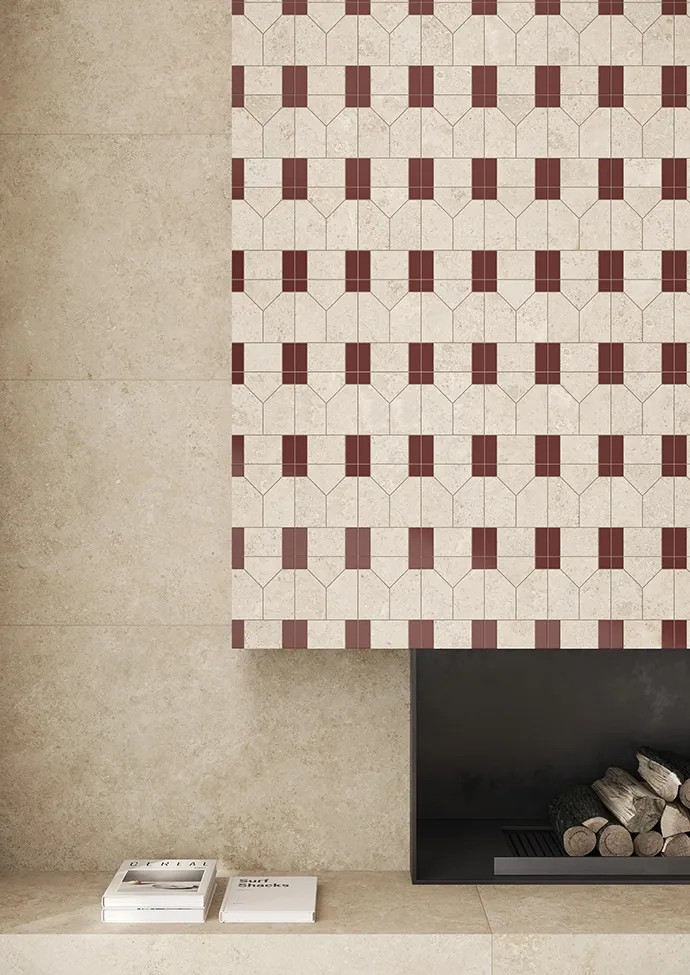
Cream and burgundy Art Deco porcelain tiles with octagonal geometric pattern and square insets

Art Deco porcelain tiles for bathrooms, kitchens & living spaces

Art Deco porcelain tiles adapt naturally to a wide range of interiors, with each space drawing on a different aspect of the style's visual vocabulary:

  • Bathrooms and powder rooms: geometric wall tiles combined with high-gloss finishes and strong color contrast produce the immersive, jewel-box character that defines many of the most celebrated Art Deco interiors.

  • Kitchens: the backsplash is where the style finds its most practical expression, with chevron, stepped, and geometric patterns adding visual interest without overwhelming the space.

  • Living rooms: large-format floor tiles in structured geometric layouts, anchored by a bold border or feature inset, benefit from a more restrained approach.

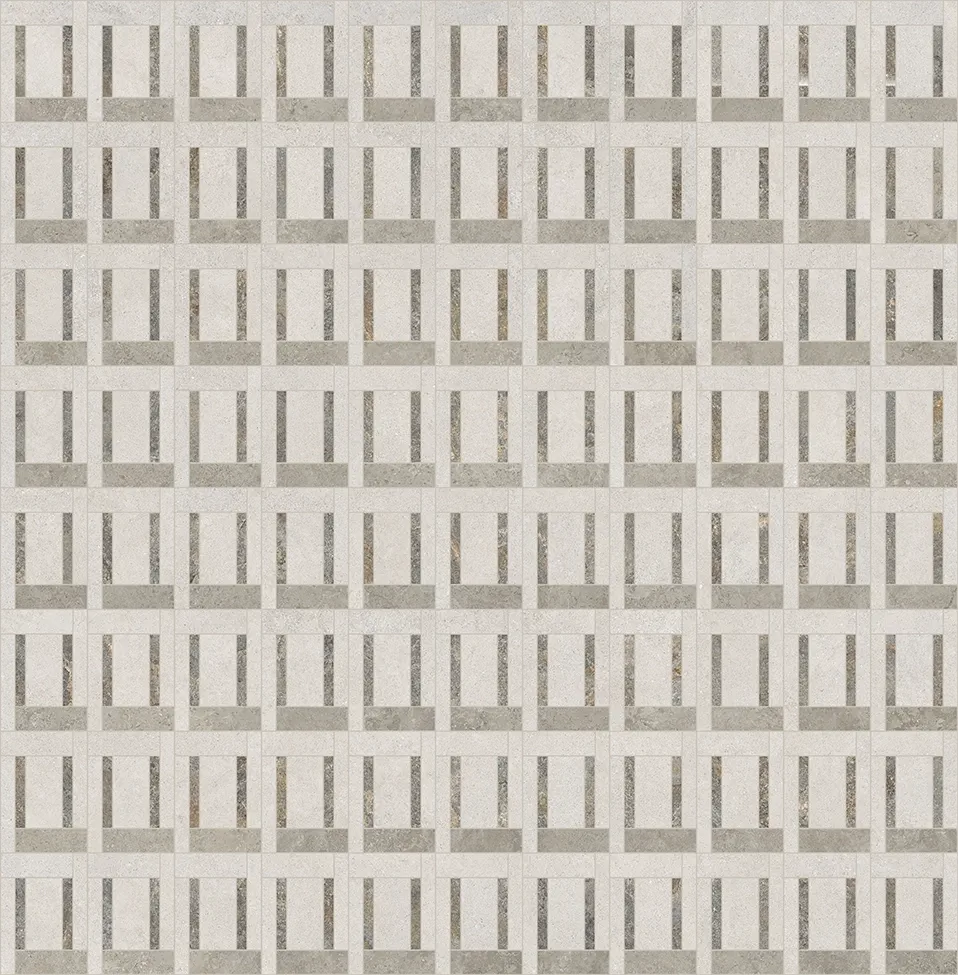
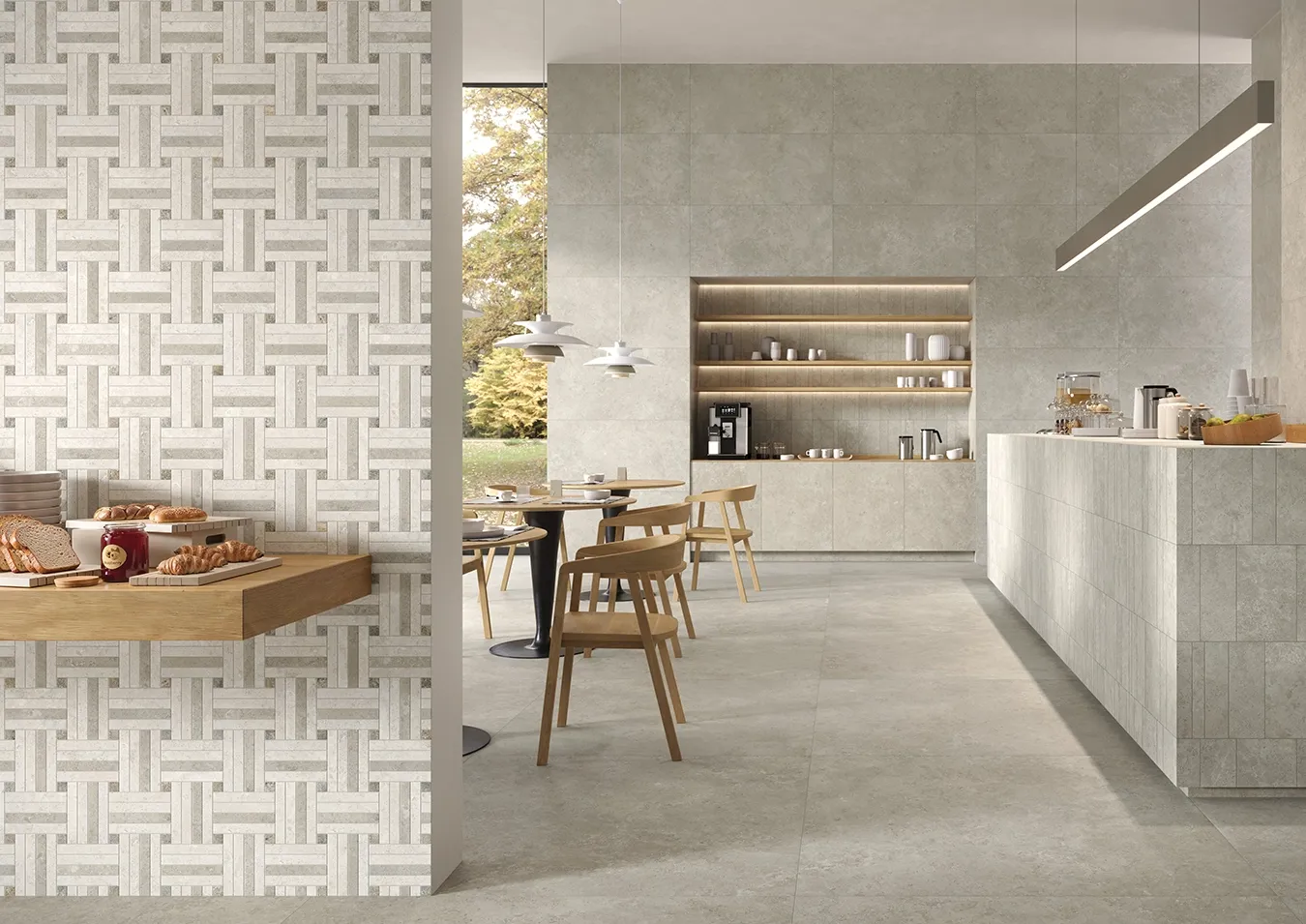
Light gray Art Deco porcelain tiles in straight stack layout with stepped rectangular border insets

Installation patterns that enhance Art Deco porcelain tiles

The installation pattern is as integral to an Art Deco result as the tile itself, determining how the geometry reads across a surface and how strongly the overall composition communicates the style's characteristic order and rhythm. A complete reference for how to lay porcelain tiles covers the technical requirements that underpin every layout decision.

For Art Deco specifically, these patterns deliver the strongest results:

  • Straight stack: aligns joints vertically and horizontally, reinforcing the symmetry and geometric discipline at the core of Art Deco design.

  • Chevron and herringbone: directional layouts that introduce movement and energy while maintaining the precision and control the style demands.

  • Medallion and radial: centered compositions that anchor a room visually, working particularly well on entryways and bathroom feature walls.

  • Border and inset: framing a field tile with a contrasting border or decorative inset is one of the most classically Art Deco installation techniques, adding architectural definition to any surface.

How to choose the right Art Deco porcelain tile style

Choosing the right Art Deco porcelain tile style starts with identifying which aspect of the movement resonates most with the space and the design vision behind it. The movement encompasses a wide spectrum, from the bold high-contrast glamour of black and gold geometric floors to the softer expression of champagne neutrals with subtle surface relief. These are the key factors to consider:

  • Room scale: smaller formats suit intricate motifs and mosaic compositions, while large-format tiles carry stepped and radial patterns with stronger architectural presence.

  • Finish: should respond to the room's light conditions and function, from Lappato in formal spaces to ULTRAmatt in more contemporary interpretations.

  • Color: consider the existing palette of the space rather than working in isolation, since Art Deco's strength lies in its coherence as a complete visual system.

  • Pattern: start with the motif that best reflects the room's architectural character, whether a radial composition for a focal wall or a directional chevron for a floor.

Maintenance & cleaning tips for Art Deco porcelain tiles

Porcelain tiles require minimal maintenance regardless of the finish selected, making them a practical choice for even the most decorative Art Deco compositions. A <0.5% water absorption rate means the surface does not harbor moisture, bacteria, or mold, and routine cleaning requires nothing more than a damp mop and a pH-neutral detergent.

For polished and glossy finishes, where surface reflectivity is central to the design's appeal, avoiding abrasive cleaning products preserves the tile's clarity over time. Grout lines in high-contrast geometric layouts benefit from a quality grout sealer applied after installation, since darker grouts absorb residual cleaning agents when left unsealed. Selecting the right grout color and maintaining contrast-heavy layouts over time are decisions that deserve as much care as the tile choice itself.

Frequently asked questions about Art Deco porcelain tiles

Are Art Deco tiles durable?

Art Deco porcelain tiles are extremely durable, combining the decorative intensity of the style with porcelain's core technical properties: <0.5% water absorption, high abrasion resistance, and full color stability under UV exposure and weather conditions. The pattern and finish are integral to the tile body rather than applied to its surface, ensuring they do not wear or fade over time.

Do Art Deco tiles look realistic?

Yes. Contemporary digital printing technology reproduces geometric motifs, metallic-effect surfaces, and decorative patterns with a precision and consistency that earlier ceramic techniques could not achieve. Handmade-look porcelain tiles also capture the subtle surface irregularities of original Art Deco ceramic work for a more handcrafted appearance.

Are Art Deco tiles good for bathrooms?

Art Deco tiles are an excellent choice for bathrooms. Porcelain's non-porous vitrified surface resists moisture and inhibits bacterial growth, while R10-rated finishes deliver documented slip resistance on wet floors.

Are Art Deco tiles good for kitchen backsplashes?

Art Deco tiles work exceptionally well on kitchen backsplashes. Their high stain resistance and smooth surface make them easy to wipe clean, while geometric and metallic-effect patterns add strong visual identity to the space.

Do Art Deco tiles require sealing?

Porcelain tiles do not require sealing. Their dense, vitrified surface is inherently impermeable, unlike natural stone, which requires routine sealing to prevent staining. Grout joints in high-contrast layouts benefit from a quality grout sealer applied after installation.

Are Art Deco tiles slippery?

The slip resistance of an Art Deco porcelain tile depends on its finish. Polished and glossy finishes carry an R9 rating, which specifies them for dry interior areas. For bathrooms and kitchens, R10-rated finishes such as Natural R10 or Spazzolato R10 deliver documented slip resistance on surfaces regularly exposed to water. US projects typically require a DCOF of 0.42 or higher under ANSI A137.1 for interior floors expected to be walked on when wet.

You might also be interested in