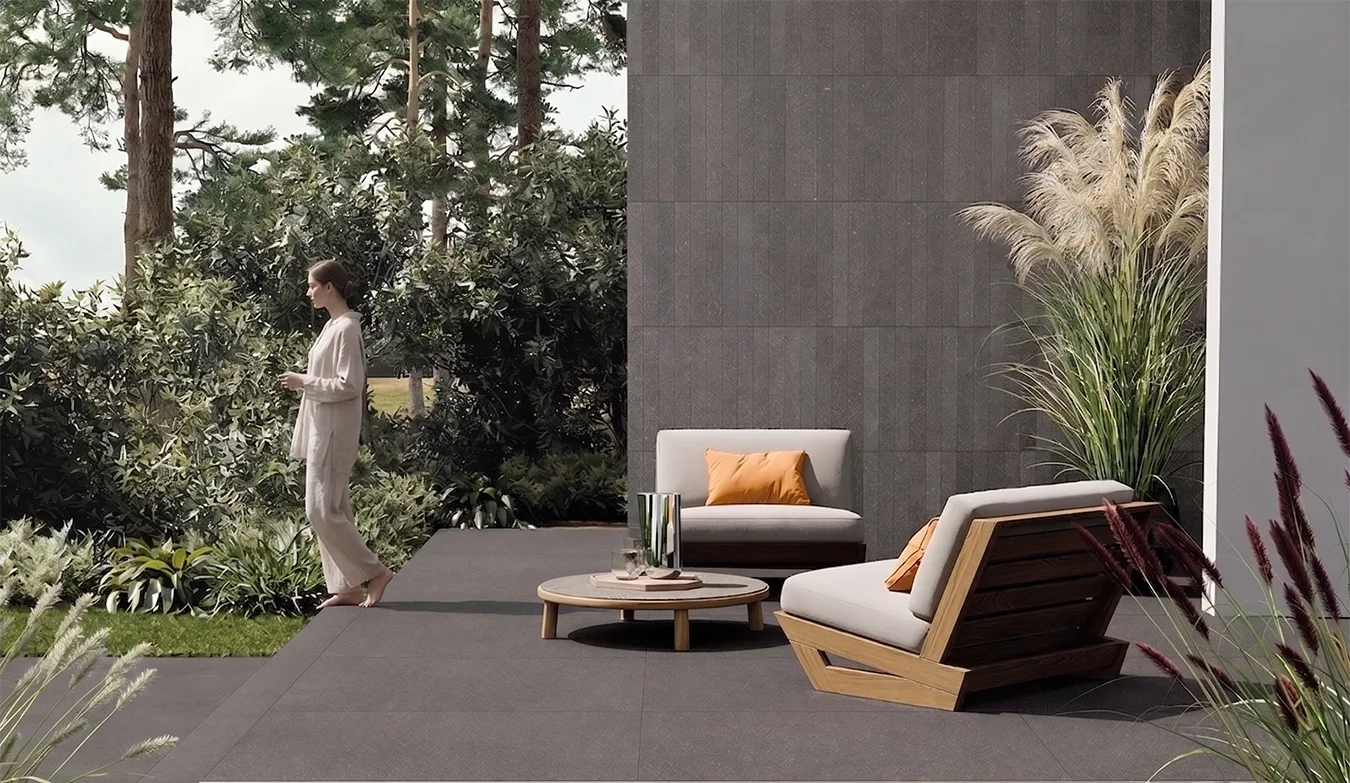
Best porcelain pavers for hot & sunny climates

Best porcelain pavers for hot & sunny climates

What makes porcelain pavers heat-resistant?

Porcelain pavers are heat-resistant because their dense, low-porosity structure resists thermal shock, UV fading, and surface heat buildup. Water absorption stays below 0.5 percent, so the material won't crack or warp under intense summer heat.

Tile thickness also plays a role in heat performance. Outdoor pavers are typically manufactured in a thicker profile, around 3/4 inch (20 mm), compared to standard indoor floor tiles, which helps the material handle expansion and contraction as temperatures rise and fall.

How porcelain pavers behave in extreme heat

Porcelain pavers behave differently from most outdoor materials under intense heat, remaining structurally stable even as surface temperature, color, and slip resistance are put to the test. 

Thermal conductivity and heat absorption

Porcelain pavers have low thermal conductivity, so heat moves through the material more slowly than it does through concrete or natural stone. This means the surface takes longer to heat up under direct sun exposure, and because so little heat penetrates below the surface to begin with, it sheds that heat quickly once shade or evening temperatures set in.

Surface temperature also depends on color and finish, not just on the material itself. Lighter porcelain pavers reflect more sunlight and stay cooler to the touch, while darker shades absorb more heat and can feel noticeably warmer underfoot during peak sun hours. 

Why porcelain stays cooler than concrete, stone, or ceramic

Porcelain pavers stay cooler than concrete or natural stone because their fired, vitrified body holds far less residual moisture and mass capable of storing heat. Concrete and porous natural stone absorb and retain heat throughout the day, which is why they often stay warm well into the evening. Porcelain tiles release that heat much faster once direct sun exposure drops.

Ceramic tile, by contrast, is more porous than porcelain and prone to surface wear under constant sun and foot traffic. Porcelain's density gives it an edge in both heat performance and long term durability outdoors.

UV resistance and color stability in sun exposed areas

Porcelain pavers resist UV damage because color is fired directly into the material rather than applied as a surface coating. This means the color will not fade, chalk, or peel, even after years of direct sun exposure, a common failure point for sealed stone and stained concrete.

No resealing or color treatment is needed to maintain this stability. The finish stays consistent season after season, which matters most in climates with long, intense summers.

Barefoot comfort on sun exposed surfaces

Surface comfort underfoot depends on color, finish, and thickness working together, not on any single factor alone. Lighter colored pavers with a matte or textured finish stay noticeably cooler than dark, smooth surfaces exposed to the same sun.

For pool decks and terrace floors where bare feet are common, choosing a light or medium toned paver with a slip resistant finish offers the best balance of comfort and secure grip.

Key characteristics of heat-resistant porcelain pavers

A heat-resistant porcelain paver is defined by six measurable traits: low heat absorption, a reflective finish, fade proof color, dimensional stability, slip resistance, and consistent surface temperature regardless of shade. Together, these characteristics determine how a paver performs across a full day of sun exposure, not just at peak heat.

Low heat absorption for cool touch surfaces

Low heat absorption starts with density. Firing at extreme temperatures collapses the material's internal structure, leaving water absorption below 0.5 percent. With so little porosity, there is less mass inside the tile to store heat, so the surface heats up more slowly and sheds that heat faster once the sun shifts or evening temperatures drop.

High albedo finishes that reflect sunlight

Albedo is a question of what happens above the fired body, at the finish. Matte and lightly textured surfaces scatter incoming light rather than concentrating it, while glossy, dark finishes absorb more and release it as surface heat. Choosing a matte, light toned finish is a practical way to lower surface temperature without changing the tile's technical performance.

Fade proof performance under intense UV rays

Color stability comes from how pigment enters the tile. In through body and glazed porcelain, color is fixed during firing rather than applied afterward as a topical coat, so there is no film for UV rays to break down. In practical terms, a paver installed today will show the same color a decade from now, with no resealing or refinishing needed.

Dimensional stability in extreme temperature swings

Dimensional stability is a direct result of low water absorption. Materials that retain moisture expand and contract as temperatures rise and fall, which over time causes cracking, lippage, or joint failure. With water absorption below 0.5 percent, porcelain moves very little across a day's heat cycle, so pavers stay flat and joints stay even season after season.

Slip resistance in hot, dry outdoor conditions

Slip resistance matters even in dry climates, since dust, sunscreen, and pool splash reduce grip on a smooth surface quickly. Non slip tiles are engineered with surface texture that holds grip under exactly these conditions, offering reliable traction for patios, pool decks, and driveways exposed to constant sun.

Color temperature performance (light vs dark pavers)

Color choice has a direct, measurable effect on surface temperature, since light and dark pavers from the same production line absorb sunlight differently. This makes color one of the few heat management decisions made at the design stage, alongside layout and finish, rather than something addressed after installation. In high exposure settings such as driveways or open terraces, a lighter tone can noticeably reduce how hot the surface gets by midday.

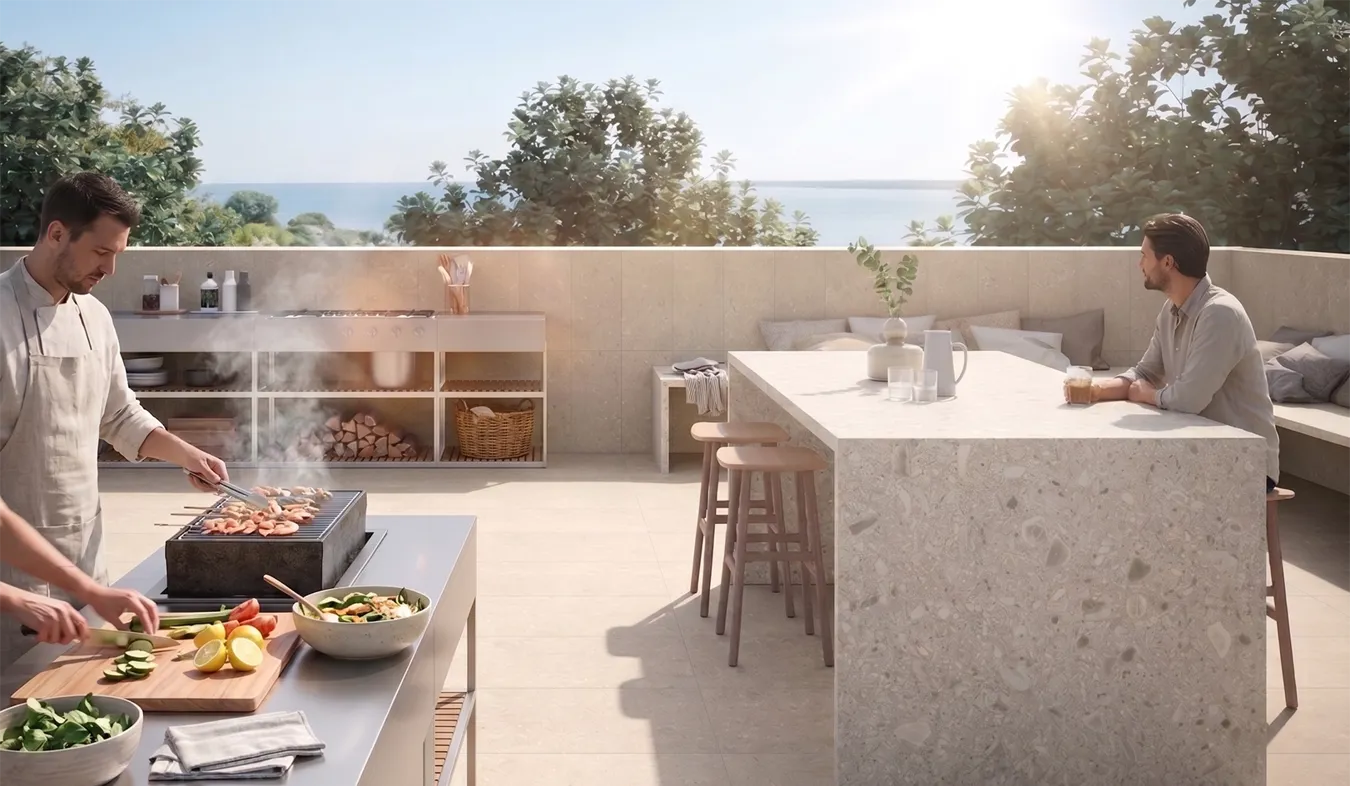
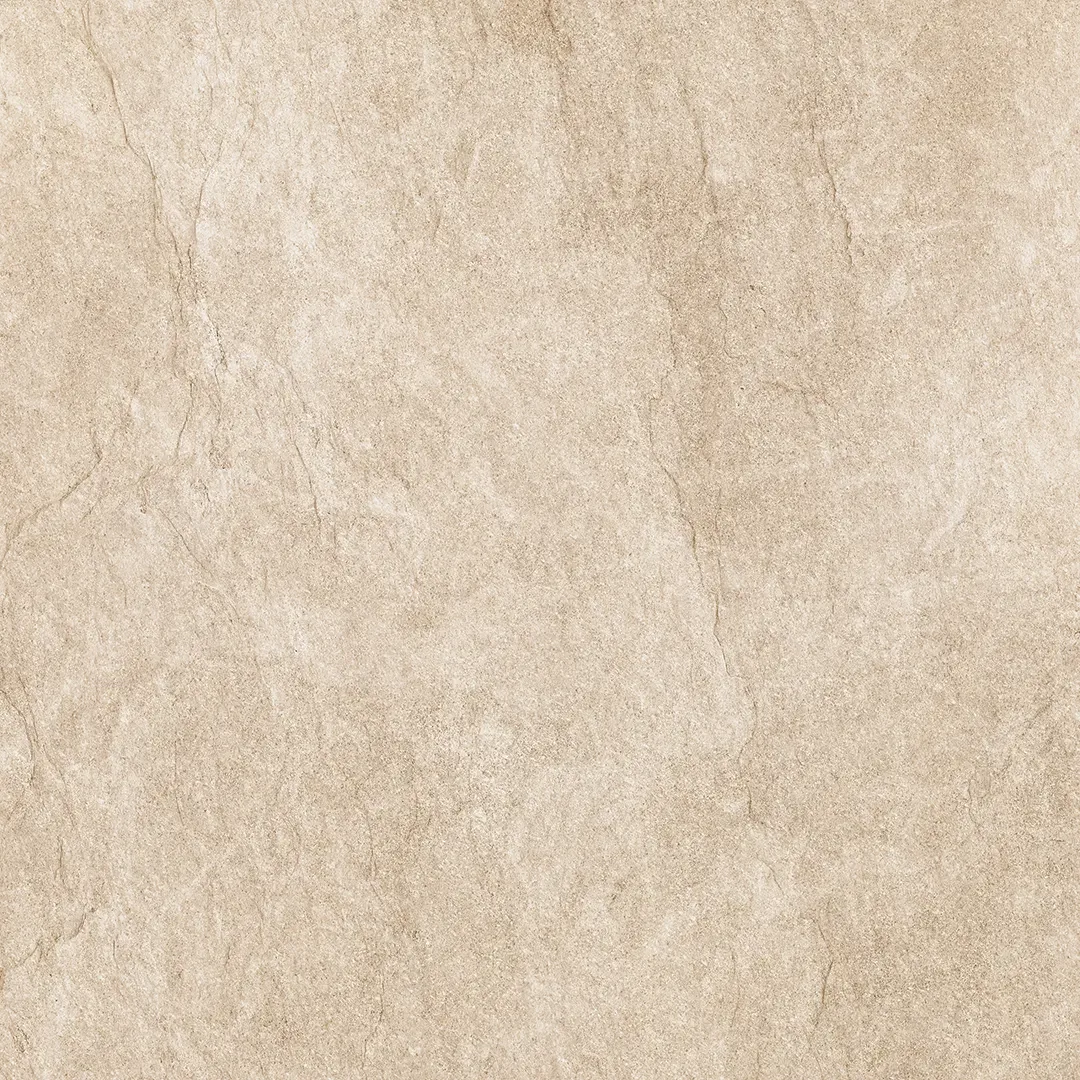
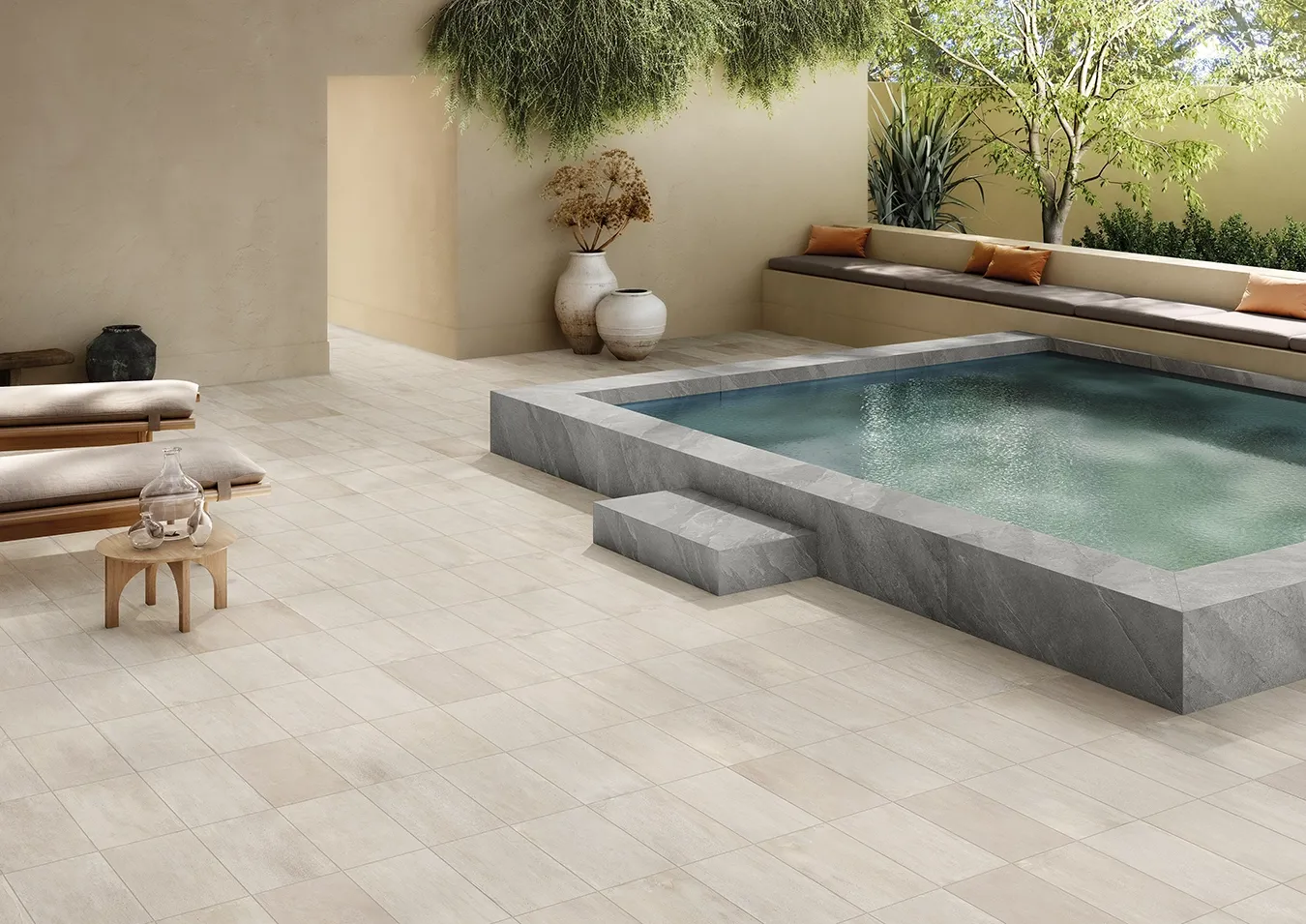
Light beige stone-effect porcelain pavers on a sunlit outdoor patio
Nyth Beige
Nyth Beige

Benefits of porcelain pavers in hot climates

The main benefit of porcelain pavers in hot climates is durability paired with low maintenance, holding up against sun, heat, and daily wear without resealing or refinishing.

  • Color and finish stability: UV exposure won't fade or degrade the surface over time

  • Low upkeep: sunscreen, food, and debris rinse off easily, no sealing required

  • Structural durability: resists cracking, warping, and surface wear under heat cycles

  • Design flexibility: available in stone, travertine, wood, concrete, and other looks, across formats and thicknesses suited to pathways, terraces, and large open spaces

Drawbacks and considerations before choosing porcelain pavers

Porcelain pavers perform well in hot climates, but a fair assessment means weighing a few real limitations alongside the benefits.

  • Upfront cost: material typically costs more than concrete or basic ceramic, especially in R11 finishes or large formats, though the gap often narrows over the product's lifespan through lower maintenance

  • Still absorbs some heat: heat resistance lowers surface temperature and speeds up cooling, but it doesn't make the paver immune to heat; a dark, glossy paver in full midday sun will still get hot enough to notice underfoot

  • Weight and handling: large format pavers are heavy and harder to maneuver or replace individually, which matters if a single tile is ever damaged

  • Batch to batch color variation: natural variation between production lots can be more visible across large, sun exposed surfaces like open patios or driveways, so ordering enough material from the same lot upfront matters

  • Contributes to surface heat buildup nearby: like most hardscape, porcelain pavers are impervious, so while the paver itself resists heat, a large paved area still radiates warmth into the surrounding space more than a planted or permeable surface would

Heat-resistant, ivory stone-effect porcelain pavers around an outdoor pool deck
Street Milano Ivory
Street Milano Ivory

Best places to use heat-resistant porcelain pavers

Heat-resistant porcelain pavers perform best in outdoor spaces with constant sun exposure and heavy foot traffic, where durability and low maintenance matter most.

  • Pool decks: resist moisture, chlorine, and sunscreen, with an R11 finish for a secure grip when wet

  • Patios and entrywaysoutdoor tiles hold color and finish across seasons of direct sun

  • Driveways: withstand heat cycling and heavy loads without cracking or fading

  • Garden walkways and pool surrounds: lighter tones stay cooler underfoot in direct sun

  • Courtyards and rooftop terraces: large format pavers create a clean, seamless look across open spaces

Across all of these settings, the right choice ultimately comes down to how a paver performs alongside the alternatives available for the same space.

Porcelain pavers vs other outdoor materials in hot weather

Porcelain pavers outperform concrete, natural stone, and wood decking across the categories that matter most in hot climates, from surface temperature to long term durability.

  • Concrete: prone to cracking from heat cycling and staining over time, and its lighter mix colors tend to fade unevenly under UV exposure; requires periodic sealing that porcelain doesn't

  • Natural stone: porous and heat retentive, often staying warm well after sunset; also more prone to efflorescence, the white mineral residue that appears as moisture evaporates, and needs regular sealing to resist staining

  • Wood decking: comfortable underfoot but vulnerable to UV fading, splintering, and moisture damage; boards can also warp or cup as they expand and contract with heat cycles, requiring ongoing refinishing

  • Ceramic tile: more porous than porcelain, making it less suited to constant sun and temperature swings, with a higher risk of surface crazing over time

Where porcelain gives ground is upfront cost, since concrete and basic ceramic are typically cheaper to purchase. For most hot climate applications, though, lower long term maintenance and greater dimensional stability tip the balance back in porcelain's favor.

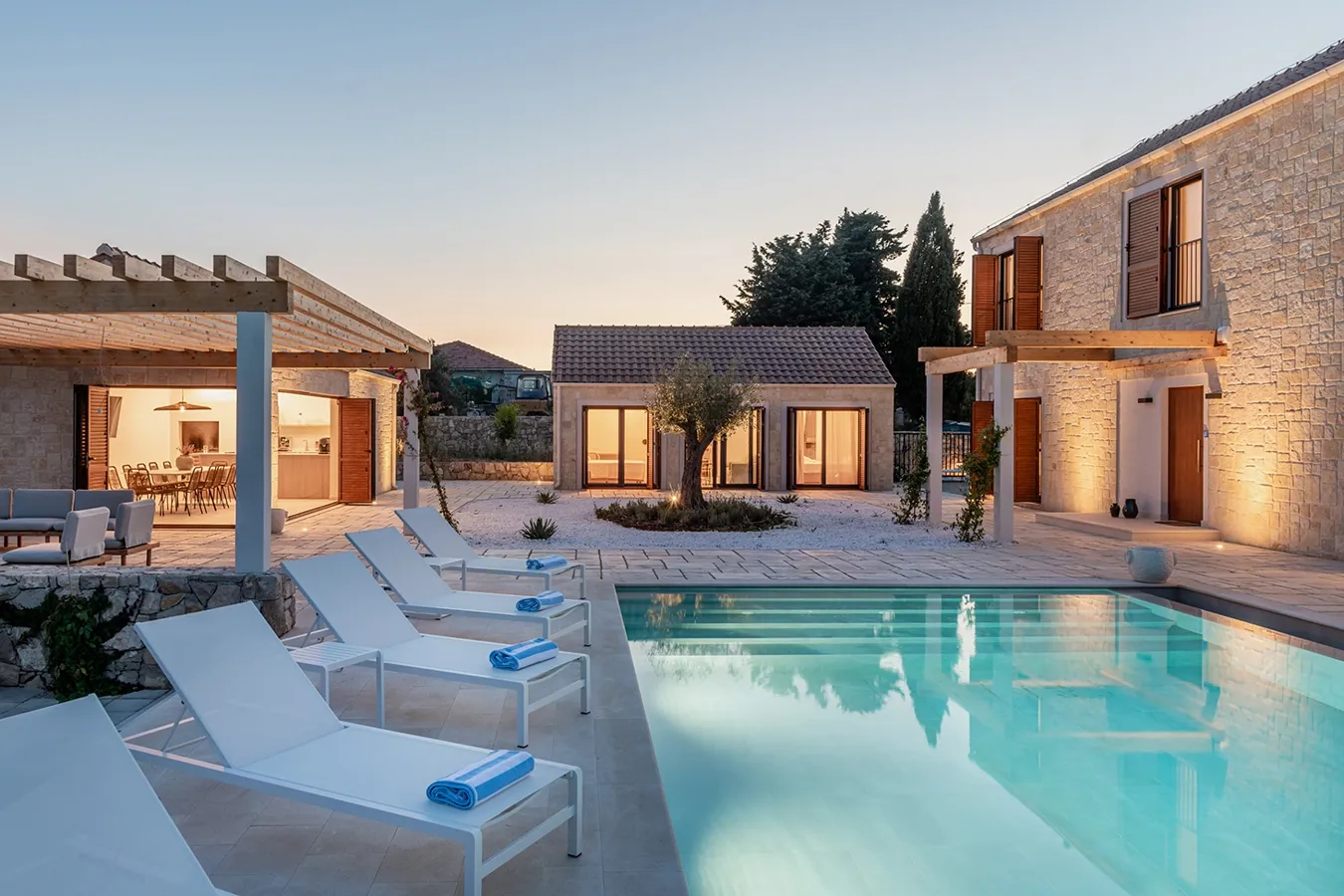
Heat-resistant, light ivory concrete-effect porcelain pavers around an outdoor pool at dusk
Moov Ivory
moov ivory

Best heat-resistant porcelain paver styles for modern outdoor design

The best styles for hot climate  outdoor design combine heat performance with the look of natural materials, without the maintenance those materials demand.

Light colored pavers for maximum cool touch performance

Light colored pavers, in white, beige, or soft gray tones, reflect more sunlight and stay noticeably cooler underfoot than darker finishes. This makes them a natural fit forĀ beach house floors and other sun drenched settings where comfort and brightness matter as much as durability.

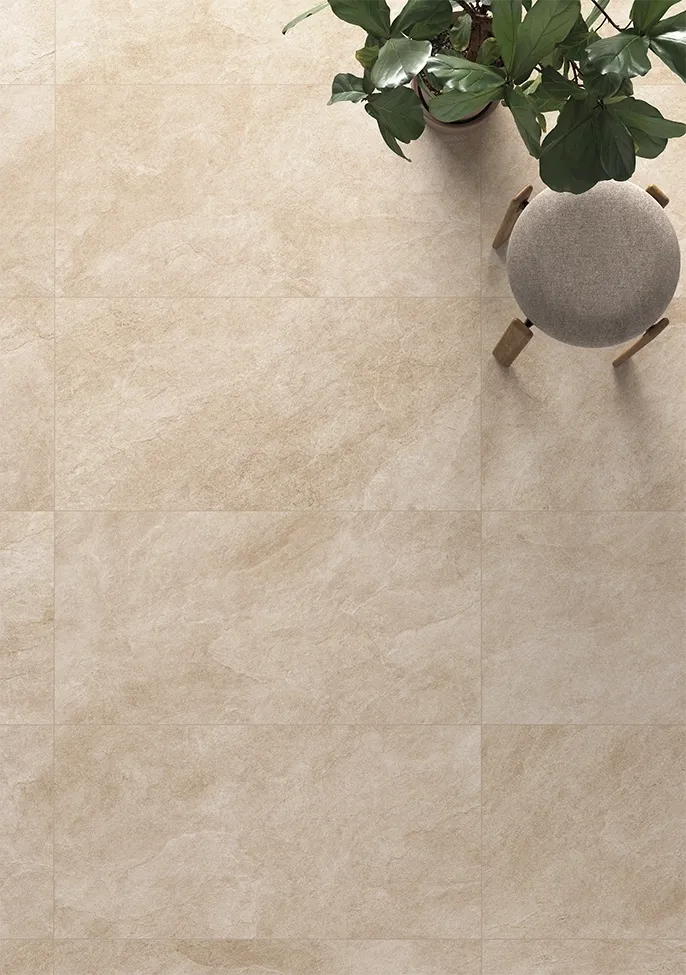
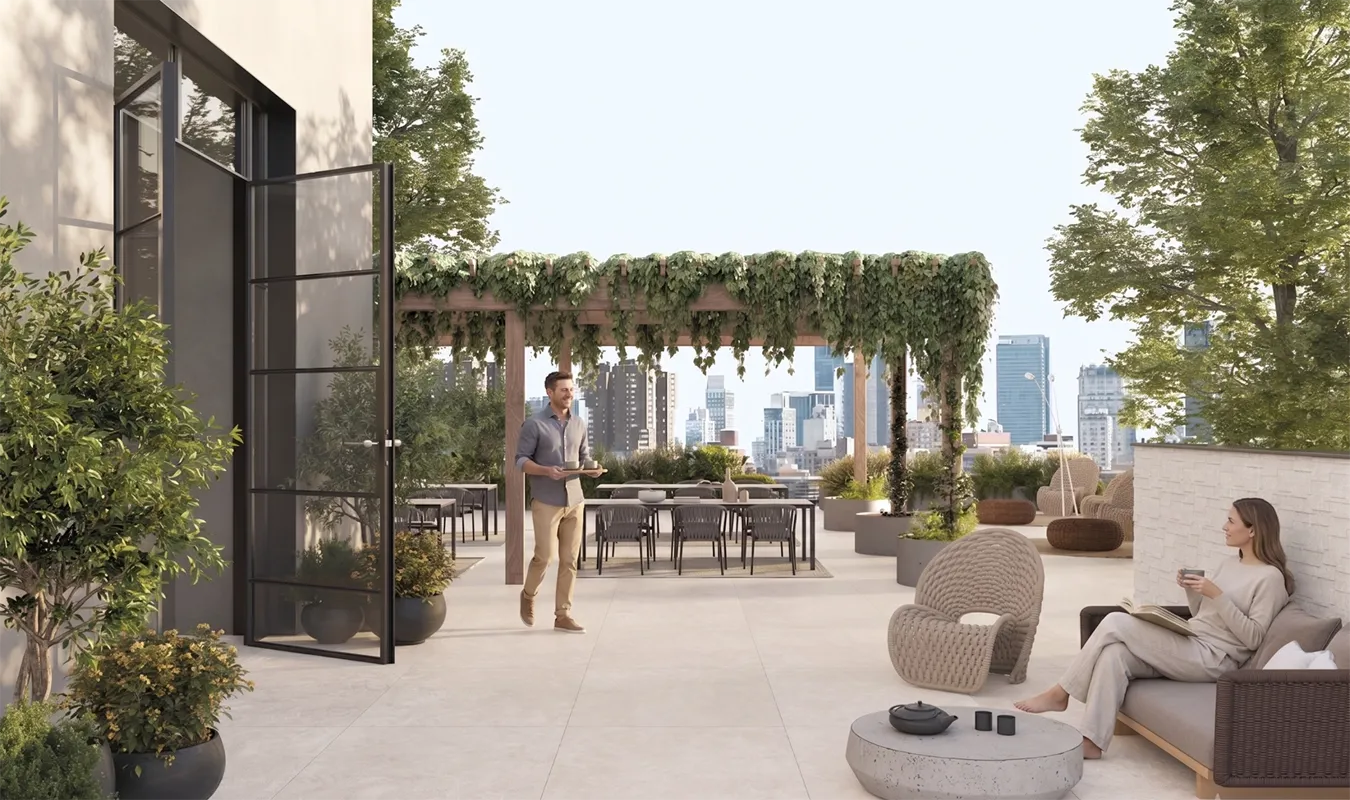
Heat-resistant, large-format travertine-look porcelain pavers on a rooftop terrace
Trevi Pearl Cross Cut
Trevi Pearl Cross

Stone look porcelain pavers (travertine, limestone, quartzite)

Stone look porcelain pavers replicate the texture and warmth of travertine, limestone, and quartzite while avoiding the sealing and staining issues natural stone brings outdoors. These finishes suit patios and terraces where a timeless, organic look is the goal, without sacrificing heat and UV performance.

Large format outdoor slabs for seamless surfaces

Large format slabs reduce the number of grout lines across a surface, creating a cleaner, more contemporary look for pool decks, courtyards, and open terraces. Fewer joints also mean fewer points where heat, moisture, or debris can settle in and cause long term wear. Larger formats, some reaching 48x48 inches (120x120 cm), let a single, sun exposed surface read as one continuous plane rather than a grid.

Together, these styles show how heat-resistant porcelain pavers can meet both performance requirements and the design language of modern outdoor spaces.

Maintenance, cleaning and installation tips for hot climate performance

Heat-resistant porcelain pavers need very little upkeep, but a few habits help preserve their performance in intense sun and heat over time.

  • Regular rinsing: hose down surfaces periodically so dust, pollen, and sunscreen residue do not settle into textured finishes

  • Mild cleaning products: following the right steps for cleaning porcelain tiles is enough to keep surfaces looking new, no harsh acids or abrasives required

  • Laying method: these pavers install several ways, from dry laying on gravel or grass, to bonding on a screed with mortar, to raised installation on pedestals, so the base can be specified to suit the site and the climate

  • Joint spacing: correct spacing during porcelain paver installation allows for natural heat expansion and contraction, reducing the risk of cracking or lippage over time

  • Drainage planning: a well graded base prevents water pooling, which matters most when sudden storms follow long stretches of heat

  • Periodic inspection: checking grout or joint material seasonally helps catch early wear before it becomes a larger repair

Following these steps keeps porcelain pavers performing at their best, season after season, in even the most demanding hot climate conditions.

Frequently asked questions about heat-resistant porcelain pavers

Do porcelain pavers get hot in the sun?

Porcelain pavers can get warm in direct sun, but they heat up more slowly and cool down faster than concrete or natural stone, thanks to their low water absorption and dense structure. Color and finish still play a role, with lighter, matte surfaces staying noticeably cooler than dark, glossy ones.

Are porcelain pavers good for pool decks in hot climates?

Yes, porcelain pavers are well suited to pool decks in hot climates because they resist moisture, chlorine, and sunscreen without staining or degrading. An R11 slip resistant finish also adds reliable traction around wet, high traffic areas.

Do porcelain pavers fade under UV rays?

No, porcelain pavers do not fade under UV rays, since color is fired directly into the material rather than applied as a surface coating. This keeps the finish consistent for years, even under intense, prolonged sun exposure.

Are porcelain pavers cooler than concrete?

Yes, porcelain pavers generally stay cooler than concrete because their low porosity limits how much heat the material absorbs and retains. Concrete tends to hold heat longer, especially in darker mixes, keeping surfaces warm well after the sun goes down.

Which porcelain paver colors stay coolest?

Light colors, such as white, beige, and soft gray, stay coolest, since they reflect more sunlight instead of absorbing it as heat. Darker tones and glossy finishes absorb more light and typically run warmer underfoot in direct sun.

Do porcelain pavers crack in extreme heat?

No, porcelain pavers are highly resistant to cracking in extreme heat, thanks to their low water absorption and dimensional stability across temperature swings. Proper installation, including correct joint spacing, further reduces any risk of cracking over time.

You might also be interested in