
Cersaie 2026: Colors, Materials, and New Interior Design Trends from the Latest Bologna Trade Show

Cersaie 2026: Colors, Materials, and New Interior Design Trends from the Latest Bologna Trade Show

Walking through the booths at Cersaie 2026 at BolognaFiere (held September 21–25), the feeling was immediate: the world of surfaces and bathroom furnishings has turned a new page. In these complex times, interior design responds by transforming the home into an authentic and discreet sensory sanctuary.

Gone are the days of ostentation or artificial luxury: the true star of the 2026 edition is a sober, textural, and imperfect aesthetic. From majolica tiles with irregular edges to matte finishes, Porcelain tile no longer seeks a lavish visual impact, but rather a deep tactile and emotional connection with those who inhabit the spaces. The ceramic surface thus becomes a tailor-made garment, blending technological innovation with craftsmanship.

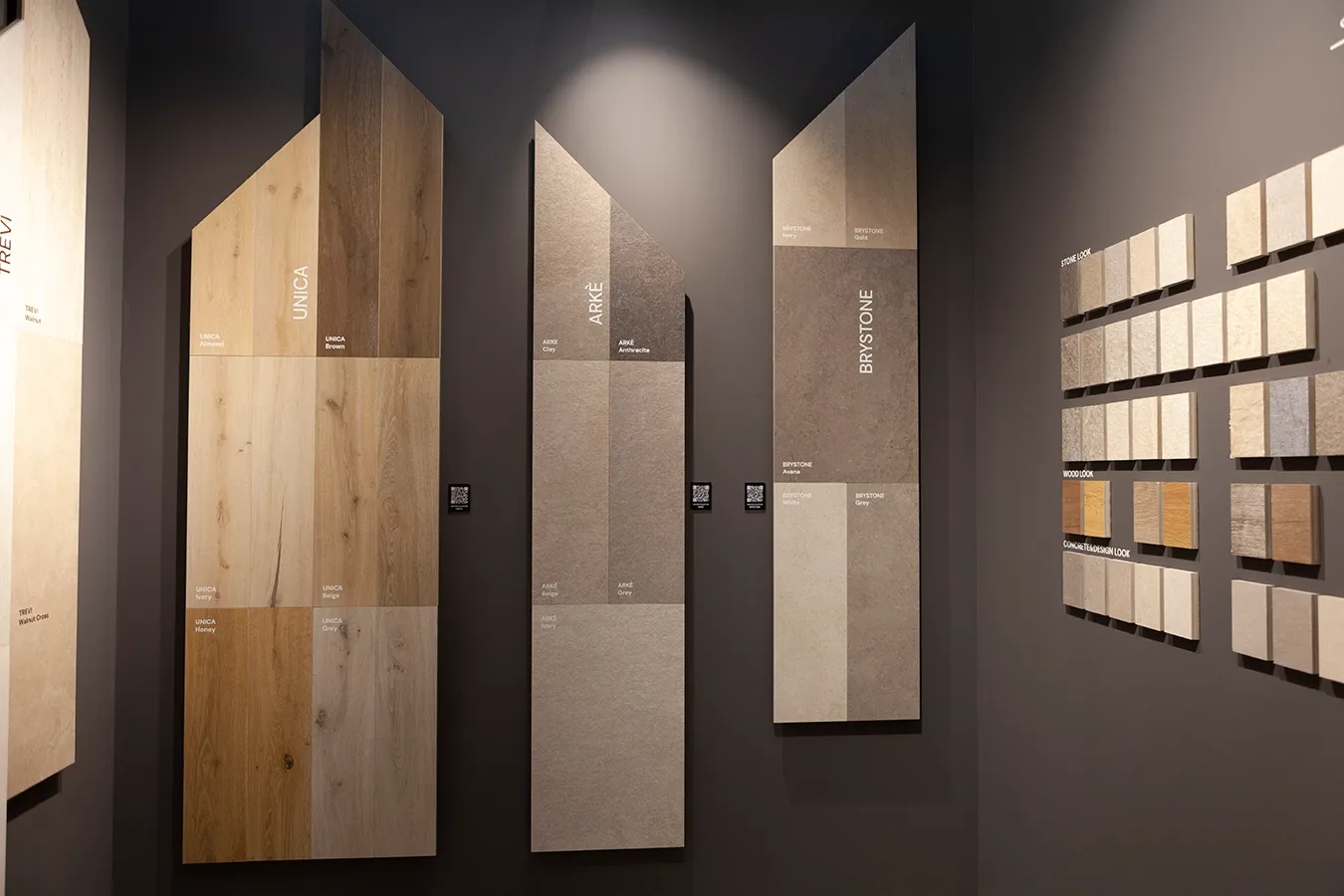
Vertical wall displays showcasing wood-look and stone-look porcelain stoneware tiles from the Unica, Arkè, and Brystone collections.

2026 Surface Trends: Natural Stones, Desaturated Tones, and the Aesthetic of Imperfection

Walking through the exhibition halls, natural stone reaffirms its status as the undisputed queen of finishes. The new ceramic collections explore veining, inclusions, and porosity with a level of material fidelity never seen before.

Leading this sensory revolution is a warm, relaxing, and soothing color palette:

  • Key shades: Sage green and blue-gray emerge as the year’s key colors, chosen by designers to infuse balance and well-being into home and work environments.

  • Stone-effect stoneware: Surfaces are adorned with mineral-inspired patterns on a neutral, desaturated base, ideal for creating rejuvenating spaces.

  • The charm of imperfection: High-gloss marble is being abandoned in favor of matte textures, knots, and roughness that evoke craftsmanship.
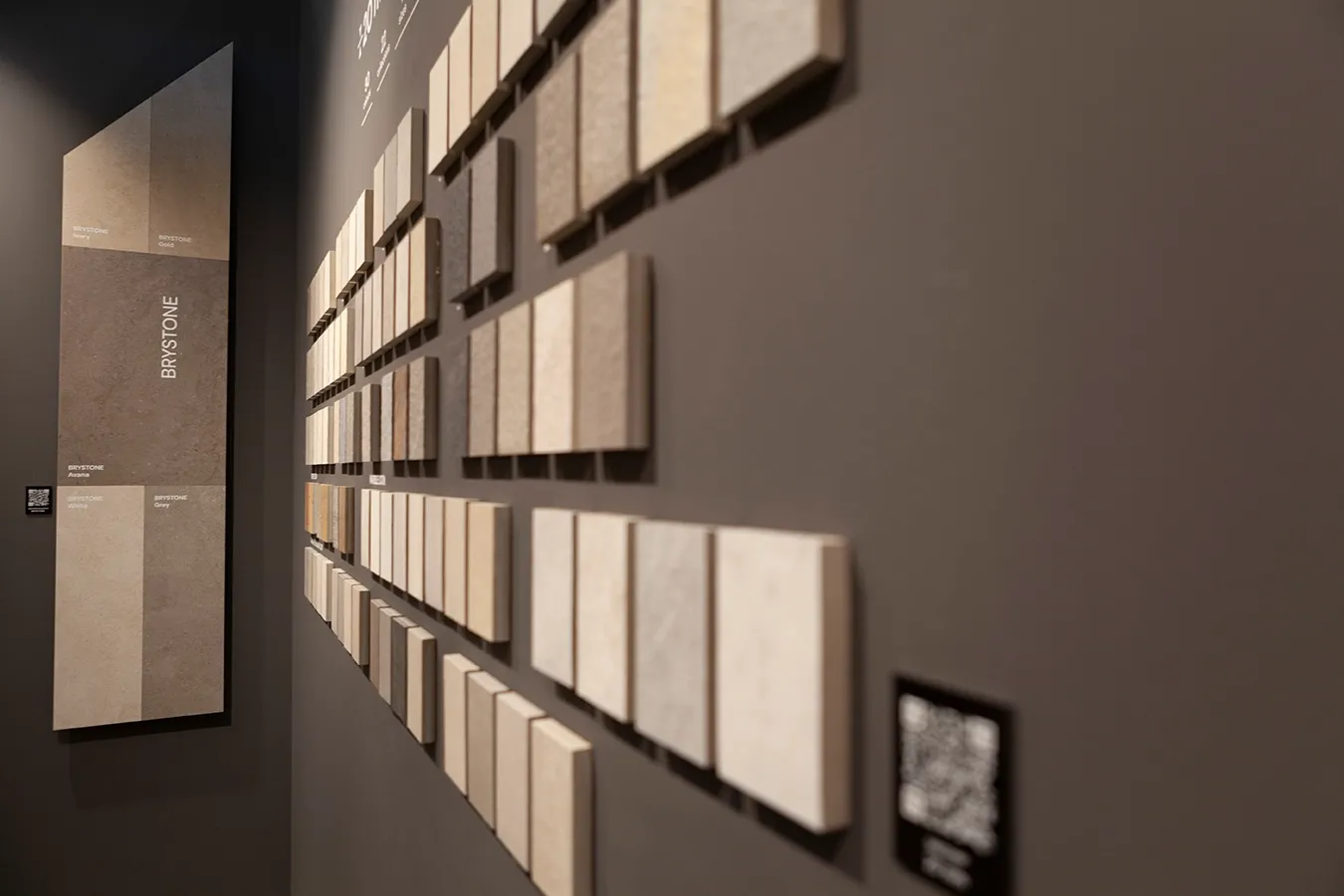
Detailed view of concrete-look porcelain tile samples in dusty urban tones and matte finishes on display at Cersaie.

New urban finishes: the decline of polished marble and the rise of dusty concrete

In spaces with a metropolitan flair, the shift is clear. Cersaie 2026 marks a shift away from traditional marble textures toward urban and contemporary surfaces:

  • Concrete effect and dusty tones: Dynamic, textured concrete surfaces prevail, capable of adding depth without feeling cold.

  • Cool color palettes: Alongside urban grays, deep blue and gray-blue shades emerge, perfect for sophisticated interiors with strong personality.

Brand Spotlight: Ceramiche Keope presents the Grace Atelier multi-stone system

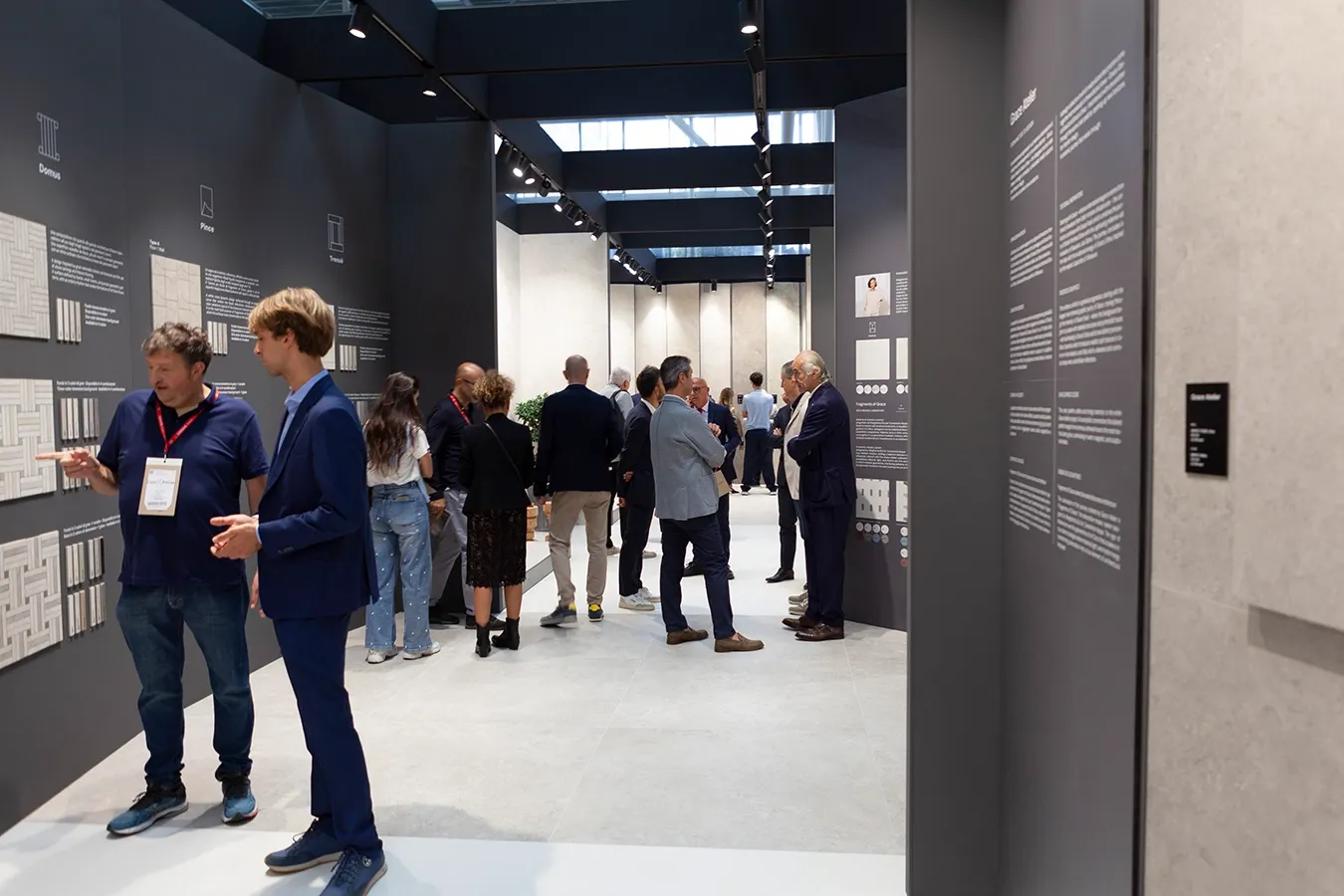
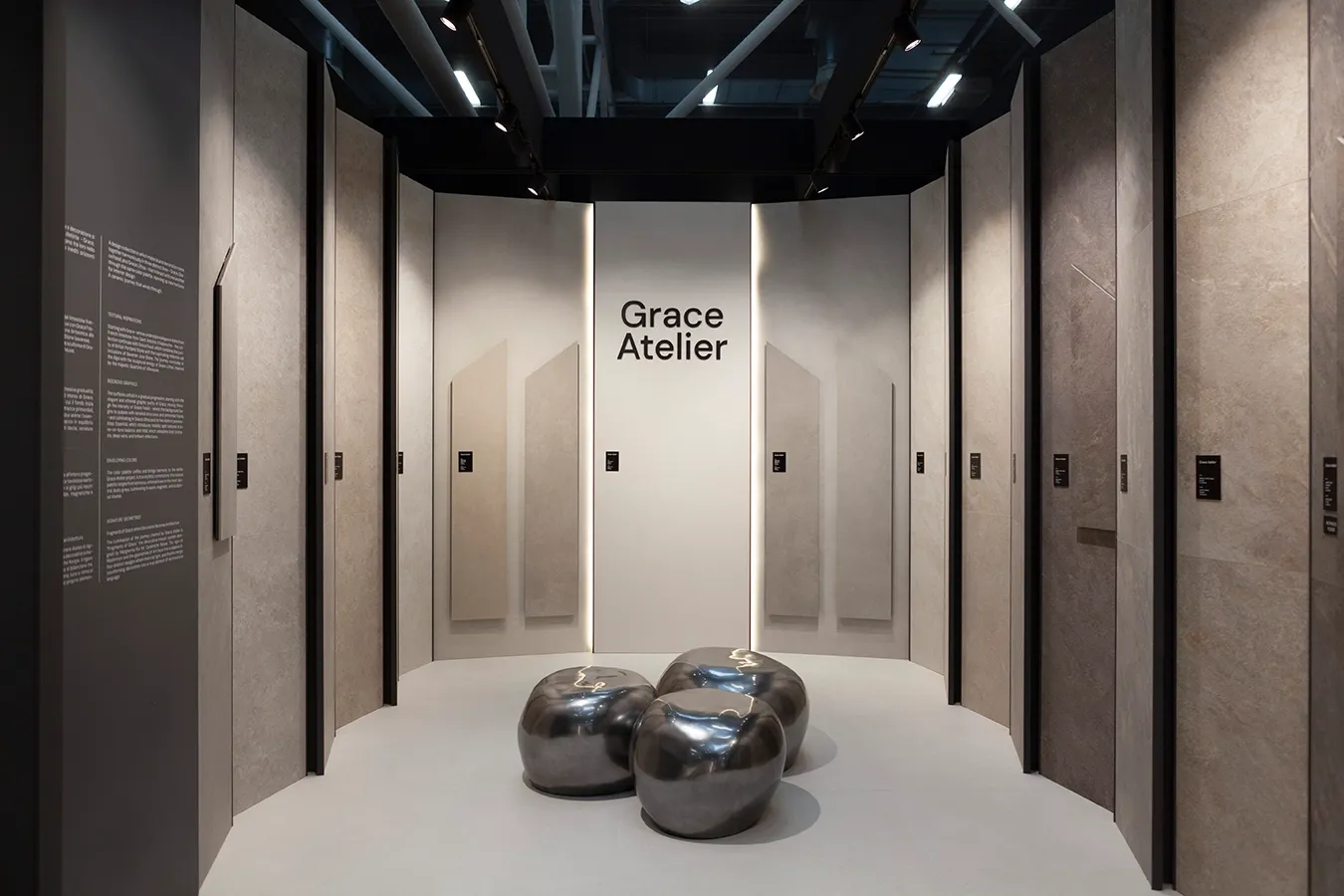
Very much in line with these trends, at the latest edition of Cersaie, Keope unveiled Grace Atelier, a design platform conceived to offer architects and designers an ecosystem of innovative solutions centered on stone, available in three distinct collections: Grace, Grace Fossil, and Grace Lithos.

The project is conceived as a comprehensive design tool based on four cornerstones:

  1. Multi-stone compatibility to combine different surfaces within the same space.

  2. Modular patterns, ranging from minimalist to highly textured.

  3. A color palette that spans the entire range.

  4. Customized and original decorative motifs.

Ceramiche Keope exhibition display at Cersaie featuring Grace Atelier limestone-effect porcelain tile panels and metallic seating.

Grace Fossil and Grace Lithos: the answer to the new demands of interior design

While the Grace collection (inspired by the understated elegance of limestone) is already a benchmark, the spotlight at the trade show was truly on the two new additions:

  • Grace Fossil: Blends the softness of Portland stone with the timeless details of Jura fossil inclusions, creating a fascinating geological narrative.

  • Grace Lithos: Offers a modern reinterpretation of Villeneuve quartzite (a typical Alpine stone from the Aosta Valley). It is available in two distinct graphic styles:

    • Minimal: Clean, minimalist, and elegant.

    • Wild: Intense, dynamic, and full of character.

Rounding out the collection are the “Fragments of Grace” mosaics, designed by Margherita Rui: a decorative system that blends modernist precision with Art Deco influences.

The Future of Surfaces: Well-being, Nature, and Micro-Tailoring

The overall impression left by Cersaie 2026 is that Italian ceramics have definitively moved beyond the phase of merely “copying and pasting” natural materials. Today, interior architecture seeks authentic harmony: materials are no longer meant to impress, but to create spaces where people can feel at ease, breathe freely, and rediscover a more human rhythm.

Whether it’s a residential project or a metropolitan commercial space, the trends that emerged in Bologna are clear: in the coming years, matte surfaces, desaturated tones, and design systems that blend geological history, technology, and bespoke design will take center stage.

You might also be interested in