




Matter and Design: An Ongoing Dialogue
Arch. Davide Ruzzon
The English word matter carries a dual meaning: matter, but also to matter, to have
value. A revealing linguistic coincidence, because matter is what gives shape to the world and, at the
same time, what gives it meaning. Every material tells a story: geological, biological,
cultural. Without matter, the spaces we inhabit would not exist, nor would the perceptions that bring them to life.
Humanity has shaped its evolution through an increasingly sophisticated relationship with
matter: it has excavated it, shaped it, transformed it into signs, surfaces, and architecture. In this
millennia-old dialogue, nature offers its primordial codes—the grain of wood, the layers of stone, the
transparencies of glass—while the project adds new meanings, layering technology, vision, and culture.
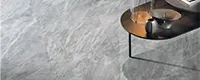
Ceramics fits fully into this narrative. A primal material—mineral powders,
clays, earths—that through fire becomes a surface, the skin of architecture, a testament to the
deep bond between technique and imagination. Ceramics carries a dual memory: the
natural memory of its composition and the design-driven memory of the formats, textures, and
geometries that make it an integral part of contemporary languages.
Every material, after all, is a form of writing. The grain of wood narrates seasons and growth; stone recounts geological eras; glass captures the tension between fragility and light. And ceramics, with its ability to transform and evoke other materials—stone, concrete, marble, metal—becomes a versatile alphabet, capable of adapting to the sensory and aesthetic needs of today’s architecture.
Our psychological well-being also stems from this deep relationship with matter. Touching
surfaces capable of conveying a story, perceiving the solidity of a material that grounds us in
space, observing the harmony of textures consistent with our imagination: these are all experiences that
shape our presence in places. The quality of an environment depends not only on its
function, but on the ability of the materials that compose it to speak to our sensibilities.
For this reason, in contemporary design, material is not merely a technical choice: it is a cultural element. It is what reconnects space to our memory and our identity. It is what allows architecture to hold stories, emotions, and visions.
And it is from this perspective—where material signifies value—that materials like ceramics
become an essential part of building new living landscapes.